Online Reporter
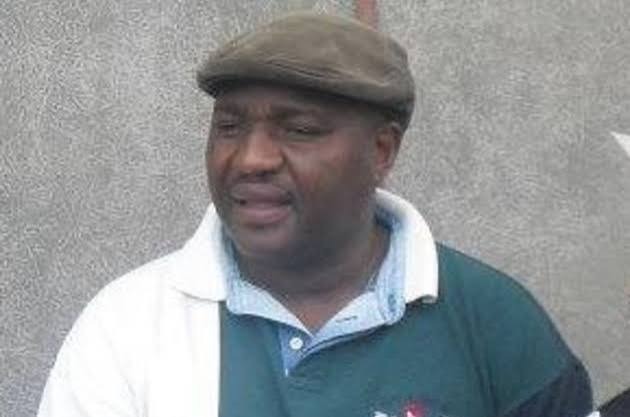
We continue our interview with Cde Cecil Banda, real name Dingani Ncube, the former Camp Commander of Victory Camp (VC) in Zambia and Brigade Chief of Logistics at Gwayi River Mine Assembly Point after the war. Cde Banda was a ZPRA specialist in military logistics during the armed struggle. In this week’s interview, he tells our Assistant Mkhululi Sibanda (MS) about the reasons for his promotion to the rank of Camp Commander, a facility that accommodated women before they received military training. Cde Banda insists that accommodating women at VC was a decoy, as the facility was mainly used to store weapons. Below are excerpts from the interview. Read on . . .
MS: You spoke about the underground armouries and the raid on one of them. Let us pick up the conversation from there.
Cde Banda: As I mentioned, besides the underground armoury at Siajumba, we had another one at koMbhunu, also along the Zambezi River on the Zambian side. The Rhodesians likely gathered intelligence about it and launched a raid. Their approach was strategic — they drove cattle towards the facility to trigger any landmines or anti-personnel mines we might have planted. The site was guarded by eight comrades, who were caught off guard. We lost seven comrades in the attack, with the only survivor being Qhude Nyathi, a comrade from Filabusi. After securing the facility, the Rhodesians detonated TNT grenades inside the armoury, setting off a massive explosion due to the landmines and ammunition stored there. However, beyond these main storage sites, we had smaller sub-storage facilities between Feira and Livingstone. I believe remnants of the Siajumba armoury still exist. When he was Vice-President, Mphoko (Phelekezela) had even suggested visiting these sites. He asked me whether I could still locate them.
MS: You also served as the camp commander of Victory Camp (VC), a facility that housed female combatants. Tell us about your time there.
Cde Banda: In 1977, there was a sudden influx of girls into Zambia to join the war. This followed the recruitment of students from Manama Mission School in January 1977 and later from Thekwane Mission. With hundreds of female recruits arriving, we decided to establish a dedicated camp — Victory Camp (VC). Before VC, only a few women had trained alongside their male counterparts, such as those at Morogoro in Tanzania and Mwembeshi in Zambia. I was deployed as the camp commander of VC because the ZPRA command element used it as a decoy.
MS: What do you mean by VC being a decoy?
Cde Banda: Very few people, including some combatants, realise that VC housed what I would call ZPRA’s national armoury. It was the largest ZPRA weapons storage facility in Zambia. When hundreds of female recruits arrived, we stationed them at VC to mislead the enemy. It was thought that it was unlikely the Rhodesians would bomb an all-female refugee camp at that time. The approach and thinking changed when Mkushi was bombed. That was the thinking at that time. Even the women at the camp were unaware that they were living in a facility that stored our biggest weapons cache. My appointment as camp commander was directly linked to my background in military logistics. My primary task was to safeguard the weapons stored there. Comrades would come to collect arms when needed, including Assaf Ndinda, who was later ambushed and killed near Kabanga Mission.
MS: How was VC structured?
Cde Banda: There were four large barracks: 1, 2, 3, and 4. The fourth barrack was unoccupied and used to store weapons. After Assaf was killed on his way to deploy Angolan-trained guerrillas, ZPRA commander Nikita Mangena arrived at VC early in the morning, demanding weapons. He was accompanied by senior commanders such as Tshangane (Jevan Maseko), Jack Mpofu, Eddie Sigoge, and Donki Dube. We loaded additional arms onto their Land Rover. However, despite Dr Joshua Nkomo’s strong advice against it, Mangena decided to visit the scene where Assaf had been killed, together with dozens of troops. Tragically, on that mission, Mangena’s Land Rover hit a landmine, leading to his death.
MS: Who were the other senior commanders at VC?
Cde Banda: Those under my command included Matswaha, Manyokopo, Qhude, and later Sylvester, who served as my Chief of Staff. Initially, security at VC was minimal. However, after the Rhodesians bombed both Freedom Camp (FC) and Mkushi, a women’s military training camp, in October 1978, we reinforced security by deploying anti-aircraft weapons around VC.
MS: How large was the population of VC?
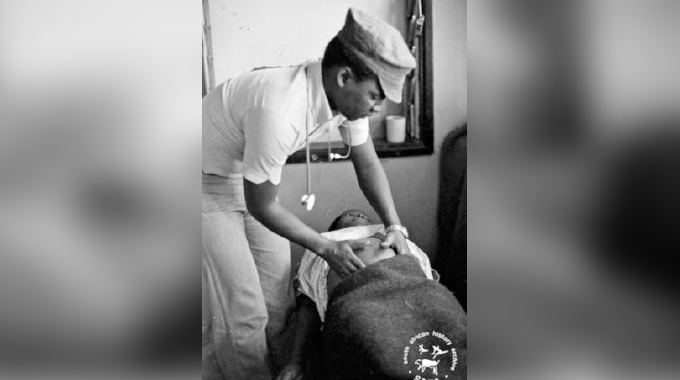
Cde Banda: The camp housed thousands at any given time. It served as a feeder camp for Mkushi, where female combatants received military training. Other women were sent to other countries to receive training in intelligence and civilian courses such as nursing, medicine you name it. Due to its nature as a female camp, some women had children there — some arrived pregnant, while others fled Rhodesia with their babies. Recognising this, a member of the Zapu National Executive, Cde Nyamurowa, chose to live at VC rather than in Lusaka to support the women. She played a crucial role. Additionally, two medical doctors, Dr Gordon Bango (who later became Provincial Medical Director for Matabeleland South) and Dr Malaba, frequently visited the camp to conduct medical check-ups and provide treatment. As the threat of an attack on VC increased, we relocated all stockpiles of weapons. Without weapons to oversee, my role at VC came to an end.
MS: Where were the weapons relocated to?
Cde Banda: The weapons were loaded onto the Zambian Defence Forces’ trucks and taken to their armouries. After that, if we wanted to arm our forces, we would write requisitions which were approved by the now-late National Hero, Colonel Masala Sibanda, one of the deputies to the ZPRA Chief of Logistics. When we started deploying battalions along the Zambezi River as part of the Zero Hour Strategy, I was sent to DK, a long-standing crossing point for our troops. As the logistics unit, we deployed between the battalions commanded by Cde Zuva and Jack Matiwaza. Zuva commanded the second battalion while Matiwaza was in charge of the third. The two battalions were conventional forces, well dug-in and armed with an assortment of weapons. Within that vicinity, there was a guerrilla detachment made up of about 100 guerrillas under the command of Cde Madayiza (Austin Peter Moyo). Madayiza died in 2018 from injuries sustained in an accident. At the time of his death, he was a senior intelligence officer in the Central Intelligence Organisation (CIO) based here in Bulawayo.
MS: What was the purpose of that guerilla unit?
Cde Banda: They operated like commandos because they would cross the Zambezi River on a seek and destroy mission in Rhodesia. They caused a lot of damage to the enemy in areas around Hwange and Tsholotsho districts.
After their mission, they would return to the base. However, on their return from one of their missions, they set up a base near a dam, which we strongly condemned. We told them that the Rhodesians might also be attracted by that dam in case they launched a cross-border raid into Zambezi. The advice fell on deaf ears as those comrades had an air of arrogance and were trigger-happy. As predicted they were attacked in broad-daylight at around 1pm. There was fierce fighting there and casualties were recorded on both sides.
MS: What was the response of the battalions during that attack?
Cde Banda: The battalions were between five and 10 kilometres away, but were ready to defend as they were well deployed and properly armed like I said. After that attack, the ZPRA Chief of Reconnaissance, Ananias Gwenzi (General Philip Valerio Sibanda) came to assess the situation. Ananias was quick to warn that there was a possibility that the bodies were booby-trapped, so they should be handled with care. Indeed they were. Our engineers were able to diffuse those landmines. The Rhodesians had also mined the road, and again our engineers did well to diffuse the mines.
To be concluded next week, with Cde Banda talking about the ceasefire period and his role as the Brigade Chief of Logistics at Gwayi River Mine Assembly Point near Dete in Hwange District, Matabeleland North Province. Gwayi AP housed only conventional forces.