Bruce Ndlovu, Sunday Life Reporter
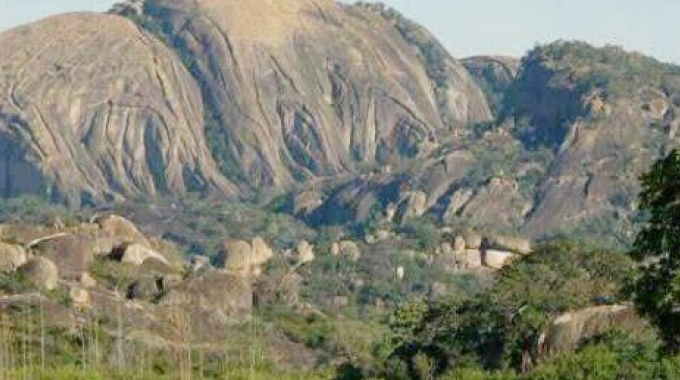
MOUNT Silozwe rises like the head of a bald man in the heart of Matobo National Park.
Even within the park, where another great dome is always just a stone’s throw away, Silozwe is unique. Standing 1 476 meters above sea level, it is the largest of the national park’s famous granite domes.
Rising above the granite wonderland of Matobo, the imposing dome dominates the skyline long before visitors arrive at its base.
To hikers, it is the ultimate conquest in a landscape famous for its balancing rocks and granite outcrops. To photographers, it is a masterpiece sculpted by nature over millions of years.
But for those who have lived beneath its shadow for generations, Silozwe is far more than an impressive geological formation. It is a place where the physical and the spiritual have long intersected — a landscape where every path and every rock carries the echoes of traditions that once governed everyday life.
Today, hiking boots have replaced ceremonial regalia on many of its slopes.
Tourists arrive with cameras instead of offerings, eager to experience the breath-taking views from Matobo’s highest peak. Yet, beneath the growing popularity of adventure tourism, an older story persists, refusing to disappear despite the march of time.
For 78-year-old villager Golden Ndlovu, Silozwe remains sacred, regardless of how many visitors climb its slopes.
“Back in the day, one could not just go up and down the mountain. It was taboo because this was regarded as a sacred place,” he told Sunday Life.
“When we were children, our parents told us that we were not permitted to point at the mountain, as it was said that you would disappear or some other terrible thing would happen to you. For many people in the area, that belief holds strong. You will rarely see a person from here pointing at the mountain. It is simply unheard of.”
As he spoke to Sunday Life, Ndlovu instinctively avoided stretching a finger toward the towering granite giant.
Instead, he nodded in its direction — a small gesture reflecting beliefs carefully handed down through generations.
For many outsiders, such customs may seem like superstition. For local families, however, they represent a code of respect for a place believed to possess immense spiritual significance.
“A lot of our younger people have now forgotten our customs and traditions and that is why you might find some of them pointing at the mountain,” Ndlovu said.
“They know they should never do this, but some do it because they want to be rebellious or daring.”
For centuries, Matobo has occupied a unique position in the country’s spiritual landscape.
The hills have long been associated with rainmaking ceremonies, ancestral worship and traditional healing, attracting people who seek blessings, health and guidance during times of hardship.
Silozwe stood at the heart of many of those practices.
“Matobo has always been a place associated with traditions, culture and a connection to the ancestors,” Ndlovu explained.
“Long ago, you were not allowed to go up the mountain without the elders’ approval. It was an important site for people who needed to seek spiritual guidance, heal the sick or conduct important ceremonies that brought rain and prosperity to the people.”
While rituals may no longer dominate daily life as they once did, such customs remain deeply ingrained in the community’s collective memory.
Today, however, a new group has discovered Silozwe.
They arrive carrying backpacks, hiking poles and water bottles, eager to tackle what many regard as one of the most rewarding climbs in Matobo.
Social media has only fuelled the mountain’s appeal, with hikers sharing spectacular sunrise photographs and panoramic views that stretch across the endless granite landscape.
Every weekend, the mountain attracts visitors looking not for spiritual answers, but for personal achievement. Each successful climb becomes another badge of honour.
For 20-year-old Thandiwe Moyo, who grew up in the area, the mountain has become part of everyday modern life.
“We have a lot of hikers who want to climb the mountain. For them, it is a challenge. It is not only Silozwe, but other smaller ones as well. I guess Silozwe is the most attractive to them because it is the biggest,” she said.
Ironically, even local youths sometimes make the ascent — not for adventure or ceremonies, but for something as ordinary as a mobile phone signal.
“We also go up the mountain, but it is mostly because of the network challenges that we face in the area,” she said, laughing.
“There are certain spots you can go to that offer better network coverage. While we understand the traditions around the mountain, we want to chat with our loved ones and connect to the internet.”
It is perhaps the perfect illustration of how dramatically life has changed.
That balancing act between preservation and progress defines Silozwe today. The mountain, once the preserve of elders, traditional leaders and healers, has become a symbol of two worlds existing side by side.
One is rooted in ancestral memory, where every climb once carried profound spiritual meaning.
The other belongs to a new generation drawn by adventure, photography, fitness and even the promise of a reliable signal. A mountain once climbed only after receiving an elder’s permission is now, for some, the quickest route to a stronger internet connection.
Despite this, modernity has not erased respect entirely.
Ndlovu says villagers still make an effort to explain local customs to visitors, hoping that even if outsiders do not fully embrace the beliefs, they can at least appreciate the mountain’s cultural importance.
“Now things are different. As with everything else in life, the passage of time has seen a shift in the way we interact with the mountain,” he said.
“Nowadays, we have a lot of tourists who come to view Silozwe for its beauty. We, of course, try to educate them about some of the rules and traditions that govern the mountain, but it is difficult for someone who did not grow up in this area to completely understand these rules. For us, these customs were passed down from old to young over time, so we can never forget them, but it is a lot more difficult for someone new to the area to grasp that.”