Chronicle Editor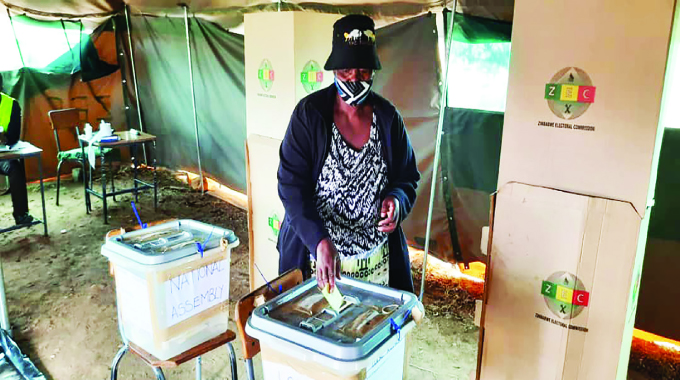
ACCORDING to André Blais and Eva Anduiza (2021) participating in elections is an essential component of democracy: citizens in democratic political systems are expected to be able to vote and to choose their representatives.
“Through their vote, either directly in presidential elections or indirectly in parliamentary elections, citizens also select among competing government alternatives. Turnout is thus a central topic in politics. Although turnout is the most widespread form of political participation, some people do not vote. Moreover, turnout varies substantially over time and across types of elections within a country as well as across countries. Who votes and under what conditions people are more likely to turn out are central questions in this literature. Explanations for turnout variation have focused both on individual characteristics (such as age, education, or political attitudes) and contextual features (such as the effect of compulsory voting, electoral systems, or party competition).”
In addition, as Teorell, et al (2007) show, other types of participation such as protesting or contacting politicians are performed by a small minority of citizens. Additionally, voting is the only form of political participation where influence is equal (one person, one vote), and unaccountable (through secret voting), as pointed out in Rokkan (1961). André Blais and Eva Anduiza add that although some works such as Pateman (1970) argue that citizen participation should go beyond voting, there is a relative consensus that high turnout is desirable, and thus, declining turnout rates found in many advanced democracies are a deep source of concern for many observers. The underlying assumption behind such a concern is that the legitimacy of the political system depends on a high turnout rate.
Experts say in political science, voter turnout is the participation rate, often defined as those who cast a ballot of a given election. This is typically either the percentage of registered voters, or all voting-age people. According to Stanford University political scientists Adam Bonica and Michael McFaul, there is a consensus among political scientists that “democracies perform better when more people vote”.
According to the 2023 voters roll statistics used in last week’s general elections, there were 6 619 691 registered voters in Zimbabwe. Women made up the majority of the voters. There were 3 551 997 female voters which is 53,7 percent of the total number of registered voters. Men were 3 067 694 which translates to 46,3 percent of the voting population. The highest number of voters were in Harare province with 907 752 excluding those in Chitungwiza. Bulawayo province had the least number of registered voters, 287 220. The majority of registered voters, 68 percent, turned up to exercise their democratic right.
It is therefore pleasing to note that the voter turnout was good across the country, which is a good for democracy. This means that those who registered to vote and were eligible to vote managed to exercise their democratic rights. On the other hand, those who were voted into office know that they have a mandate from the electorate, and thus, they are answerable to the electorate. Observers have also hailed Zimbabweans for turning out in numbers to vote, and being peaceful. In a statement, the Organisation of African, Caribbean and Pacific States (OACPS) said it was happy with the voting processes.
“Having visited ten polling stations in Harare and its environs on August 23, 2023, and spoken to various stakeholders, including voters, the OACPS congratulates all concerned for the transparent, peaceful, and orderly conduct at the polling stations. The OACPS notes with satisfaction the high numbers of women participating as polling officials, agents, and in the electorate. This is a most welcome development. The OACPS also notes with satisfaction that local and foreign observers were given full access to the polling stations in the spirit of transparency and accountability,” read part of the statement.


 Online Reporter