Online Reporter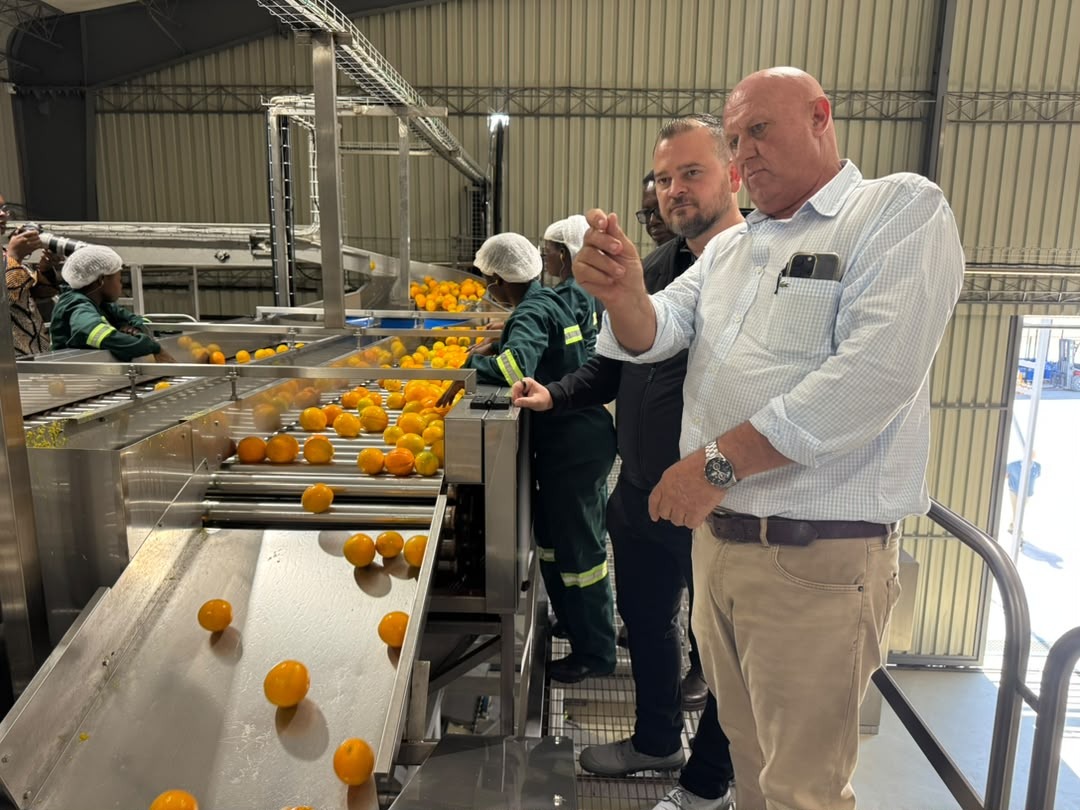
THE Orange Ville citrus project in Beitbridge offers a compelling glimpse of what Zimbabwe’s rural economy can become when agriculture, industry and investment are brought together under a single vision.
For decades, rural areas have largely been viewed as producers of raw agricultural commodities, with value addition and manufacturing concentrated in urban centres. Farmers produced crops, which were then transported elsewhere for processing, packaging and marketing. While this model sustained production, it also exported jobs, investment and economic opportunities from the communities where the crops were grown.

The emergence of Orange Ville Trading’s more than US$40 million citrus production and processing project signals a shift away from that outdated model.
What is taking shape in Beitbridge is not merely a citrus plantation. It is an integrated value chain that combines production, processing, logistics and marketing in one location.
The project currently employs more than 400 people and is expected to create around 2 000 direct jobs when fully operational. More importantly, it demonstrates how rural industrialisation can create sustainable economic activity that extends well beyond farming.
The significance of such investment lies in its ability to multiply economic benefits. When oranges are processed into juice locally, greater value remains within the community. When by-products such as orange peels are converted into animal feed, waste is reduced and new business opportunities emerge. When workers are provided with housing, water and electricity, the benefits extend beyond the workplace to improve family and community welfare.
This is precisely the type of development Zimbabwe needs if it is to achieve broad-based economic transformation.
The project also highlights the importance of identifying and building on regional comparative advantages. Beitbridge’s favourable climate and water resources make it ideal for citrus production.
Rather than forcing a one-size-fits-all approach to development, provinces should focus on sectors where they possess natural strengths. In doing so, they can develop specialised industries capable of competing both regionally and internationally.
Equally encouraging is Government’s intention to replicate the Orange Ville model across surrounding farms and other parts of the country. Such an approach has the potential to transform entire districts into production and processing hubs, creating stronger linkages between small-scale farmers, commercial producers and industrial processors.
However, replicating this success will require more than ambition. Investors need reliable infrastructure, secure water supplies, efficient transport networks and consistent policy support.
Access to affordable financing will also be critical if Zimbabwe is to attract similar large-scale investments into horticulture and agro-processing.
The Orange Ville project further illustrates the critical role of value addition in economic development. For too long, African economies have relied heavily on exporting raw commodities
while importing finished products. By processing agricultural produce locally, Zimbabwe not only creates jobs but also increases export earnings and strengthens industrial capacity.
As the country pursues Vision 2030, projects such as Orange Ville provide practical evidence that rural industrialisation is achievable. The challenge now is to ensure that this development is not treated as an isolated success story but as a blueprint for national growth.
The true measure of success will not be the hectares planted or the millions invested. It will be the number of rural families whose lives are transformed through stable employment, higher incomes and expanded economic opportunities.
If Zimbabwe can replicate what is happening in Beitbridge across its agricultural regions, rural industrialisation will cease to be a policy aspiration and become a powerful driver of inclusive national development.