Online Reporter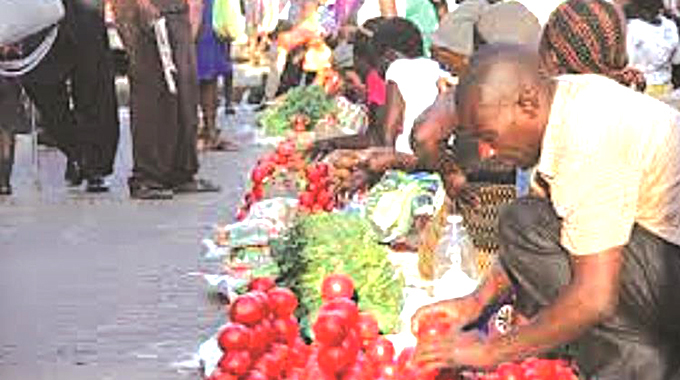
The ongoing conflict between Bulawayo’s informal vendors and city authorities is a dilemma that demands urgent and practical solutions.
On one hand, vendors need to make a living, and on the other, the city must maintain order, cleanliness, and adherence to public health standards.
The current situation — where vendors occupy every street corner, cooking and selling meat, Russian sausages, and other foodstuffs — has highlighted a long-standing issue: the lack of well-positioned vending sites.
It is no secret why vendors are spread across the Central Business District (CBD). Their primary goal is to be where the customers are. Past attempts by the Bulawayo City Council (BCC) to allocate vending sites have often failed because these spaces were too far from high-traffic areas, making them impractical for business. Vendors cannot afford to operate in isolated locations while their customers move about the busy city streets.
Cracking down on vendors without offering realistic alternatives is neither fair nor sustainable. Instead of pushing them into further illegality, the city council must rethink its approach. The solution lies in providing designated vending spaces that are well-placed, accessible to both vendors and consumers, and properly regulated to ensure cleanliness and order.
Other cities across the world have successfully integrated vending into their urban landscapes. Well-planned market hubs, food courts, and designated street vending zones have allowed vendors to thrive without causing chaos. Bulawayo must take a similar approach. The council should engage vendors in discussions and identify areas within the CBD where they can operate legally while maintaining hygiene standards.
Instead of treating vending as a problem, the city should view it as an opportunity. Formalising the sector will not only improve the city’s aesthetics but will also boost revenue through proper licensing and regulation. A well-organised vending system can co-exist with established businesses, creating a more dynamic and inclusive economy.
Bulawayo’s streets must not be lawless, but neither should its people be denied a means of survival. The city council must act swiftly to create a system that benefits both vendors and residents. If vendors are given the right spaces to operate, the city can remain clean, organised, and business-friendly — a win for everyone.