Online Reporter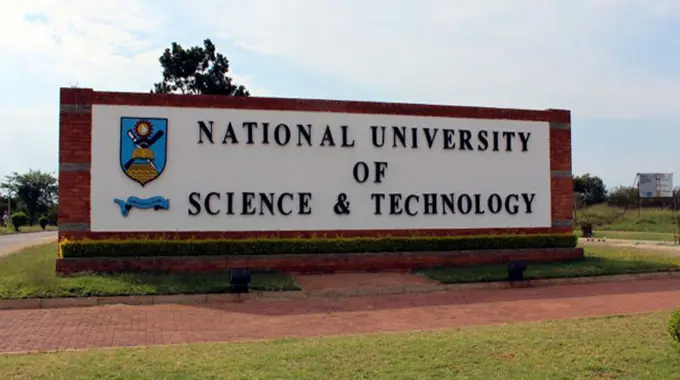
Zimbabweans across the country are now enjoying the benefits of their institutions of higher learning’s highly competitive 5.0 Education hubs.
In Bulawayo, the National University of Science and Technology (Nust)’s Applied Genetic Testing Centre (AGTC) has widened its scope beyond human DNA testing, to cover animal genetics and forensics, to assist the police in solving criminal cases such as rape, murder and housebreaking, among others.
The AGTC is also assisting farmers to resolve livestock ownership disputes and also ascertain origins of animal genetics.
Registered with the National Biotechnology Authority and the Medical Laboratory and Clinical Scientists’ Council of Zimbabwe, the AGTC has also assisted in the identification of accident victims.
In the Midlands, the Midlands State University (MSU) has established innovation hubs and an industrial park to create clear pathways that link research, innovation and industrialisation within the university system.

This has enabled the university to leverage intellectual resources to drive socio-economic development.
The university has established a complex ecosystem of research-intensive institutes and centres such as the National Pathology Research and Diagnostic Centre, the Tugwi-Mukosi Multi-Disciplinary Research Centre, the National Language Institute Centre and the Centre for Public Policy and Devolution.
In Mashonaland West Province, the

(CUT) is also harnessing its intellectual resources to promote socio-economic development across the country.
Its latest project is the development of an antivenom, whose success will drastically reduce Zimbabwe’s snakebites deaths.
The new antivenom being developed is a polyvalent (potent against many toxins) herbal-based formula, unlike the serum-based antivenom that is specific to a snake type.
This herbal-based formula taps into Zimbabwe’s traditional heritage that evolved through history to treat snake bites.
The new antivenom will offer treatment to snake bites to neutralise its effect whether the venom targets the nervous system (neurotoxic), blood and cardiovascular system (Haemotoxic), cells at the bite site (cytotoxic) and muscle tissue (myotoxic).
Zimbabwe at the moment imports the antivenom from India and often runs out.
It is therefore pleasing to note that universities are now leading in stimulating rural industrialisation, agro-innovations and value addition.
This is a confirmation that the institutions of higher learning have taken heed of the Government’s call for universities to produce tangible goods and services that address challenges facing communities.
Our universities are now churning out graduates that meet societal demands and this is as it should be.
We continue to celebrate innovation breakthroughs as our universities engage in research to find solutions to challenges facing their respective communities.