Online Reporter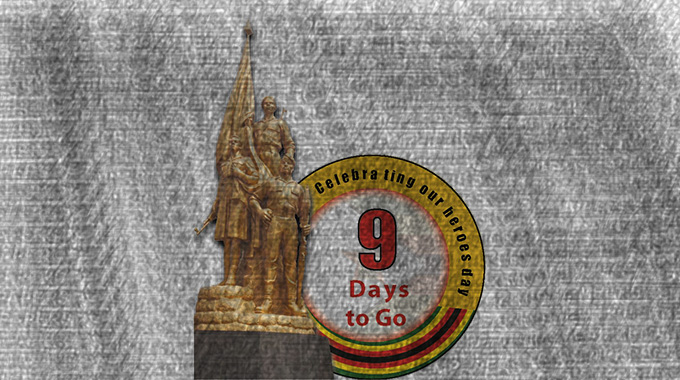
Elliot Ziwira, Deputy Features Editor
As Zimbabwe marks Heroes Day on August 11, the nation pauses — not just in reverence, but in deep reflection.
This day is not merely a date on the national calendar. It is an invocation of memory, a clarion call to reckon with the past, and an urgent reminder to honour those whose blood and bones fertilised the soil of freedom.
The commemoration of our heroes is not just about exalting the fallen, no! It is about reclaiming our story from the clutches of erasure; about unsilencing the past.
Sowing the seed of defiance: Going beyond the acre
In 1896, amid the first tremors of what would become the long, tortuous struggle for self-rule, a young Matabele chief posed a question that continues to haunt the architecture of colonial deceit.
“Where are we to live when it is over? The white man claims all the land,” he asked Cecil John Rhodes, the chief architect of plunder.
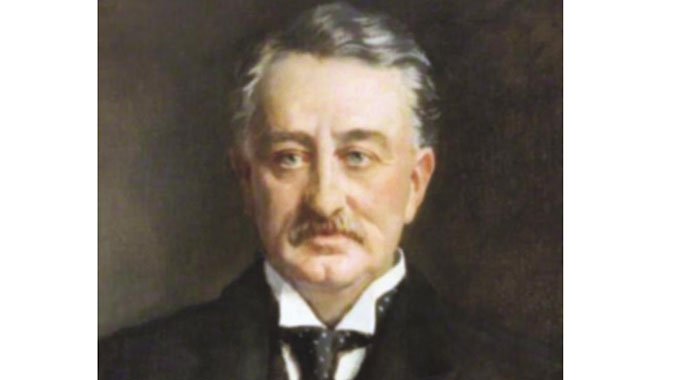
Cecil John Rhodes
As documented by journalist Vere Stent and quoted in Julie Frederikse’s “None But Ourselves” (1990), the chief’s challenge to colonial conqueror Rhodes exposed the existential crisis that colonialism would impose on the African spirit.
Rhodes, speaking with the haughtiness of the empire, replied: “We will give you settlements. . . we will set apart locations for you.”
This calculated promise was no act of benevolence. It was a blueprint for domination, a thinly veiled attempt to mask the true intentions of colonialism— to dispossess, to oppress and to exploit.
However, the irony was not lost on the young chief, who understood with piercing clarity that it was the
African who should be allocating land, not pleading for a place on his own soil. Yet the most fertile lands had already been seized by settlers, cloaked in claims of legality, driven by greed, and a desire to establish a colonial inheritance for generations to come.
Sensing the resolve in the chief and seeing that he was armed, Rhodes attempted to coax him into disarming. But the chief stood firm.
With fearless candour, he told the imperialist: “When I speak with a rifle in my hand, the white man listens. Without it, I am nothing — just a dog to be kicked.”
To the young chief, as with the fighters of the Second Chimurenga, there was no illusion about the nature of liberation. He knew, as Frantz Fanon (1967) later asserts, that decolonisation is inherently violent; just as violent as colonisation itself.
The courage shown by the young Matabele chief ignited a flame of resistance that would burn through the decades, culminating in the armed liberation struggle that birthed the Zimbabwean nation.
Therefore, there is a need to go beyond the acre as we celebrate the gallantry of heroism.
Every August, we are reminded that the spirit of resistance did not die with the likes of Queen Lozikeyi, Mbuya Nehanda, Sekuru Kaguvi, General Josiah Tongogara, Alfred Nikita Mangena, or Jason Ziyaphapha Moyo.
It lives on in the nation’s collective consciousness, etched into the landscape in the form of the National Heroes Acre, and in the intangible heritage of pride, dignity and identity.
Our heroes’ selfless sacrifice was more than for the emancipation of the land. It was for the resurrection of a culture, a people and a way of being that colonialism sought to bury.
Dismantling the villainous Rhodesian lie
Remembering our heroes calls for the confrontation of the villains, who attempted to suppress them; not out of spite, but as a moral imperative.
Cecil John Rhodes was no founder in whatever way one may deem the concept of founding. He was a symbol of plunder, white supremacy and systemic violence. His so-called “Pioneer Column,” which hoisted the Union Jack on Harare Hill on September 12, 1890, did not discover unclaimed land.
They simply invaded it.
The colonial holiday once known as Rhodes and Founders Day was, in essence, a celebration of a genocide, dispossession and cultural mutilation.
It was first marked in 1903, aligning with Rhodes’ birthday (July 5) and the crossing of the Shashe River by the Pioneer Column.
Even the practical rearrangement of the holiday in 1910 by Colonel Raleigh Grey, to suit the logistics of settler military drills, tells a tale of a colonial government more interested in white leisure and military dominance than in the lives or dignity of the black majority.
Redefining collective memory
The decision by the Patriotic Front Government after Independence in 1980 to abolish Rhodes and Founders Day was symbolic and restorative. It was a redrawing of the moral map of Zimbabwe, with Heroes Day emerging as a powerful tool of collective healing.
As early as May 15, 1982, at a rally at Dewa, Zvishavane, then Minister of State in the Prime Minister’s Office, Emmerson Mnangagwa (now President of Zimbabwe), prophetically warned: “If we forget the struggle and the people who died for our freedom, we shall drift aimlessly.
“We, who are alive, link with those who have died and those who have yet to be born; and we must look after the heritage of our country, and teach our children what that heritage is and what it means” (The Sunday Mail May 16, 1982).
This intergenerational pact formed the ideological bedrock for the National Heroes Acre, conceived by local and North Korean designers, where black granite from Mutoko was moulded into a lasting homage to gallantry.
It is a shrine of sovereignty that goes beyond symbolism.
Perched on a ridge at Warren Hills in Harare, the 57-acre National Heroes Acre is not merely a burial ground, no! It is a statement of self-determination.
With the Tomb of the Unknown Soldier, the Wall Murals, the Eternal Flame and the Museum, the sacred site bridges history and futurity.
The first official burial on August 12, 1980, attended by 40 000 people, marked the repatriation and reinterment of General Tongogara and Ziyaphapha Moyo, having been initially interred in Mozambique and Zambia, respectively.
It was not just a burial — it was a homecoming of dignity.
Father Alexio Muchabayiwa of the Roman Catholic Church presided over the service, adding spiritual solemnity to national mourning.
Memory as resistance: Struggling for the calendar’s soul
Heroes Day itself was a product of fierce political and ideological contestation.
Initially observed on August 11 and 12, the debate around its timing became a reflection of a deeper societal tug-of-war.
In Parliament, on July 28, 1980, Senator Joseph Culverwell expressed frustration with white MPs, who were more concerned with “business disruption” than with historical justice.
Deputy Home Affairs Minister, Tarisai Ziyambi, reminded the House that millions of black Zimbabweans had for decades been forced to observe holidays, like Rhodes and Founders, which was replaced by Ancestors Day, that bore no relevance to them.
The final structure; Heroes Day on the second Monday, and Defence Forces Day on the second Tuesday of August, was codified in law in 2001, bringing clarity, consistency and most importantly, national ownership of remembrance.
Thus, it is our collective duty to use memory as a form of resistance to colonial domination.
In the face of neo-colonial narratives and attempts to whitewash history for gain, commemorations like Heroes Day become acts of resistance. The past is not dead; it is living and it demands engagement.
As the late Vice President Dr Joshua Nkomo once stressed, the point is not merely to remember the dead, but to protect the living legacy of justice and equality for which they died.
To unsilence the past, therefore, is to unmask the propaganda of “founders”, to resist cultural amnesia and to assert that history belongs to the people. It does not belong to those who wrote it in blood, but to those who challenged it with courage.
Hence, this upcoming Heroes Day should not be a passive ritual, but a moment of awakening.
We should collectively remember not just the what of the struggle, but the why, so that our children may never inherit a world where Rhodes is called a founder — instead of invader, thief and oppressor, or where freedom is mistaken for a gift rather than a right wrested from the jaws of subjugation.
Rhodes and his associates did not “find” an unpossessed land, but rather stole it from its rightful owners.
Their legacy is one of bloodshed, displacement and cultural destruction.
As the seeds of struggle germinated through the young Matabele chief’s resolute stance and Mbuya Nehanda’s bones, the nation’s soul was birthed. It is up to us to keep their bones dancing to the drumbeat of a liberated future.