Chronicle Editor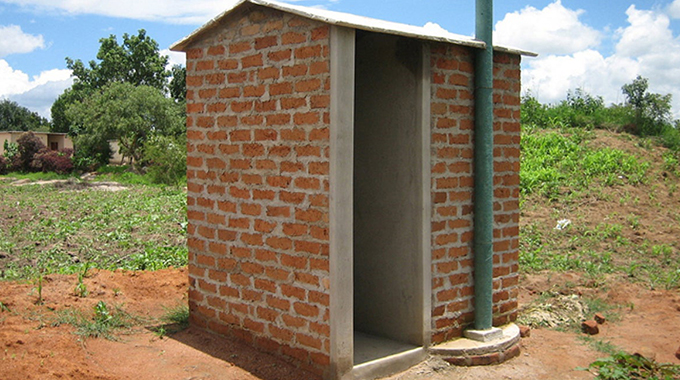
Nqobile Tshili, Chronicle Reporter
BULAWAYO’S five-days-a-week water shedding exercise takes effect today, putting under the spotlight hygienic issues especially in suburbs where residents use communal toilets.
The local authority announced the drastic water conservation measure last week as the city’s dam levels continue dwindling.
Town Clerk Mr Christopher Dube said the prevailing water crisis could be the worst the city has ever experienced, calling residents to use water sparingly.
He said the city’s water consumption has increased due to population increase while aging infrastructure has seen council losing a lot of water due to bursting water pipes.
The water shedding is a result of inadequate rainfall in the 2018/2019 and 2019/2020 rainy seasons.
The water crisis has exposed the grim unsanitary existence of residents living in the city’s populous suburbs of Iminyela and Mabutweni who use communal toilets.
Both suburbs built in the early 1940s to accommodate bachelors who were working in the thriving city’s industries now house several families who share a single toilet.
At the construction of the house each bachelor was not supposed to bring a family in their one room but now four families, some with large members numbering up to 14 share the same room and there is one toilet for all of them.
According to 2015 Bulawayo City Council Census, Iminyela has 1 815 properties housing 21 780 residents while Mabutweni’s 1 232 properties house 14 784 people.
Chronicle yesterday visited the suburbs where residents expressed fears of disease outbreak due to the water shedding exercise.
They said in their suburbs, five days without water was akin to an application for dangerous diseases.
Residents dared the news crew to just peep into their toilets to prove what they were talking about after water was cut off on Saturday.
However, the crew cringed at the idea of viewing exposed waste in ablution facilities that are used by more than 40 people.
Mrs Josephine Mtshundu of Iminyela said while they worried about contracting Covid-19 that brought the country to a lockdown, their more immediate concern is the water crisis which can expose them to cholera among other diseases.
“In my house (room) we are 14. I stay with my children as well as my grandchildren. As a family we share our toilet with three other families and they also have very huge families.
“So, for council to impose a 120-hour weekly shedding exercise exposes us to unhygienic practices. We are just too many to be sharing a single toilet with such huge numbers,” said Mrs Mtshundu.
She said without downplaying the prevailing water crisis, council should consider exempting the suburbs from the five-day water shedding exercise.
Another resident Ms Nokuthula Dube said using communal toilets had the drawback that some people were extremely unhygienic and no one could be held accountable to the stomach-turning mess, some people often left behind.
She said trying to keep toilets clean was a challenge as those who failed to maintain theirs would encroach into neighbours’.
“We are using outdoor toilets and as four families we can agree to use the toilet responsibly, but anyone can come and use it without us noticing.
“As a result, this is creating tension among neighbours as others can be blamed for leaving the toilets dirty yet it could be someone who just randomly used the toilets,” said Ms Dube.
The council in 2012 started a programme to build toilets for each home in the suburbs under a partnership with Zimbabwe Homeless People’s Federation (ZIHOPFE), Dialogue on Shelter (DOS) and the National University of Science and Technology (Nust).
So far, only 279 homes have individual toilets, which council commissioned in 2017.
The news crew observed that structures that had been erected and earmarked as toilets, have been turned into homes.
“When people realised that the separate toilets programme had stopped, some of them started using the rooms for accommodation,” said Ms Kudzai Moyo from Mabutweni suburb.
The rooms could be tiny but Ms Moyo insisted that a whole father, mother and their children can share one.
She said council should find ways to ensure that they are supplied even with bowser water as they have children who are at high risk of contracting diseases after using dirty toilets. — @nqotshili.



 Online Reporter