
Communion with Bishop Lazarus
Revolutions, by their very nature, are not pretty, but messy — very messy.
They often involve forcefully — and at times violently — tearing the fabric of normal politics, a process that is inherently both seismic and cataclysmic.
More often than not, they are blood-letting convulsions that herald the birthing of a new political or social order.
In our long and storied history as a country, most of these convulsions have been precipitated by clashes between an invasive alien species of white settlers seeking the country’s land, mineral wealth and resources, and natives asserting their sovereignty and God-given rights over the same.
History tells us how thousands were killed during the revolutionary struggle, which came to be known as the First Chimurenga, between 1896 and 1897, when whites, under the aegis of Cecil John Rhodes’ British South Africa Company, began making moves to dispossess our forebears.
It culminated in a new political order, where white invaders took over the land and all the resources above and beneath it, and established a social order through and under which indigenes were subjugated and enslaved.
It also critically heralded the beginning of a cynical system where locals were used as draught power in the exploitation of their resources for the benefit of a fortune-seeking alien race at home and abroad.
Colonisers truly had a wicked sense of humour.
Taking over a man’s land and turning him into a slave to work for one’s enrichment is a different and special kind of cruelty and iniquity.
Such gross injustice was inevitably bound to brew revolt, as it eventually did, starting with the agitation by nationalists in the late 50s and early 60s, which naturally evolved into the revolutionary war that began with the shots fired in Chinhoyi on April 28, 1966 by seven Zimbabwe African National Liberation Army (ZANLA) combatants — David Guzuzu, Arthur Maramba, Chris Chatambudza, Godwin Manyerenyere, Simon Chingozha, Godfrey Dube and Chubby Savanhu.
And this was the Second Chimurenga that dragged on for 14 years as swarms of guerrilla fighters tenaciously fought to upend a stubborn white minority system which, after tasting the abundant milk and honey of this land, was not prepared to let go — ever.
Zimbabweans paid for their freedom in blood, for the Second Chimurenga was really a “meat grinder”.
Travel around Zimbabwe and you would not find a family that did not lose a loved one or loved ones in that brutal, bloody, protracted and unforgiving struggle.
This ushered in a new political and social order, where indigenes reclaimed political power and naturally began reordering society in line with the principles of justice and equality.
But, critically, after reclaiming political independence and freedom, the land and mineral wealth predominantly remained in the hands of an exploitative system that had become entrenched for close to 100 years.
Growing inequalities in wealth between those who controlled the means of production and fortune (land and mines) and the black majority that had been raised and conditioned to be nothing more than labourers in the wider economy planted the seeds of upheaval.
Sure enough, the upheaval came at the turn of the millennium when the late Chief Svosve (Enock Gahadza Zenda) and his people, armed with hoes and axes, moved from villages such as Magorimbo, Mupazviriho, Chematanda, Kanjiva and Nyabonde, Choto, Mumvuma and Mareverwa in Mashonaland East province, where they had been condemned by colonial administrators, to four sprawling white-owned farms — Bruce Farm, Daskop Farm, Igava and Homepark — in a development that marked the beginning of the Fast-Track Land Reform Programme.
In the annals of Zimbabwe’s history, this epochal period has come to be known as the Third Chimurenga.
It was revolutionary in every sense, as it represented incremental control on both the means of production and wealth.
For example, where a handful of farmers used to pocket millions from tobacco grown on stolen land, close to 130 000 farmers now enjoy the fruits of the land.
All told, under ED’s Second Republic, we have thankfully lived to see the success of the Land Reform Programme.
Our farmers are producing more and growing richer and richer from the land.
A new revolution is here
Hebrews 10:35-36 tells us: “Therefore do not throw away your confidence, which has a great reward. For you have need of endurance, so that when you have done the
will of God you may receive what is promised.”
Unless and until locals have total control of the “digital economy, mining, tourism and manufacturing”, as hinted by President ED at the National Heroes’ Acre last week, the struggle continues.
This new struggle that we find ourselves in, the Fourth Chimurenga, is about overthrowing an entrenched neo-colonial order and system which continues to siphon wealth from the Global South to the Global North.
You see, the dynamic of contemporary global capitalism cannot be understood without confronting the ongoing, systemic transfer of economic surplus from the nations of the Global South to those of the Global North.
This process is not a relic of classical colonialism, but rather a defining feature of the monopoly-finance capital era.
According to the late American Marxian economist, Professor Paul Baran, who did a lot of research on monopoly capital, the economic surplus generated in peripheral economies (read the Global South or developing countries) is systematically appropriated by the capitalist classes of the core countries, serving as a primary source of their profits and enabling the reproduction of a profoundly unequal global order.
While the geography of exploitation has shifted and the methods have become more complex, the underlying structure persists: The wealth of the Global North is fundamentally predicated on the dispossession of the Global South.
Under this obtaining world order, the wealth extracted from resource-rich countries like Zimbabwe — often by workers toiling in factories for a fraction of wages in developed countries and by communities extracting resources for global supply chains — is largely transferred abroad before it can be productively invested in local development.
This, folks, is what explains the paradox of why we remain poor while we are rich and the developed countries remain rich when they are actually poor.
A real fight
But three key policies that are encapsulated in a new five-year economic blueprint, the National Development Strategy 2 — the Zimbabwe National Industrial Development Policy (2026-2030), the Local Content Policy and the Consumer Protection Policy — are reconciled to this reality.
More so, they provide an antidote to the age-old development limitations and a guiding light to a prosperous future.
By taking the bold initiative to ban the export of raw minerals, the Second Republic has sent a signal that it is dead serious on the local beneficiation and value addition of our mineral wealth.
By exporting raw minerals, Zimbabwe was losing on many fronts.
For instance, while we were content to pocket US$2 000 per tonne or less for lithium concentrate, buyers would get as much as US$26 000 per tonne for lithium sulphate or carbonate on international markets.
Imagine how much money we would have made if we were selling lithium carbonate only? Phew!
Again, this is largely unambitious.
Why not make the lithium batteries?
In fact, we should actually aim even higher.
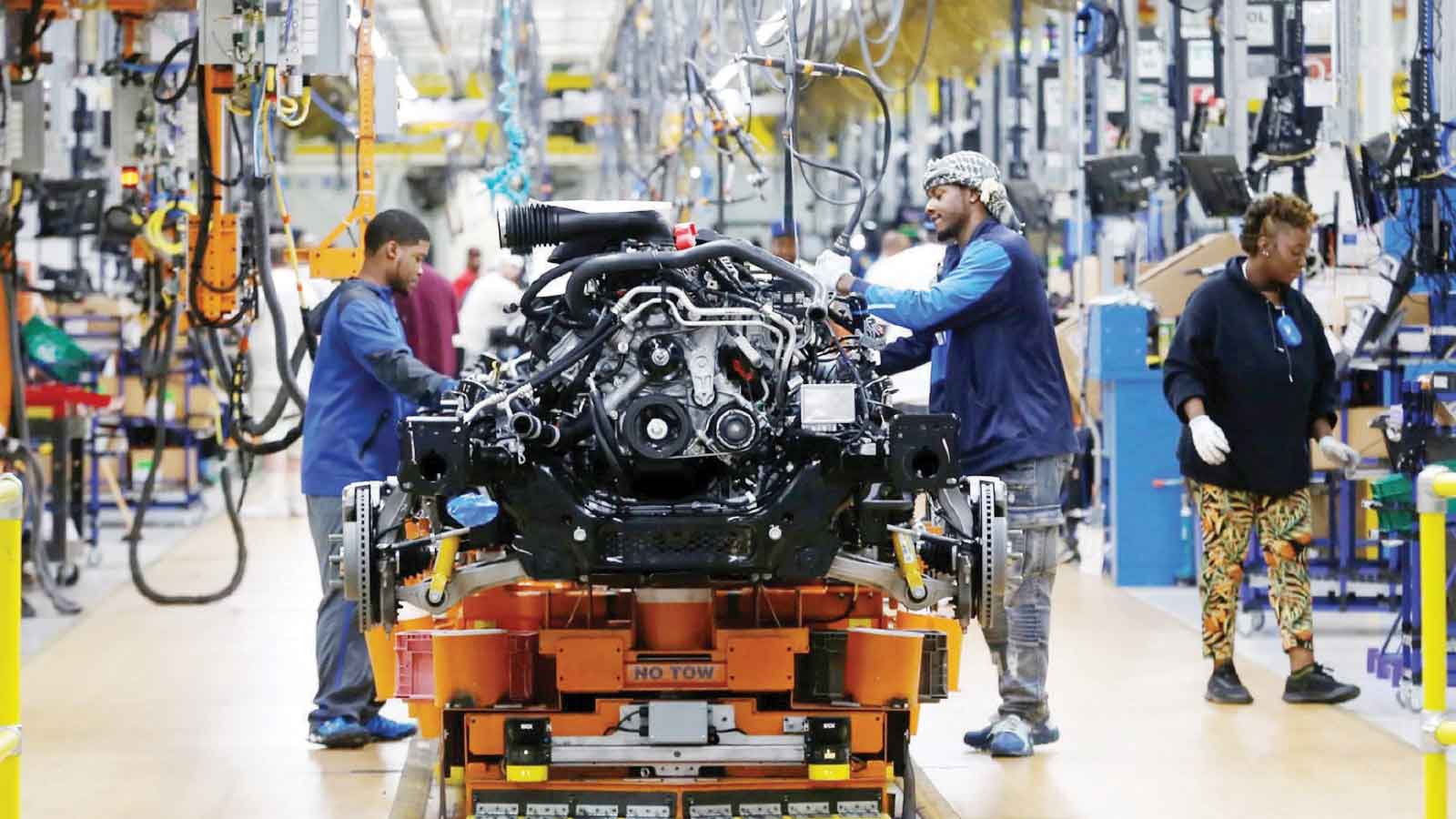
Who still remembers that at its peak, the local motor industry used to employ more than 50 000 people to assemble — not manufacture — vehicles that shaped the Zimbabwean economy, such as the Nissan range, Peugeot range, the Mazda range, as well as the Hino FF, AVM-DAF trucks and ERF trucks.
Principally involved in the passenger vehicles and small trucks manufacture and assembly was Quest Motor Corporation based in Mutare and Willowvale Mazda Motor Industry (WMMI) based in Harare, while large trucks and buses involved W Dahmer, Deven Engineering, WMMI, Zambezi Coachworks, Trinity Engineering, Hubert Davies, and Cummins.
Other supporting industries included steel and engineering firms, timber industry (for boards), paint and glue manufacturers, tyre manufacturers, as well as manufacturers of various components ranging from shock absorbers to springs, glass windows, plastics and rubber components, brake and clutch linings, fuel filters, tie rod ends, coated extile mats and fuel tanks.
These are the simple economics that create jobs and spur economic growth.
Zimbabwe’s drive to value-add and beneficiate its resources, as well as boost the manufacturing sector — the hallmarks of industrialisation — will, however, not be easy.
It will obviously be resisted by the shadowy forces that benefit from exploiting our resources.
Did you see how Statutory Instrument 87 of 2025 (Agricultural Marketing Authority [Grain, Oilseed and Products] [Amendment] Regulations, 2025) — which compels processors to source 40 percent and 100 percent of materials locally by April 1, 2026 and April 1, 2028, respectively — was resisted?
Unbeknown to many, there is a whole economic architecture that is built to profit on Zimbabwe’s failures.
In fact, there are many companies across the Limpopo that celebrate each time Zimbabwe is forced into drought-driven imports.
For them, Zimbabwe’s vulnerability consistently translates into revenue, market share and financial stability.
In the 2023/2024 marketing year alone, South African exports to Zimbabwe hit US$3,78 billion, with grains making up a significant portion.
A complex ecosystem of South African financial, insurance and commercial enterprises is designed to facilitate and profit from this flow of wealth northwards.
It is lucrative business.
Equally, manufacturing our own finished products means other destinations will be deprived of the raw materials that they would ordinarily use to keep their own people employed and keep the wheels of their economies turning.
So, this upheaval represents a threat to them and the current world order where resource-rich countries are considered a quarry for manufacturing hubs in the West and East.
No doubt, Zimbabwe, which is the vanguard of revolutionary ideals, can be trusted to successfully prosecute this new frontier of the continental struggle to industrialise.
We fought the longest and most intense armed struggle on the continent to be free.
We were also the first to reclaim our land from the colonisers.
We will also be the first country to embark on a true industrialisation programme on our way to prosperity.
Bishop out!