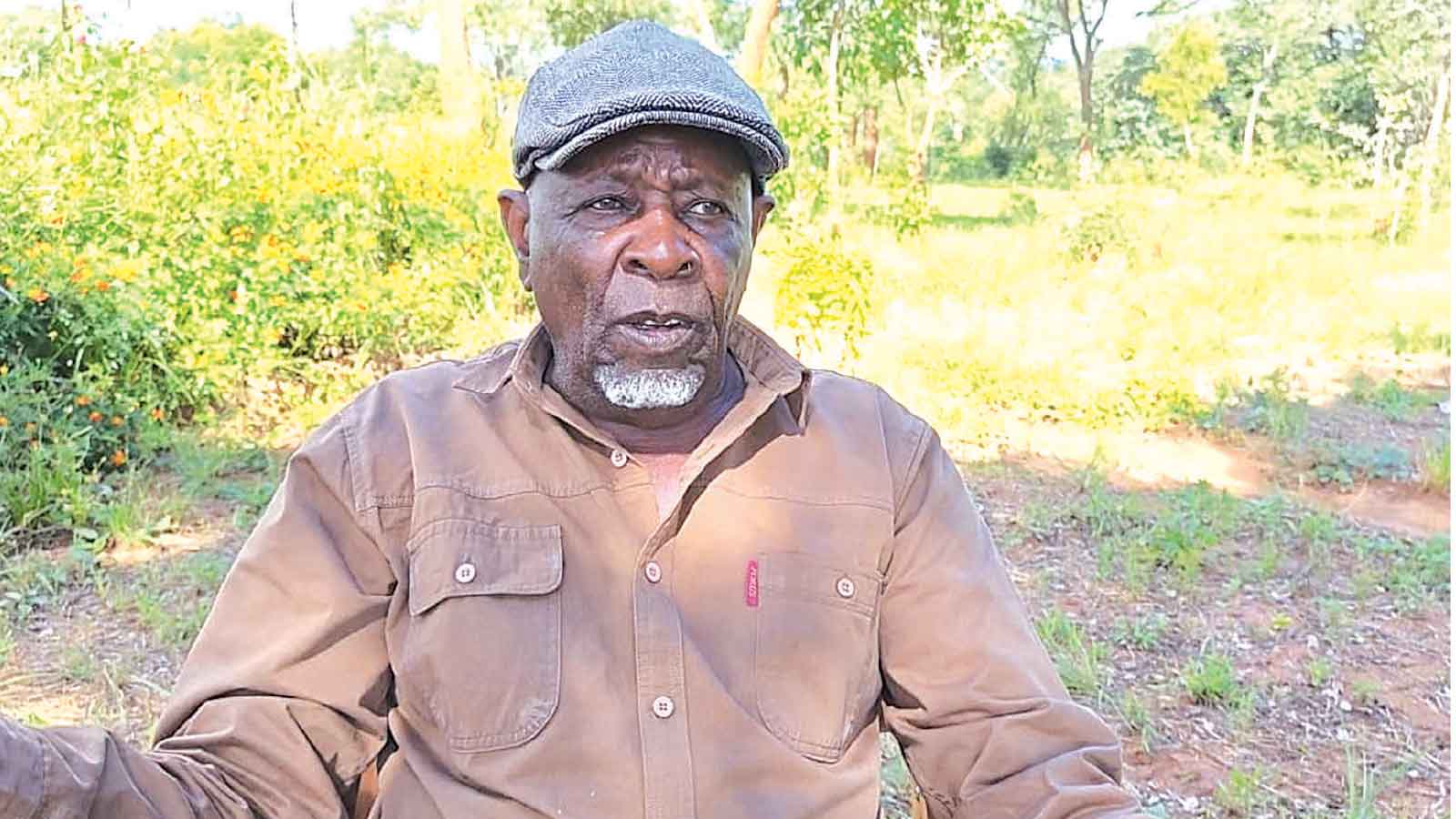
After describing how he and his fellow comrades bombed BP Shell oil tanks in December 1978, in a strike that dealt a blow to enemy forces, becoming both a devastating tactical setback for them and a monumental morale booster for liberation fighters, CDE DAVID MUSHANGWE, who used the nom de guerre Cde Lobo, this week wraps up his account by chronicling to Zimpapers Politics Hub’s KUDA BWITITI about the tense and dangerous days that followed the attack on oil tanks and last episodes of the struggle. He also pays tribute to his fallen comrades.
***************
Q: Where did you go after bombing the BP Shell oil tanks?
A: After deciding that it was no longer safe to be in Domboshava, we left the area and headed back to Mozambique. During the journey, we regularly met with other comrades in different areas and continued fighting battles against the enemy.
But there is one particular incident that I always remember with sadness. Not long after our exploits of bombing the tanks, there was a lady whom I met and she asked me to take her son to join the war, as we were heading to Mozambique. She actually begged me to do this.
At first, I was not keen, but she was persistent and said she would be glad for her son to be under my wing, since I was a seasoned fighter.
Q: What happened to the boy?
A: Unfortunately, he died during combat and the Rhodesian Security Forces took his body and desecrated it.
Q: Please tell us what happened?
A: They did not simply kill him. They erased him. They . . . dragged and discarded his body as one would a slaughtered beast.
They treated his body not as that of a human, but as if he were nothing more than an animal. They cut him apart. They cast the pieces into a big boiling pot . . .
To think of it even now is distressing. That a human being, who was keen to liberate his country, could be so cruelly killed brings sorrow that words cannot describe.
Knowing what they did to him — that pain never truly leaves you. What pained me more was that I was never able to meet the woman who had convinced me to recruit his son to offer my condolences. I also lost some friends, like Cdes Goronga and Ndebvu, during the battles that we fought. So, these were bittersweet moments that followed, even after the success of the bombing of the Salisbury oil tanks. After these incidents, we crossed into Mozambique, and this was now in 1979.
Q: What happened after you arrived in Mozambique in 1979?
A: After arriving in Mozambique, we spent some time there before we were deployed to Romania. So, for some months in 1979, I lived in Romania. It was whilst in Romania that the heaviest blow came.
The saddest moment during our stay in Romania was receiving news of General (Josiah) Tongogara’s death. It was a true tragedy — not just for us, but for the entire liberation movement. What made it even more painful was that our commander fell when we were so close, so very close, to tasting the sweetness of independence.
He had led us through the darkest hours, and yet he would not live to see the dawn. We could not come home for his funeral. That was the hardest part — being unable to stand beside our comrades, unable to pay our last respects in person.
So, we did the only thing we could. In a foreign land, surrounded by people who did not fully understand our pain, we mourned him. For an entire week, we grieved.
We held our own ceremonies. We remembered his voice, his courage, his sacrifice. Even now, the memory of that week stays with me — a time of deep sorrow, but also of quiet resolve. We mourned and remembered what he taught us in battle.
Q: When did you return from Romania?
A: I returned to the country in 1980, just after the elections that gave ZANU victory.
Q: After independence, many ex-combatants joined the armed forces. Did you pursue the same path?
A: I could have been attested into the Zimbabwe Defence Forces and other security forces, but I chose a different path.
For a while, I worked for the Zimbabwe Broadcasting Corporation (ZBC) as an engineer. In Romania, in 1979, I studied engineering as part of my courses, so that came in handy at the national broadcaster.
After I left ZBC, I worked for other companies. When the Land Reform Programme was introduced, I was allocated a piece of land in Mashonaland West province and I am presently an A2 farmer.
Q: Any last words?
A: I want to speak about the granting of hero status to those who fought in the liberation war. In my view, all comrades of the struggle deserve to be accorded the same hero status. Why? Because we fought side by side.
We suffered together in the bush. We sacrificed together — leaving our families, our homes and everything we had. We endured hunger, sickness and the constant threat of death.
And we did all of this for one reason: to free our country from oppression.
So, it is my firm and personal conviction that every comrade who took up arms in the struggle should be recognised equally as a hero. Not some honoured while others are forgotten.
But all of us, because without each one of us, victory would not have been possible.
Rhodesian security forces boiled the remains of a young recruit