Chronicle Editor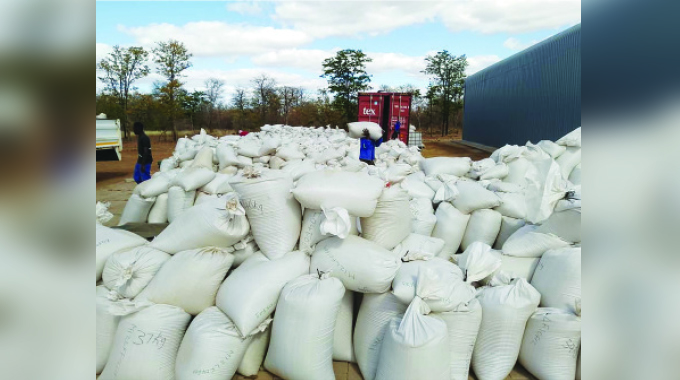
Vincent Gono in Mwenezi
THE Government’s rural industrialisation agenda has picked up pace in Mwenezi District, Masvingo Province with the completion and operationalisation of the US$550 000 agro-processing plant for paprika, sesame, spices and small-grain crops transforming the once largely remote rural area into one bustling with economic activity.
Potential for exports of the processed products has also been noted with enquiries from as far afield as Spain, Egypt and the USA.
The project, set up in Rutenga by the Sustainable Agriculture Technology (SAT) feeds into the Second Republic’s rural industrialisation initiative whose import is to see industrial activity being launched based on factor endowments that define and drive economic activity for the benefit of the local people.
The plant that was set up in Rutenga follows the Marula/Mapfura Processing and Value-Addition factory that was established by the Government in 2019 and has seen more than 500 villagers being actively involved economically during its peak period when the communities will be supplying the Marula/Mapfura fruit to the plant for processing.
Plans are at an advanced stage for the official opening of the agro-processing plant, tentatively by President Mnangagwa at least according to SAT Deputy Country Director, Mr Lloyd Masunda.
He confirmed in an interview that they have completed the agro-processing plant whose paprika component established under the PapriAfrika (Pvt) Limited banner would be one of the biggest plants in the country with a capacity to process 840 tonnes of milled paprika per year.

He said there would be several benefits to smallholder communal farmers in the district who would be responsible for feeding the plant with the crop.
“The paprika processing plant and sesame value addition centre have now been fully established and are operational at Rutenga Industrial Park in Mwenezi District. We have to date invested around US$550 000 in the paprika and sesame processing centres, with support from our funding partners.
“Currently, we are milling paprika pods and producing various sesame value-added products that include cleaned sesame seed, sesame oil, sesame cake for feeding livestock, and de-hulled sesame seed for the confectionery industry.
“These developments have been made possible with the support that Sustainable Agriculture Technology (SAT) has received from its donors including the Italian Agency for Development Co-operation (AICS), the Bubye Valley Conservancy (BVC) and Christian Aid,” he said.
He said the paprika processing plant and sesame value addition centre operate as two distinct businesses — PapriAfrika (Pvt) Limited and SesAfrika (Pvt) Limited respectively where farmers from the district have been offered shareholding capacity through their growers’ associations.
“Through their growers’ associations, smallholder farmers in Mwenezi have been given a shareholding of 24,5 percent in each of these businesses. The other 24,5 percent shareholding belongs to SAT, while the remaining 51 percent share is available for private sector partners who are willing to buy-in into these businesses.”
Mr Masunda said the targeted smallholder farmers have the capacity to supply raw materials to the two agro-processing plants after the farmers in Chiredzi, Mwenezi and Masvingo districts significantly increased the hectarage under paprika production in irrigation schemes.
“The paprika processing plant has the capacity to produce 840 000 kilogrammes of milled paprika per annum. The plant will target smallholder farmers in all paprika-producing areas in the country, including Makoni District, which had 1 575 hectares under small-scale paprika production in the 2023-2024 season,” he said adding that Mwenezi alone has over 400 hectares of irrigable land on smallholder irrigation schemes, all fully equipped with modern irrigation systems.
For sesame, he said there are at least 8 000 smallholder sesame producers in Chiredzi and Mwenezi districts alone while part of it will come from Bikita, Beitbridge, Gutu and Masvingo, which are also sesame-producing districts that lie within the sesame value addition centre’s catchment area.

In terms of benefits to the communities, he said the agro-processing plant offers a ready market for paprika and sesame at their doorstep and linkages to potential export markets in China and Japan, which have been facilitated by SAT.
In addition, he noted, the increased production of paprika and sesame has started to create massive seasonal employment opportunities for women and youths who will be engaged to provide various services across the two value chains.
Mr Masunda said already 17 youths have been employed full-time at the paprika and sesame processing centres at Rutenga while through their shareholding in PapriAfrika and SesAfrika, smallholder farmers will also receive a dividend annually on profits made by the two businesses.
He said they were expecting good business as they have already started exporting cleaned sesame seeds to Japan and China through Itochu Corporation and Surface Wilmar.
“This season, we have a target to supply up to 1 300 MT to these two market destinations. Aggregation and cleaning of the product is underway at present, with 200 MT already cleaned, aggregated and ready for shipment. We will continue to explore other export opportunities in the near future.
“For the paprika, we will begin with exports to South Africa soon and shall gradually expand to other market segments once the necessary food safety certifications at the paprika processing plant have been finalised.
“With support from the OAK Foundation, we will also be establishing a Youth Vocational Skills Training Centre Linked to Green Agricultural Technologies at Rutenga Industrial Park later this year.”
He said should resources permit, they would explore the feasibility of establishing a value-addition centre for small grains, which were available in huge quantities in Chiredzi and Mwenezi districts.
Senator, Chief Chitanga said the Mwenezi community was overly gratified by the developments that were taking shape in the district.
“Our communities are happy. There is a lot of development taking shape and transforming ordinary people’s lives. From the marula plant, now we have the agro-processing plant, all born out of the vision and philosophy of President Mnangagwa of leaving no-one and no place behind. For us, vision 2030 is a reality,” said Chief Chitanga.


 Online Reporter