

 Chronicle Editor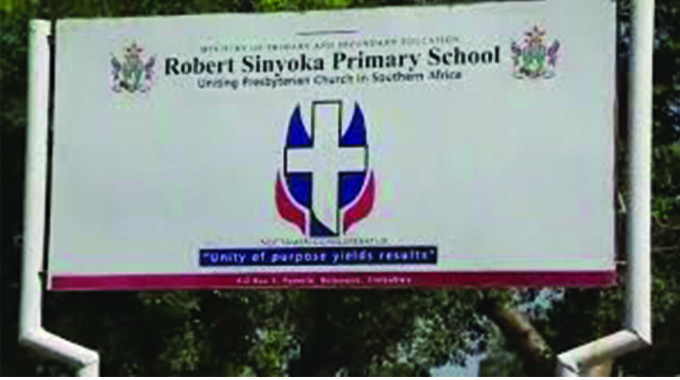
Ashley Phiri, [email protected]
THE peri-urban community of Robert Sinyoka on the outskirts of Bulawayo is undergoing a remarkable transformation through various projects in partnership with DREAMS (Determined, Resilient, Empowered, Aids-free, Mentored and Safe). The organisation’s Community School Education Partnership (COSEPA) project, which promotes community involvement, has turned Robert Sinyoka Primary School into a thriving hub of education and empowerment.
The school recently received 22 computers, bridging the digital divide and providing learners with access to a world of knowledge and information. The school’s headmistress, Mrs Senelisiwe Sibanda, noted that the children now have a better appreciation of Information Communication Technologies and are on par with their peers.
“Before we received the computers, we used to have eight outdated machines. The children used to gather around one machine and, as a result, they could not fully appreciate what they were learning,” she said.
“We are now noticing a big difference in the appreciation of computers by the children, and they seem happy now that they are grasping concepts their peers were grasping.”
DREAMS also donated a solar-powered borehole, providing a sustainable water source that has enabled the school to establish a flourishing vegetable garden.
The school has secured drip irrigation pipes to increase production.

The garden not only provides fresh, nutritious food for learners but also serves as a valuable learning tool. The all-weather solar system also powers the computer lab.
COSEPA is anchored on community participation, and the residents of Robert Sinyoka have embraced this concept wholeheartedly. Parents, teachers, and pupils are working together to improve their school, promoting a sense of ownership and pride.
“The heart of COSEPA is community ownership of projects. You see that the parents, students, and teachers want these projects to work. The understanding is that I may be transferred to a new school, but the community will still be here, so they take the projects seriously, and we are happy about how even the students have a sense of ownership of all the projects we have going on at the school,” said Mrs Sibanda.
Poverty has been a significant obstacle to education in the area, and in the past, many children would drop out of school. The deputy headmistress, Mrs Sibusisiwe Siziba, said the number of school drop-outs has significantly reduced since DREAMS stepped in.
“We used to have many children dropping out of school in recent years, but now that number is at zero.
We think the school feeding programme is helping keep the children in school,” she said.
“Some were dropping out because they could not concentrate when hungry, and some would have to leave school to look for food, but they no longer have that worry. You can tell even when you are teaching them that something has definitely changed in them, and we are thankful for the Government school feeding programme, which we supplement.”
The school’s story is one of resilience and determination. A few years ago, a parent who couldn’t afford school fees offered a turkey as payment. The school bought another turkey, and today, it has a thriving poultry project, with turkeys being reared and sold to generate funds for various school activities. At the height of the Covid-19 pandemic, the turkeys were sold to pay ancillary staff at the school, and now they are sold to locals to generate income to buy food for the learners. The school has 32 turkeys ranging from US$15 to US$25, depending on the size.
In addition to the turkeys, the school has established a chicken rearing project. The birds provide nourishment for the learners and are also a source of income for the school. Recognising that many learners in the area may not have the opportunity to pursue higher education, the school has introduced skills development programmes.
A local organisation, Virtuous Women, taught pupils how to make petroleum jelly, detergents, and reusable pads, equipping them with valuable life skills and preparing them for future employment.
The teacher responsible for the skills training, Mrs Miriam Tshuma, said the training has boosted the school’s self-sufficiency.
“I teach the children how to make petroleum jelly, detergents, and reusable sanitary pads. We do not sell the petroleum jelly but give it to the children free of charge. The detergents benefit the child-headed households, and we have a number of them here. The older children who do not go to secondary school also benefit from a skill they can use when they leave this place,” she said.
Robert Sinyoka Primary School’s commitment to education and community development has had a profound impact on the lives of its pupils and the broader community. One of the parents, Mrs Sithokozile Tshuma, who volunteers to cook for the children, said the school plays a huge role in uniting the community.
“Everyone in the community has somehow found a place here at the school. As you can see, we are here cooking, others are over by the garden expanding it, the children take turns taking care of the turkeys, feeding the chickens, and watering the garden. All these activities also keep people away from mischief,” she said.


 Blessing Chizhande
 Online Reporter