Chronicle Editor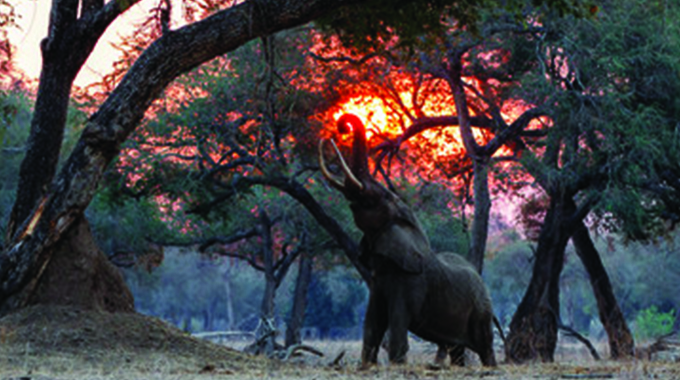
Johnson Siamachira, Harare (New Ziana)
IN the Lubu Village in the sweltering heat of the Zambezi Valley in Binga District, Matabeleland North Province, 81-year-old Mr Luckson Muzamba’s face contorts with pain as he recalls how elephants recently trampled his four close relatives to death.
Mr Muzamba, a traditional leader in this north-western Zimbabwe district, is at a loss for words. The elephants have become a menace to his people, he says, even much more than common diseases.
‘‘National laws often define many traditional hunters as ‘poachers’, causing much local anger,’’ Mr Muzamba says.
Mr Muzamba says again: “I believe national parks were created for the rich, who can still hunt in the parks and do whatever they want with wildlife. We didn’t even know the parks existed until the authorities started sending our people to prison for hunting. That’s when we found out we were not allowed to hunt the animals that were killing our livestock and at times people. Why didn’t anyone ask us what we thought? Then we might not have had these challenges.’’

The plight of Muzamba’s community is common to those people who live adjacent wildlife sanctuaries in Zimbabwe.
Stephen Chauke lives in Malipati, adjacent to Gonarezhou National Park in Chiredzi District in Masvingo Province.
‘‘In the past, we were not threatened by elephants, but now the population has increased so much and we live in fear everyday,’’ Chauke says.
Chauke also says: ‘’We feel the elephants should be culled so that we can be able to live in harmony with wildlife because if we plant our crops, the elephants come and destroy them and we will not have anything to harvest.’’
Zimbabwe’s wildlife-rich landscapes have long been a source of pride and a draw for ecotourism. But, the delicate balance between human and animal populations is under severe strain, with escalating conflicts that threaten both lives and livelihoods.
The country is home to an abundance of iconic African wildlife, including elephants, lions, leopards and rhinoceros. However, as human populations and settlements have expanded, the competition for scarce resources has intensified.
According to the Zimbabwe Parks and Wildlife Management Authority (ZimParks) reports of human-wildlife conflict have increased by 60 percent over the past decade.
‘‘We’re seeing more frequent incidents of elephants raiding crops, lions preying on livestock and even animals like baboons invading rural homesteads in search of food,’’ says Mr Tinashe Farawo, ZimParks spokesperson.
“This is a major challenge that impacts the lives and livelihoods of rural Zimbabweans.’’

The data paints a sombre picture. In 2021 alone, human-wildlife conflict resulted in 60 human fatalities and the loss of 7 000 livestock. Smallholder farmers like Muzamba have borne the brunt of these clashes.
“I lost two acres of my maize crop to elephants this past agricultural season. This is so devastating for my family’s food security and income. It’s pretty much gambling with nature,’’ he complains.
Mehluli Mudimba, of Hwange District also in Matabeleland North Province, shared his harrowing experiences: “We’re constantly encountering elephants in our communities and those with calves are more dangerous.”
Mudimba also lost six goats to raiding hyenas and he fears that the predators may return for more if remedial action is not taken, soon.
“I woke up one morning only to find six of my goats missing. The culprits were two hyenas that had dragged my goats out of the pen for a meal. We hear their sounds every night and I’m worried they might return,” Mudimba lamented.
ZimParks and conservation non-governmental organisations argue that the root causes of this escalating conflict lies in a combination of factors, including habitat loss, climate change effects and increasing competition for dwindling resources.
“As human settlements expand and natural ecosystems are fragmented, it is inevitable that animals will venture out of protected areas in search of food and water,’’ explains Mr Lungile Sibanda, acting director of the Communal Areas Management Programme For Indigenous Resources (Campfire) Association, a local community-based natural resources management programme.
“This puts them in direct contact with rural communities, sparking dangerous confrontations.’’
The authorities maintain that resolving this crisis requires a multi-pronged approach, including strengthening protected areas management, improving early warning systems and working closely with local communities to develop mitigation strategies.
‘‘We can’t simply fence off wildlife and expect the problem to go away,’’ says Mr Farawo.
“We need to empower communities to co-exist sustainably with nature, while also addressing the broader conservation challenges facing Zimbabwe’s ecosystems.’’
Currently, the Government is proposing a human-wildlife conflict compensation package. The Human Wildlife Conflict Relief Fund is a proposed financial window aimed at providing monetary relief to victims of human-wildlife conflict. The proposed fund is part of the Parks and Wildlife Amendment Bill, which seeks to address the growing concern of human-wildlife conflict in the country.
Beyond the Government’s efforts, various local organisations are stepping up to support communities impacted by human-wildlife conflict.
‘‘One of the strategies we are employing to mitigate human-wildlife conflict is using chilli as a deterrent for elephants,”’ said Maxwell Phiri, the Zimbabwe site co-ordinator of the Sustainable Wildlife Management Programme.
The chilli technology involves hanging chilli-infused strings across known elephant routes near cultivated areas to deter their entry into fields.
The Zambezi Society has trained villagers in using beehive fences and other non-lethal deterrents to protect their crops and livestock from wildlife raids, empowering communities to take an active role in protecting their livelihoods.
Other conservation efforts are creating direct economic benefits for communities living near wildlife areas, such as ecotourism revenue sharing. This helps to boost wildlife conservation.
The Government and its conservation partners, are pushing for a paradigm shift and trying to ensure a better balance between biodiversity and development, which are interdependent.
Involving local stakeholders must not be just for show. It has to be central to collective decision-making and protected areas management practices.
This shift is necessary to “decolonise” the current conservation paradigm once and for all, since by imposing community-based anti-poaching programmes, for example, it merely promotes conservation-oriented activities while cutting local communities off from their traditional culture and agriculture practices. This situation locks conservation practices into dominant top-down and often unjust systems with little chance of long-term sustainability.
Above all, this is a matter of social and environmental justice.
“People living on the fringes of protected areas must be allowed to defend their rights just like anyone else,” adds Campfire Association’s Sibanda.
‘‘It’s about finding creative solutions that balance the needs of people and wildlife,’’ says Sibanda. ‘‘We’re working to build a future where humans and wildlife can co-exist, rather than being locked in a perpetual cycle of conflict.’’
As Zimbabwe navigates this delicate challenge, the call for collaborative, community-based approaches has grown louder. With the support of conservation partners and a renewed commitment to sustainable land management, the country’s fragile co-existence between people and wildlife may yet be restored.


 Online Reporter