admin
admin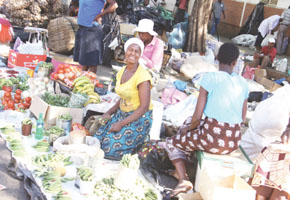
Goods that were previously sold in the city’s supermarkets have stretched to occupy almost every corner and street of the city as more vendors have taken the initiative of selling as a source of livelihood.
These vendors seem to know no boundary as any spot that has potential for business has become a marketplace for them to sell various kinds of foodstuffs. They have turned out in large numbers, turning Egodini terminus into a vibrant marketplace as well as various bus terminuses in the high-density areas.
While the vendors are pursuing their entrepreneurial activities, residents believe the city council is failing to rise up to the situation. They believe the council is not sufficiently monitoring the suitability of these areas for being selling points.
Mrs Nozipho Benge, a Bulawayo resident, said there were some foodstuffs that were being sold in unsuitable areas and this was going by unnoticed on a daily basis.
“It seems as though any environment has suddenly become suitable for selling food that people are expected to eat. Vendors are selling curdled milk (amasi) in buckets at Egodini on a daily basis.
They barely close those buckets in that extremely congested and polluted area because they want to attract potential customers.
“That very same area they sell from is where people rush by when they board kombis, some people would be coughing and others smoking and passers-by go on to buy food exposed in such a manner,” said Mrs Benge.
She said food was being moved from proper selling points to improper places where the vendors were only concerned with selling their goods regardless of the possible health repercussions which their activities might pose to people who buy from them.
“Those people who sell from Egodini do not handle their goods properly. Some of these people are operating without stands and when the police do their check-ups they run away and hide their goods in nearby toilets. In the process some of the stuff they sell falls on the toilet floors and they just pick it up and that is what we are expected to buy,” said Mrs Benge.
A number of selling points have emerged in many places with vendors selling a whole range of foodstuffs, including wild fruits, vegetables, roasted maize, meat and fish.
Mr Vusa Mlilo said he believed the city council had to closely consider the environment which vendors wanted to operate from and the kind of goods they intended to sell before giving them the go-ahead to operate.
“I think there is some kind of laxity on the part of the city council with regards to the preservation of health in selling areas. The city council seems to be just giving stands to people without even inquiring on what they intend to sell and the places they are selling from.
“Today we see vendors selling fruits and roasting maize which they sell to people from areas like Egodini. I wonder where these vendors wash their hands after using the toilets because I have never seen a tap in the area. To make it worse children buy fruits from such areas and they move on to eat those fruits without washing them,” said Mr Mlilo.
In most high-density suburbs goods such as milk, meat and bread are being sold at bus terminuses from the stands that the council awarded to vendors.
Vendors that have been awarded stands are expected to pay rentals to the city council on a monthly basis. Some vendors who received stands for the purpose of selling clothing from Egodini area pay $14 per month while those who sell foodstuffs pay $10.
More and more people are venturing into the informal sector in order to sustain their families due to the high unemployment in the country. As a result vending has become an important source of employment in urban areas as it requires low skills as well as little capital.
The informal sector has therefore been regarded as crucial to achieving broader development objectives such as poverty alleviation, unemployment and improving the welfare of vulnerable groups such as women and children.
Mrs Irene Mugadza said the city council did not only have to focus on collecting rental fees from vendors only but also on supervising selling areas.
“The city council has to fully take up its role of channelling the preservation of a healthy environment in the city’s selling areas because that is a crucial duty,” she said.
Mrs Mugadza said the council had to set up proper complexes as selling points rather than allowing people to sell food directly from the ground.
“Vendors have to sell from complexes because they are the proper selling sites. The government is saying people have to be empowered to work for themselves, let people utilise unused buildings in the city as selling points.
“The council should not just give vendors selling points for the sake of it, but rather proper selling points and they have to be strict on how these points are maintained,” said Mrs Mugadza.
Mrs Benge said selling food from improper selling points was affecting the standards of the city.
“Imagine what the city would look like if almost every street is turned into a selling area where you can find meat, milk and fish. Meat has to be sold from butcheries and stores because it should be inspected before being sold to people.
“If all of these goods are not properly stored and handled they can become poisonous causing illnesses such as diarrhoea,” said Mrs Benge.



 Online Reporter