admin
admin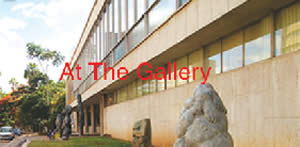 When one is creative and considering to make use of their inventive skills as a means of expression and a tool to leading a sustainable way of living amidst an ever unpredictable financial environment what avenue must they take? Considering enrolment with the National Gallery School of Visual Arts and Design Short Course in Visual Arts and Design would be the natural path to pursue as it grants the prospective student with a Certificate of Competence at the end of one year duration of the course that not only equips them with a basic understanding of art but provides the prospective artist access to furthering their artistic endeavours at numerous institutions locally, regionally and internationally.
The course offers the prospective student the means and modes to navigate the creative industry so as to not only express themselves in a visual way but to enhance their networking skills, educate them in entrepreneurship and train them to be functional cogs in the nation’s economic machinery. The qualification aids the artist in developing their levels of understanding the sub-sector by engaging them with a tutorial and teaching staff that consists of art industry professionals who bear expansive knowledge and skill.
The National Gallery School of Visual Arts and Design application form is available for collection at the National Gallery of Zimbabwe branches in Harare, Bulawayo and Mutare and applicants must be over 16 years of age. Eligibility for enrolment entails the ability by the applicant to speak and write in English and most importantly the applicant must provide a Portfolio of no more than Ten (10) artworks that have preferably been done within the last calendar year.
With regards to the application process, the National Gallery School of Visual Arts and Design also requires a Letter of Motivation in which the prospective student outlines their reason for pursuing the Visual Arts course and what interests they have in taking the course. The Short Course Certificate in Visual Arts and Design is a Full Time Course and requires the utmost dedication and attention in order for one to develop their stylistic and technical abilities with all different kinds of media.
The practical component of the course identifies the prospective student’s ability to draw, paint and create designs with understanding of the principles and elements of art. These basic templates develop the prospective student’s ability to branch out into print-making, photography and sculpture as the capability to execute the basic components expand into successfully handling the diversity of techniques the course has to offer.
The prospective student must take note of the various influential artists who have passed through the studios of the school, among them the likes of the late Luis Meque, Charles Kamangwana, the late Hilary Kashiri, Lovemore Kambudzi and Tonely Ngwenya, Semina Mpofu, Chikonzero Chazunguza, Portia Zvavahera, Fasoni Sibanda, Mercy Moyo, Obert Muringani, Admire Kamudzengerere and Virginia Chihotaall of whom have become internationally known and acclaimed artists.
Notably enrolment can expose the prospective student to greater opportunities such as in Kamudzengerere’s case of being selected at the Rijksakademie in the Netherlands, Zvavahera’s winning the FNB Art Prize in South Africa and exhibiting at the Johannesburg Art Fair as the Main exhibition or her and Chihota’s participation at the Mediations Biennale in Poland.
The opportunities that are connected to receiving a formal art education are endless and aside from breaking deeply rooted misconceptions pertaining to the practice of art being for the uneducated, however the artist is a complex being in society as they create from three types of capital namely human, social and cultural capital.
Arguably the trained artist has the capability to operate at a low budget whilst creating quality, export ready artwork. The trained artist will know how to communicate with funding structures and how to follow their procedures in order to effectively pursue their practice.
Among practicing visual artists it has been found that at least 21% have received formal training whereas informal practitioners account for about 49 percent attaining Secondary education.
The National Gallery School of Visual Arts and Design’s intake pays particular attention to the prospective student’s talent, hence the need for the Portfolio of work. Development of artistic talent becomes key by identifying the prospective student’s strong-points and weaknesses without emphatic regards to curricular merit.
The importance of the development of talent takes centre stage at the National Gallery School of Visual Arts and Design and if one has considered guidance in their artistic pursuits and education the School is the best place offering professional faculties to develop art with a properly structured approach to aiding the prospective student.



 Online Reporter