

 admin
admin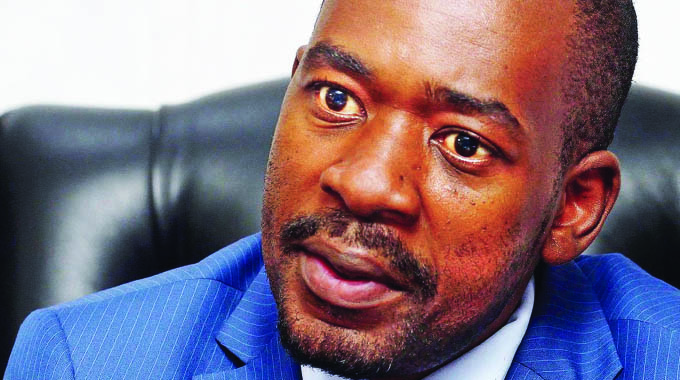
Nobleman Runyanga
Over the past two weeks, the social media has been abuzz with the words “constitution” and “congress” with respect to the opposition outfit, the Citizens Coalition for Change (CCC).
This arose from CCC leader’s refusal to hold an elective congress to select substantive leadership ahead of the 2023 polls citing infiltration and lack of resources.
The internal conflict has exposed to the world the massive fissures in the opposition party and Chamisa’s despotic tendencies.
They say the more things change, the more they remain the same.
It is MDC/CCC tradition that any member who holds a contrary view to the majority is labelled an infiltrator from ZANU PF or the Central Intelligence Organisation (CIO).
It is, therefore, not surprising that those CCC members who are pushing for the elective congress are being conveniently called ZANU PF or CIO projects.
In a bid to create negativity and unattractiveness around the otherwise noble and democratic process of an elective congress, CCC’s leaders such as interim spokesperson and her deputy, Fadzai Mahere and Gift Siziba respectively, have been at the forefront calling it a CIO and ZANU PF project.
The intention is obviously to ensure that as many members as possible hate and criticise it thereby ensuring that the congress is delayed for as soon as possible in line with Chamisa’s wishes.
The party’s interim secretary general, Chalton Hwende has weighed in claiming that the opposition outfit does not have the necessary financial resources to hold the congress.
Much as Mahere and Siziba may believe their own propaganda, the world knows that most of the increasing calls for an elective congress are coming from within some ambitious and restive interim leaders like Tendai Biti as well as some grassroots members of the party.
Mahere and her excitable deputy should know that no amount of besmirching the congress by throwing in the names of CIO and ZANU PF will diminish the justification for holding it.
Contrary to Mahere and Siziba’s claims, the only external source of pressure to hold the congress is coming the retinue of self-exiled and tired G40 members such as Professor Jonathan Moyo and Walter Mzembi.
Their involvement is obviously being driven by the need to strengthen Chamisa and the CCC in the fervent but misplaced hope that he will unseat President Emmerson Mnangagwa for them in 2023.
The G40 spent forces are also opportunistically using the internal conflict in the CCC to wring some non-existent political relevance to prop up their waning careers.
When the Maheres and the Sibandas demonise the elective congress, it sounds as if it is concept from hell, which is being forced on the party by its opponent, ZANU PF.
A respected political analyst, Methuseli Moyo recently explained the importance of a congress when he said: “A congress is what constitutes a party, appoints persons into position to exercise power and administration of party affairs. One wonders how CCC will constitute itself and delegate authority to office bearers.”
The analyst further highlighted that in the absence of a congress, “CCC remains a collection of friends deploying each other into positions.
As such, they would be handicapped to challenge Zanu PF on any issue to do with democracy and procedure.”
Moyo indicated that without holding an elective congress, the CCC and its leadership had no one’s mandate to carry out any political activities.
Even the United Kingdom-based law lecturer and dyed-in-the-wool MDC/CCC supporter, Alex Magaisa opined that CCC should hold an elective congress but emphasised that this must be preceded and undergirded by the crafting of a party constitution.
Young African opposition politicians such as Chamisa, Mmusi Maimane of South Africa and Robert Kyagulanyi Ssentamu (Bobi Wine) of Uganda often use the term “despot” to refer to incumbent African leaders in a blanket manner.
Despotism has become synonymous with sitting African leaders not because each of them is a despot but because of political stereotype.
Interestingly, while the opposition and the media are stuck with the stereotype, real despots are sprouting and flourishing among the opposition ranks including in Zimbabwe.
One fine example of this is the case of Chamisa.
While many members of his party regretted being forced to change the name, symbol and colour of their outfit, Chamisa inwardly celebrated and cherished the opportunity to ditch the word “democratic” from the name of the party because he does not believe in democracy.
He created an impression of foregrounding, prioritising and putting ordinary people at the centre of the party’s activities by including the word “Citizens” in the name of the party.
If Chamisa and his party really believed in the superiority of their members, why were they (the people) barred from participating in choosing the party’s name, symbol, slogan and colour?
As things stand, the party is a two people affair. It is a Chamisa and Mahere political project where other interim senior leaders are just supporting something they cannot confidently claim ownership of. They would have a sense of ownership of the party if the yellow colour, which Mahere used for her 2018 Mount Pleasant election campaign, was not used as the new party’s official colour.
Mahere looms large over both Chamisa and the party, a situation which has created speculation that she is poised to take over one of the Vice President’s positions.
This has obviously left many senior CCC members wondering where this would leave them.
It is this anxiety which is forcing them to push for an elective congress as soon as possible so that they can establish their fate.
All this has nothing to do with the CIO or ZANU PF.
Although it was forced on him by Mwonzora, the CCC project came as both a bane and a boon for Chamisa as it enabled him to consolidate and entrench his stranglehold on the party even if it means tossing the democracy rule book through the window.
In any case, he is not new to trashing internal democracy after wrestling the party from its then rightful heiress, Dr Thokozani Khupe in February 2018 following the death of the MDC founding leader, Morgan Tsvangirai on 14 February 2018.
It is not surprising that upon renaming the party, Chamisa suspended the previous leadership structures leaving the previous incumbents leading in an interim capacity.
He knows that the elective congress could leave people like Biti in very strategic and powerful positions that would make it difficult for him to keep them on leash.
It is this fear of those around him that has seen him hesitating to craft the party’s ideology and constitution. The congress can only be held in line with the provisions of a constitution. All this has nothing to do with the CIO or ZANU PF.
Chamisa’s decision to put off the party’s elective congress to sometime after next year’s polls serves to further expose his undemocratic tendencies.
Many will remember that in the run up to his party’s Gweru congress in May 2019, he ordered nocturnal provincial conferences which he attended to enable him to force his own preferred candidates on provinces.
Prior to that, in 2018 he rode roughshod over both MDC Alliance candidates and those from other alliance parties by allocating and re-allocating constituencies at will to ensure that his preferred candidates were assigned to constituencies which the opposition stood better chances of winning.
After the 2018 elections, Chamisa tried to force his own choice of mayors for Bulawayo, Chitungwiza, Masvingo and Victoria Falls in blatant disregard of the fact that the councillors who voted for the winning mayors did so on behalf of the residents of the cities and towns.
Residents and the electorate get councillors into council chambers by their votes.
When councillors vote for mayors they do so on behalf of those who voted for them. Trying to override this set up as part of a political party’s internal fights constitutes gross disregard for the sacrosanct principle of democracy.
If Chamisa succeeds in holding the elective congress in abeyance until after next year’s polls, he will have to personally oversee who contests in which ward and constituency in the 2023 plebiscite because he has appointed himself the sole signatory to candidates’ papers. This was caused by the double candidate issue which bedevilled Bulawayo and Masvingo ahead of the 26 March by-election and his penchant for absolute power.
Whether or not Chamisa will finally give in to internal pressure and hold the elective congress ahead of next year’s elections is not a main issue.
What matters most is the fact that the issue has exposed him for who he is – a young despot and a sworn enemy of democracy.
Some may have been excited by the bright yellow colour of the renamed party but a leopard does not change its spots. Just three months on and Chamisa’s true colours have been hung out in the open for all to see.
This should serve as a warning to the electorate ahead of the beckoning 2023 harmonised general elections.


 Online Reporter
 dyton mupawaenda