Chronicle Editor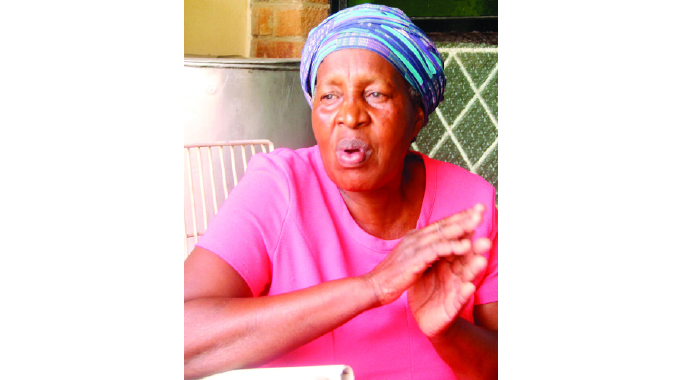
WHEN Cde Phinah Sibanda (nee Malaba) left the country to join the armed struggle in Zambia via Botswana in 1977 she walked all the way from Bulawayo to the then Rhodesia-Botswana border and little did she know that she would return to then Rhodesia, a country whose policies she resented in a regime chopper as a captive. Cde Sibanda was one of the eight female ZPRA guerillas who were captured on 19 October 1978 when the Rhodesian regime launched a ground and aerial attack on Mkushi, soon after a similar raid a few hours before on Freedom Camp (FC), another ZPRA military facility near the Zambian capital, Lusaka. Besides the eight female combatants captured at Mkushi, there was also Cde Ntatshana, a veteran male guerilla who was Mkushi’s chief of logistics. On Tuesday last week our Assistant Editor Mkhululi Sibanda (MS) traced Cde Sibanda, who is married to another former ZPRA guerrilla and instructor at Mkushi, Cde Kumbirai (Lucky Sibanda) where she gave an account of the ordeal she went through after the Rhodesian forces smoked her out from a thicket she had sought refuge from during the incessant raid. Cde Sibanda says she was lucky to come out of Mkushi alive as some of the women or girls as they are commonly called were summarily shot in cold blood by the Rhodesian forces despite the fact they had surrendered. She said those that had been rounded up were made to stand in a queue and summarily executed. The soft-spoken Cde Sibanda says from Mkushi they were flown to Kariba where they were kept for two days during which one of the female combatant succumbed to her injuries as no medical assistance was rendered to her despite the condition she was in. Below are excerpts of the interview. Read on….
MS: As we begin our interview may you start by giving us your background.
Cde Sibanda: I was born Phinah Ncube Malaba on 11 November 1959 at Mapulubusi Line under Chief Ngqoya in Tsholotsho District, Matabeleland North Province. I did my primary education at the local school, Nembe from Grade One up to Seven which I completed in 1973. From Nembe that was in 1974 I proceeded to St Lukes in Lupane where I did a course in Home Craft which involved learning about cooking, sewing and home care. The following year which was 1975 I came to Bulawayo where I enrolled for a course in Red Cross at St Patrick’s in Makokoba. It was during my stay here in Bulawayo that I became politically active as a Zapu youth in Old Magwegwe. I then left for the war in 1977 and by that time I was supposed to go and train as a nurse at St Lukes. My father, John Malaba had given me the money to go and start there. But because of the prevailing situation I decided against doing nursing and chose to join the armed struggle. I took the money that my father had given me and left the country in a group of 20 recruits.
MS: Tell us how you managed to organise yourselves to leave the country.
Cde Sibanda: There were people who were doing the recruiting and facilitating that youths leave the country to join the armed struggle. In Old Magwegwe those who were active include Molly Mpofu who is now a Senator in Parliament and another Mpofu who was later arrested by the Smith and sentenced to death. These two were part of the people who were doing a lot of mobilisation. The interesting thing about Molly Mpofu is that she later on left the country to join the armed struggle where she found me a trained person and I in turn had to take her through her paces, I trained her. But she did not stay long as she was chosen to undergo commissariat training in the then Germany Democratic Republic (GDR). The other person who drove the youths into animals and gave one the urge to leave the country was Jane Ngwenya, the national heroine. She used to broadcast her messages calling on Zimbabweans to leave the country and cross the border to join the armed struggle. It was a marvel to listen to Jane Ngwenya over the radio. She made things seem simple as if the moment you got to Zambia you will soon be armed and sent back home to do the fighting. The way her message was packaged excited a lot of youths including myself.
MS: Then take us through your journey to the war.
Cde Sibanda: It was on a Friday when we were told to go to a secluded area near Bellevue here in Bulawayo to meet others as well as guerillas who will escort us to Botswana. All that was organised by cadres such as Molly Mpofu. I left Old Magwegwe with my friends, Martha and Khethiwe for Bellevue. When we got there we had to wait for those who were knocking off from work especially in the industries. Finally our number was about 20 and I remember well, girls we were only seven, the majority being men, in addition to that there were two guerillas. We then walked all the way from Bulawayo to the border with Botswana. We left Bulawayo on Friday and got to the border on Monday. We would move at night and lie low during the day to avoid being detected by the Rhodesian forces. On that Monday we crossed the border near Ramokgwebana Border Post. Across in Botswana the guerillas spilt the group into smaller numbers. As we were walking along the road, a van picked us. We were eventually taken to Selibe-Phikwe. It was at Selibe-Phikwe where we were asked which party we were there for. If one chose Zapu like we did, he or she would be taken to Zambia and if one settled for Zanu, then he or she would be taken to Mozambique. I think we spent three or four days before we were flown to Zambia.
MS: Tell us about your arrival in Zambia and what you went through.
Cde Sibanda: When we got to Lusaka International Airport we marvelled what we saw there. The first time being at an airport brought a lot of excitement to us. However, our joy was short-lived when we were put in trucks and driven to the Victory Camp (VC). That is when it dawned on us that the situation had changed. VC as others have said in this column was teeming with people, women from all walks of life. On our first day I remember we were given isitshwala with the relish being salt, salt yes. That was a great departure from what we had been having in Botswana where we would have isitshwala with either beans or fish. The argument of giving us salt was a funny one, the authorities would say salt would make our knees strong. It was just an excuse. Babesithi isawudo liqinisa amadolo. We were then given two blankets each and told to go to a large structure which was called Big Bhawa. We were told to look for a place to sleep there. That is where I came face to face with lice, intwala which cadres called Comrade because we learnt to live with intwala. As for bathing we will get into the showers in groups and the time given was very short. It was at Mkushi where I came across my aunt, Thandiwe Mtshede, who was the wife of Tshangane (late Major-General Jevan Maseko). She was staying in Lusaka and on seeing me she made all the efforts to persuade me not to go for military life, saying I should go and continue with my education. She was a teacher. I was not interested in that as ngangile shungu of fighting the Smith regime. Later On I was taken to Mkushi in the first group of girls to train there. We are the ones who opened that camp. However, I was not supposed to be part of that group.
MS: So how did you manage to find yourself there?
Cde Sibanda: I was not part of the girls that were chosen by the ZPRA Chief Training and Personnel, Cephas Cele. But because I was eager to go for training I cheated the system by sneaking through and boarding the trucks to Mkushi. I was not the only one who did that.
To be continued next week with Cde Sibanda narrating how she was captured when Mkushi was bombed on 19 October 1978 and the trauma she went through in seeing her captured colleagues summarily executed.


 Online Reporter