Chronicle Editor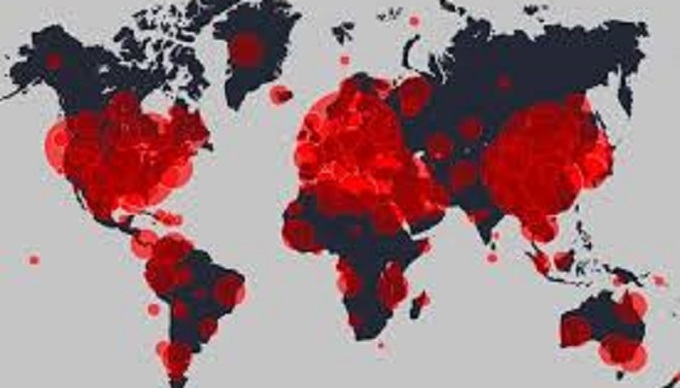
Cetshwayo Zindabazezwe Mabhena
FROM the Great Plague of London that lasted from 1665 to 1666 to the present coronavirus pandemic we can draw the lesson that there is never enough knowledge about diseases. What we certainly know about the coronavirus for instance is the truth that we don’t know enough about it. Biological and medical scientists are the first, usually, to warn us that a lot is yet to be understood and known about the present pandemic.
The Great Plague of London is said to have been part of the large family of bubonic diseases that are supposed to have originated in Central Asia around 1331 which was the year that has gone down in history as the year of Black Death. Pandemics have always been with us. We have also seen swine flu, ebola and HIV/Aids. What may differ from place to place and time to time is the scale of their severity and the death toll that they levy on the human population.
But when pandemics arise and take their toll they always appear new and novel in their emergence and human punishment. No matter how old a part of humanity death and disease are they always appear new as the human mind and psychology resists to make them a familiar part of life. Disease and death are permanent strangers in our world. So much information, rumours, fake news, alternative facts and myths about the coronavirus are in circulation.
What is scarce is truth and knowledge about the marauding pandemic. Yet what we need to navigate ourselves out of the deathly storm of the pandemic is truth and knowledge about the disease. What makes us worse off and in a much more vertiginous situation than the people that were befell by other plagues is that our age is the era of the social media that can be very anti-social when it comes to circulating rumours, myths and such other unhelpful data. A total absence of information is far better than mountains and mountains of untrue and misleading ideas.
Calm down and panic please!
In his useful book of 2020: Pan(ic)demic, Slavoj Zizek makes the interesting observation concerning that the political and medical leaders of the world keep telling people to calm down and not panic on the one hand. On the other hand the statistics, figures about the sick and the dying, are actually alarmingly inciting people to do the normal thing which is to panic. Typical of the showy but real Slovenian philosopher, Zizek forces us to ask the question: Who is lying to us, the world medical and political leaders or the statistics? At a world scale the present coronavirus statistics are not comforting at all but actually alarming. Political leaders and medical leaders are adamant that we should behave accordingly (keep social distance, wash our bodies and hands, sanitise, wear masks and avoid infection) otherwise soon enough we should be fine again. That is the politically correct message.
What will interest the regular political thinker and philosopher is that in his meditations on political power and rule in the Republic, Plato opined that the only people that may be forgiven for lying to the public are political leaders and medical scientists, as long as the lies are for the good of all.
Plato famously and also infamously made the distinction between ignoble and noble lies. Ignoble lies are self-serving and evil lies that are hated by the gods and by man. Noble lies are those right untruths whose intention is the greater good of all. The whole idea that medical and political leaders of the world might be lying to us, for our own good, and so that we remain calm in the storm of sickness and death, may itself be cause for alarm and panic.
I perfectly agree with Zizek that sometimes panic might be necessary if it is especially based on the truth of our dire situation and can get us to quickly behave in a manner that is true to the disaster before us. So many of us are not observing social distance rules, the hygienic demands and necessary rituals of sanitising and wearing masks because we are cool and calm. What we urgently need is to panic at what might actually be approaching mass death at a world scale. Besides taking down what might be comforting news and myths from powerful world leaders and scientists, Zizek suggests, we must know when the statistics end and when ideology begins. By that Zizek means that scientists and politicians might take the world on an ideological ride when what is needed is that we look our disaster and tragedy in the eye and panic accordingly to save ourselves and the world.
Let’s do our part: Khumbulani
Nkosiyami Moyo
Away from statistics, medical and political ideologies, the coronavirus is a dead serious threat to humanity. What makes it more deadly and demanding is that we know little truth about it. Like war that proverbially should not be left to the Generals and the soldiers, the struggle against coronavirus should not be left to medical and political leaders of the world; we all should play our part. In this section of my short article I want to resort to an important contribution by a scientist and medical professional that is known to me, a son of Bulawayo. I have known the fellow from our green days at the University of Zimbabwe.
I was finding my toes into literature and philosophy while he was getting lost in the medical and biological sciences. In my green mind I used to worry about such young people that had to work with sick and dead bodies as part of their studies when we were only perusing literary classics for the fear of ignorance and love of wisdom. The medical profession has taken Khumbu to many countries and back. He is now Chief of Party at Right to Care South Africa, a large medical and scientific entity.
He lives with his family in my neighbourhood of the North of Pretoria. On his Facebook Wall, Khumbulani Nkosiyami Moyo posted thus: “in January, we heard of the novel coronavirus in China, in February we heard about infections outside China, in March we heard of a first case in RSA (South Africa), By end March we were in lockdown, in April we heard of someone we knew going for test, in May we knew someone who had tested positive, in June we heard of someone who lost a loved one to Covid-19, in July we are learning on a regular basis of someone we know succumbing to it.
It gets real as it gets closer to home. Let’s do our part.” I have no immediate intention to dilute the cold and dry words of Doctor Khumbulani Nkosiyami Moyo. What I can do with humility is to add that contrary to prevalent opinion coronavirus is not at all a distant problem that concerns other people somewhere. It is our very own problem that is here to be encountered and solved. This “thing” as we frequently refer to it will not commit suicide. Medical scientists and other experts such as Khumbu should keep alerting and reminding us of our part that we have to do.
Behold the new barbarism
Coronavirus is serious for the world and humanity. We should look at it like the Flood of Noah from which a few “chosen” people will be saved. Two strong reactions to the threat of the virus have arisen. One is religious and another scientific. Religiously some people believe it is God and nature punishing humanity or just judging and culling the human population. Scientifically some of us believe that one day soon science will save us as a new powerful vaccine will be announced and we will be healthy and happy ever after. There is no political or philosophical profit in debating which option is better. What is profitable is not post-political beliefs in the messianism of science or religion.
The call of this moment is human agency. Each one of us has to do something. As people get sick and some die those that are well including medical practitioners keep careful distance from them, which is politeness for really getting as away from them as possible. This is what Zizek calls the “new barbarism” and survival of the fittest paradigm. Not only sick, dying and dead bodies are being shunned but some countries are abandoning others. It is an every country for itself stampede as the virus escalates. The just and ethical response should be that of international human solidarity. The pandemic is forcing us to think and act in post-national terms that are human terms, national borders and divisions can only disturb and not enhance our fight. It is tragic and inhuman to keep the belief that the coronavirus is a disease of other people somewhere and not our problem.
Cetshwayo Zindabazezwe Mabhena writes from Gezina, in Pretoria: [email protected]


 Online Reporter