Online Reporter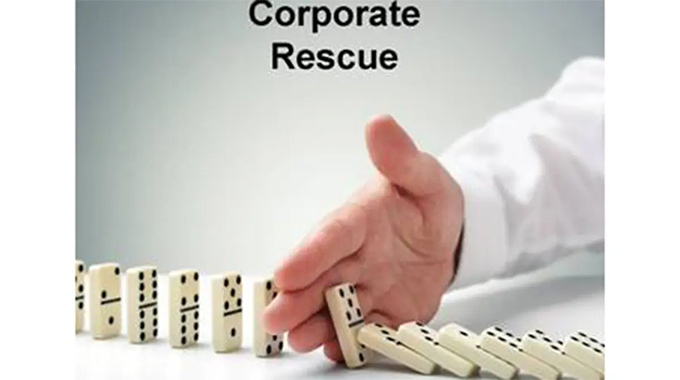
Rutendo Nyeve,Victoria Falls Reporter
WHILE the imposition of illegal sanctions from the West has seen the country experiencing economic headwinds that have often forced once-thriving enterprises to shut their doors, a legislative innovation is quietly scripting success stories of recovery and renewal.
The Insolvency Act [Chapter 6:07], signed into law by President Mnangagwa in 2018, has emerged as a pivotal game-changer, breathing new life into companies besieged by operational struggles and crippling debt through its corporate rescue provisions.
At the heart of this transformative process is the Office of the Master of the High Court, which oversees the administration of corporate rescue proceedings.
In an exclusive interview with Zimpapers, the Master of the High Court, Mr Eldard Mutasa, illuminated the profound impact this law has had on the nation’s economic landscape.
“In 2018, President Mnangagwa signed into law the new Insolvency Act. For the nation, this is a progressive piece of legislation because it introduced a new model of dealing with companies which are going through financial distress.
“Companies which, if there was no such a law introducing a corporate rescue model, could have gone under, and people would have lost their jobs. The economy would have been so much affected in the negative,” he said.
Mr Mutasa explained that the corporate rescue model has effectively replaced the older system of judicial management, which was fraught with inefficiencies.
“It did not compel the judicial manager to come up with a rescue plan for the company; there were no timelines set for how long that management should run. But now with this new law, corporate rescue introduces a clear timeline that a company should be turned around within three months or 90 days, unless there are compelling reasons for which the practitioner can apply for an extension,” he said.
“The idea is to save companies from collapse and we all know the benefits of doing so: people keep their jobs, new jobs are created, and the economy functions,” he said.
The efficacy of this legal framework is not merely theoretical.
It is being proven in courtrooms and boardrooms across Zimbabwe, rescuing major employers and key players in critical sectors from the brink of oblivion.
A flagship example is the mining giant, Metallon Gold Zimbabwe.
Along with its subsidiaries, Goldfields of Shamva and Goldfields of Mazowe, the group was placed under corporate rescue by the High Court.
This intervention has provided a structured opportunity to reorganise its substantial debts, stabilise operations, and devise a sustainable plan to return one of the country’s largest gold producers to profitability, safeguarding thousands of jobs in the process.
The coal mining sector has witnessed a direct success story.
Makomo Resources, a vital supplier to the Zimbabwe Power Company and the nation’s energy sector, was officially removed from corporate rescue in February of this year after successfully settling its debts and restructuring its operations.
Its exit marked a complete turnaround, demonstrating the model’s potential not just to stall collapse but to engineer a full recovery.
The retail and manufacturing sector is also benefiting.
As of 7 August 2024, Truworths Limited and its subsidiaries, Topic Stores and Bravette Manufacturing Company, were placed under corporate rescue.
This move offers the beloved fashion retailer a fighting chance to reorganise its business model, manage its liabilities, and adapt to the evolving market, preserving an iconic brand and its employment footprint.
Most recently, the provisions of the Act were invoked for Khayah Cement Limited.
Effective 30 December 2024, the company was placed under corporate rescue, with Mr Bulisa Mbano of Grant Thornton Zimbabwe appointed as the practitioner.
This intervention is crucial for stabilising a key player in the construction industry, whose survival is integral to national infrastructure projects.
The model has proved to be a more compassionate and commercially astute alternative to liquidation.
It shifts the focus from the dismantlement of a company to its rehabilitation, balancing the interests of creditors, employees, and shareholders.