Online Reporter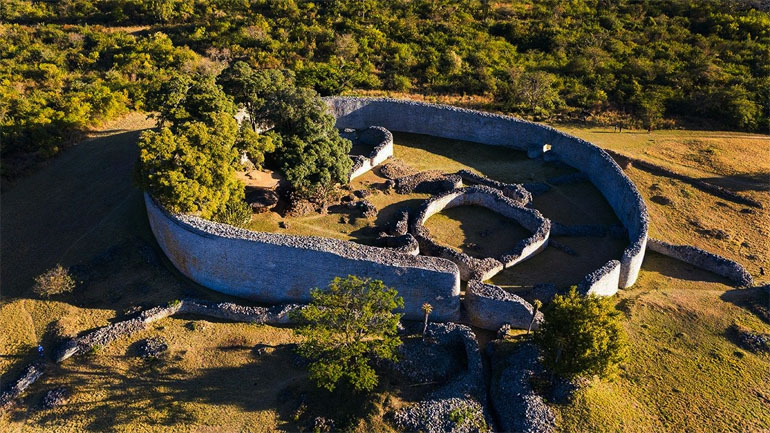
Lloyd Makonya
Correspondent
FOR decades, Zimbabwe’s tourism marketing has largely focused on traditional international markets in Europe, North America and Asia, while promoting iconic attractions such as Victoria Falls, Hwange National Park and the Eastern Highlands.
Yet a newly released perception survey from the Caribbean suggests that an entirely different market may be waiting across the Atlantic.
Zimbabwe’s new heritage-based tourism strategy may be the perfect fit for an emerging Afro-Caribbean market.
The findings come from The Africa Guide Perceptions Index – Caribbean Edition (Wave 1), a biannual study produced by diaspora-focused media platform The Africa Guide, which explores how Caribbean communities perceive Africa and their willingness to engage with the continent through tourism, business, culture and education.
While the inaugural survey involved 50 respondents across seven Caribbean territories and is intended as a directional baseline rather than a statistically representative study, it offers valuable insights into an emerging diaspora market.
Perhaps the headline finding is that 84 percent of respondents said they would like to travel to Africa. For Zimbabwe, which has increasingly repositioned itself as a heritage destination under the Ministry of Tourism and Hospitality Industry’s heritage-based tourism strategy, that figure raises an important question. Is the Caribbean an untapped tourism market Zimbabwe should be pursuing?
For years, international marketing of African tourism has been dominated by wildlife.
Interestingly, the survey confirms that wildlife and safaris remain the strongest immediate association with Africa, cited by 68 percent of respondents. Rich cultural heritage followed closely at 66 percent, while traditional music, dance and natural beauty also ranked highly.
These findings mirror many of Zimbabwe’s strongest tourism assets. The country boasts five UNESCO World Heritage Sites, including Great Zimbabwe, Khami Ruins, Matobo Hills, Mana Pools National Park and Victoria Falls. Beyond these internationally recognised sites lies a broader heritage landscape that includes archaeological monuments, living traditions, cultural festivals, museums, liberation heritage, traditional leadership institutions, indigenous cuisine and community-based tourism experiences.
Unlike destinations that rely almost exclusively on wildlife, Zimbabwe offers visitors the opportunity to experience both natural and cultural heritage in a single journey.
This is precisely the kind of multidimensional experience many Caribbean respondents appear to be seeking.
Perhaps the survey’s most revealing finding is not about tourism at all. When respondents were asked what Africa meant to them personally, the overwhelming theme was “the Motherland.” Many described Africa as their ancestral homeland, expressing a desire not merely to visit but to reconnect with their history, culture and identity. Others spoke of Africa as a place of spiritual renewal and belonging.
These responses suggest that Afro-Caribbean travellers are motivated by something deeper than sightseeing. They are searching for connection.
That presents Zimbabwe with a unique opportunity. Unlike destinations marketed purely as safari experiences, Zimbabwe possesses living cultural traditions and tangible heritage that tell the story of African civilisation.
Visitors can walk through the stone walls of Great Zimbabwe, experience traditional ceremonies still observed by local communities, hear the rhythms of the mbira, explore centuries-old archaeological sites, visit museums preserving African history and interact with communities where cultural traditions remain part of everyday life. For travellers seeking identity rather than simply adventure, these experiences offer something difficult to replicate elsewhere.
The encouraging aspect is that Zimbabwe may not need to reinvent its tourism strategy.
The Ministry of Tourism and Hospitality Industry’s policy and strategic direction has shifted towards heritage-based tourism, encouraging destinations to develop tourism clusters around culture, archaeology, gastronomy, meetings and conventions, faith tourism, community experiences, adventure tourism and nature-based attractions rather than relying solely on Victoria Falls.
Viewed through the lens of the Caribbean survey, many of these clusters align remarkably well with what respondents said they wanted from Africa. The survey found strong interest in cultural heritage, spirituality, natural beauty and authentic stories that move beyond long-standing stereotypes of poverty and conflict.
Zimbabwe already possesses these products. The challenge may simply be ensuring the right audience knows they exist. One of the survey’s more interesting findings concerns perception. Although many respondents still associated Africa with poverty and conflict, 54 percent said their impressions had largely been shaped by mainstream media.
However, many also acknowledged that African films, Afrobeats, Afro-gospel music and social media had significantly changed their perceptions of the continent. For Zimbabwe, this represents both a challenge and an opportunity.
Rather than relying solely on conventional destination marketing, there is increasing scope to tell Zimbabwe’s story through digital storytelling, cultural exchanges, documentaries, music, cuisine and authentic visitor experiences.
If the first impression is increasingly formed online, then compelling storytelling becomes just as important as physical tourism infrastructure.
Founder and Group Chief Executive Officer of The Africa Guide, Dr Vicki Otaruyina, believes Africa’s relationship with its diaspora should extend well beyond leisure travel.
According to her: “The Africa Guide was established to connect Afro-Caribbean and African-descendant communities with Africa through credible, culturally grounded and multi-sector storytelling,” presenting African countries not simply as tourist destinations but as “living ecosystems of people, heritage, innovation, business, creativity, and opportunity.”
That philosophy resonates strongly with Zimbabwe’s own aspirations. Tourism today is increasingly linked to investment, education, trade, cultural diplomacy and the creative economy.
The Africa Guide’s report concludes that the greatest challenge is no longer generating interest in Africa. Rather, it is converting that interest into actual travel through stronger partnerships, improved information and easier access. For Zimbabwe, that means working more closely with Caribbean travel operators, diaspora organisations, cultural institutions, airlines and digital media platforms.
No single survey should determine national tourism policy and it is acknowledged that this inaugural study is intended as a baseline for future research. Nevertheless, its message is difficult to ignore. Across the Caribbean, there appears to be a growing audience that sees Africa not as a distant continent but as home. Zimbabwe already possesses many of the experiences these travellers are seeking.
The question is whether the country is prepared to introduce itself.