Online Reporter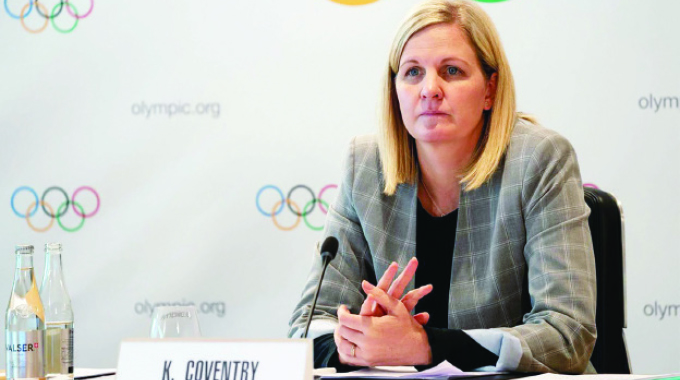
THE world Zimbabwean Kirsty Coventry walks into today as the International Olympic Committee’s first female and first African president is already very different to the one she was elected in three months ago.
Take Los Angeles, host of the next Summer Games that is the public face and financial foundation of most Olympic sports.
The city described last week as a “trash heap” by US President Donald Trump is preparing to welcome teams from more than 200 nations in July 2028.
Most of the 11 000 athletes and thousands more coaches and officials who will take part in the LA Olympics will have seen images of military being deployed against the wishes of city and state leaders.
A growing number of those athletes’ home countries face being on a Trump-directed travel ban list though Olympic participants are promised exemptions to come to the US.
Several players from Senegal’s women’s basketball team were denied visas for a training trip to the US, the country’s prime minister said.
A first face-to-face meeting with Trump is a priority for the new IOC president Coventry, perhaps at a sports event.
Welcome to Olympic diplomacy, the outgoing IOC president Thomas Bach could reasonably comment to his political protégé Coventry.
The six Olympic Games of Bach’s 12 years were rocked by doping scandals, Korean nuclear tensions, a global health crisis and corruption-fuelled Brazilian chaos.
Still, Coventry inherits an IOC with a solid reputation and finances after a widely praised 2024 Paris Olympics, plus a slate of summer and winter hosts for the next decade. Risks and challenges ahead are clear to see.
For the two-time Olympic champion swimmer’s first full day as president tomorrow she has invited the 109-strong IOC membership to closed-doors meetings about its future under the banner “Pause and Reflect.”
“The way in which I like to lead is with collaboration,” Coventry, who was Sports Minister in Zimbabwe for the past seven years, told reporters on Thursday.
Many, if not most, members want more say in how the IOC makes decisions after nearly 12 years of Bach’s tight executive control.
It was a theme in manifestos by the other election candidates, and the runner-up in March, IOC vice president Juan Antonio Samaranch, will lead one of the sessions.
“I like people to say: ‘Yes, I had a say and this was the direction that we went,’” Coventry said. “That way, you get really authentic buy-in.”
In an in-house IOC interview, Coventry also described how she wanted to be perceived: “She never changed. Always humble, always approachable.”
That could mean more member input, if not an open and contested vote, to decide the 2036 Olympics host.
Coventry’s win was widely seen as positive for the ambitions of India, and its richest family, to host the Summer Games that will follow Los Angeles in 2028 and Brisbane in 2032.
Nita Ambani, the philanthropist wife of industrialist Mukesh Ambani, has been an IOC member since 2016 and helped promote India’s Olympic bid in Paris last year.
She and Coventry are seen as being close, and the 2036 hosting award is among the biggest decisions pending.
“It is an open question,” Coventry told reporters on Thursday. “For me as a president I need to be able to remain neutral.”
Qatar is bidding for the Summer Games for a fourth time and Saudi Arabia also is interested. A regional Middle East bid could be a political and logistical solution.
A Bach legacy is the policy of fast-tracking well-connected bidders into exclusive negotiations toward a rubber-stamp vote by IOC members.
At some point in Coventry’s presidency, Russia could possibly return fully to the Olympic family. It is unclear exactly when less than eight months before the 2026 Winter Games opening ceremony in Milan.
Russian athletes have faced a wider blanket ban in winter sports than summer ones during the war with Ukraine. Even neutral status for individual Russians to compete looks elusive.
Russian President Vladimir Putin offered “sincere congratulations” on Coventry’s election win, with the Kremlin praising her “high authority in the sporting world”.
However, there seems little scope for the IOC to lift its formal suspension of the Russian Olympic Committee imposed in 2023 because of a territorial grab in sports administration. Four regional sports bodies in eastern Ukraine were taken under Russian control.
Coventry said she will ask a task force to review IOC policy relating to athletes from countries involved in wars and conflicts. — AP news.