Online Reporter
ZIMBABWEAN Kirsty Coventry took office yesterday amid mounting pressure on the International Olympic Committee (IOC) to take a stance on gender-diverse participation.
Many look to the first female head of the global governing body to keep her campaign promise.
The former Olympian announced last March that she plans to form to review the IOC’s current policy on transgender athletes. Since 2021, the organisation has deferred eligibility decisions to the individual international sports federations, creating a myriad of different policies.
Prior to last year’s Summer Games, some athletes who had gone through male puberty were prevented from competing in events such as athletics and swimming, but may have been eligible in women’s weightlifting.
Without uniform rules, athletes have had to navigate complex and sometimes conflicting criteria. Coventry hopes to change all that.
“My stance is that we will protect the female category and female athletes,” Coventry said during her campaign. “I want to work together with the international federations, and I want the IOC to take a little bit more of a leading role.”
Coventry was part of the executive board at the Paris Olympics, a tumultuous time for the IOC as the organisation publicly battled with the International Boxing Federation over the inclusion of two boxers.
Lin Yu-ting and Imane Khelif, who were born female, were allowed to compete by the IOC despite being disqualified by the IBA after failing the federation’s gender eligibility tests.
The boxers failed their tests in 2023, during which the IOC had stripped the IBA of its status as a governing body from unrelated issues.
The IOC then imposed its own decision to let the boxers compete, saying “they are women in their passports and it is stated that is the case.”
The two went on to win gold in their respective weight categories, which only added to the outrage towards the IOC, which began to attract criticism from global figures, including then-presidential candidate, Donald Trump.
The incidents have left the IOC in the hot seat, with incoming president Coventry, who said, “lessons are always going to be learnt,” to build from the ashes of the fallout.
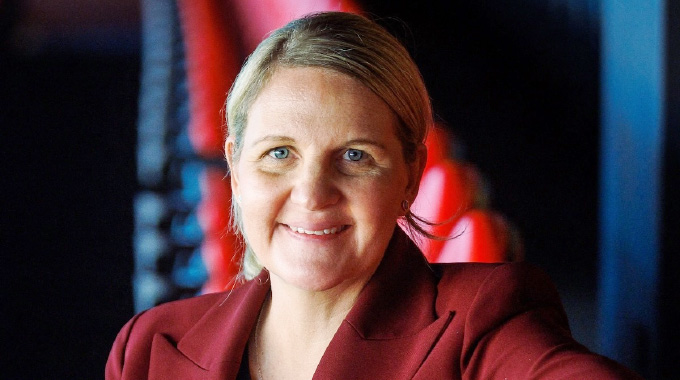
“I don’t believe this is something in hindsight we could have predicted; these boxers had bouts against each other, and there hadn’t been previous issues,” she said back then.
Coventry seems to be leaning toward implementing a blanket ban, explaining last March that “there is more and more scientific research. It is very clear that transgender women are more able in the female category and can take away opportunities that should be equal for women”.
A medical physicist at Loughborough University in the UK says that may be the case, but transitioning does have its caveats.
“Trans women as a population group are taller, bigger, and in an absolute sense stronger than cis women,” explained Joanna Harper to news outlet DW. “However, after going through hormone therapy, trans women are now moving their bodies with reduced aerobic capacity, reduced muscle mass.”
Gender affirming hormones may actually be what will hold back transgender athletes from optimal performance.
A study by Timothy Roberts and colleagues at the University of Missouri-Kansas City on military personnel who underwent gender-affirming hormone therapy indicated that while transgender women performed better in sports than cis women in the first year, their performance equalised after two years.
As science delves deeper into the issue, various federations and countries are already implementing bans on transgender participation in the women’s category.
The UK Supreme Court in April ruled to define “woman” as biological sex, excluding trans women from sex-based protections, and US president Trump banned participation at all levels last February, while calling on the IOC to do the same.
The IOC voted “to discontinue the current process of gender verification during the Olympic Games” during the 1996 International Olympic Committee World Conference on Women and Health.
Back then, the tests seemed unreliable, with eight athletes failing the gender verification tests at the Atlanta Olympics, who were later cleared by physical examinations.
However, advances have developed “simple, efficient, dignified ways of testing sex,” said Reem Alsalem, UN special rapporteur on violence against women and girls, in her report last year.
Gender testing may come back to the Games, as it has with World Athletics, which has chosen chromosomal screening and will require athletes, who compete in the female category, to submit to a cheek swab or dry blood-spot test.
The move has been met with criticism.
“It is far from being scientifically accurate as a performance indicator, while being very harmful to the athletes affected,” Madeleine Pape, a sociologist of gender in sport at the University of Lausanne, told AFP. “Chromosomal tests seem very simple, very clean, but there is a lot of complexity behind them: potentially a highly invasive and non-standardised gynaecological examination.”
As Coventry aims to protect women in sport, invasive methods may not be the way to go.
Unlike her predecessors, who delayed publishing guidelines for three years, she’ll have to act quickly.
With less than four years until the next Summer Games, held in a country that has made it clear that transgender athletes are not welcome, Coventry’s task force will have its work cut out for it.
— insidethegames.com/Sports Reporter