Chronicle Editor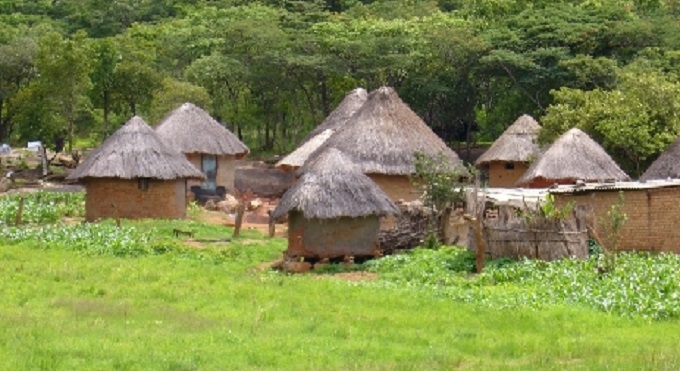
Vincent Gono, Features Editor
ELEVEN-year-old Shelton Ndou of Makado in Beitbridge has been playing a home-made soccer ball with village age mates outside when his father arrived from South Africa where he has been working. He is evidently tired and worn out and his arrival is not characterised by the usual bliss as there is nothing more to welcome than a small bag stuffed with his personal belongings.
Nothing is done to the visitor from South Africa who had come through an illegal entry point as a Covid-19 preventive measure. But he is jovially welcomed by the whole family including those that were playing with Shelton. He is greeted, hugged and even kissed with an ignorant reckless abandon and no one takes note of how he has travelled.
After exchanging greetings with his father and realising that he had nothing more to offer Shelton rushed back to resume playing with his friends, to mix and mingle with those who did not come to greet his father. They have formed themselves into three teams and are playing knock-out games in between some breather.
The winter wintry weather has been raising dust particles making their faces look ashen and ghostlike but they are not bothered. Soccer by nature is a contact sport and the coronavirus scare to them is a far-fetched folktale, a media fallacy that has nothing to do with poor communities, much so because their mothers have not yet attended a funeral of a Covid-19 victim.
Most of the men in their community have skipped the border into South Africa but recently there has been surreptitious coming back of individual villagers but not in the usual Gauteng Province (GP) marked registered vehicles with loads of groceries but they have been sneaking in and being kept at homes.
To them, as to many rural folk, Covid-19 is a town virus. The rural population feels exempted and the authorities, politicians included have not been helping the situation. The rural people have a carefree attitude, a casual approach to the pandemic where no one wears a mask, social distancing is not observed, sanitisers are not used, neither are they known, regular washing of hands has a stigma of not embracing others and life is as normal as ever.
This is not only happening in Makado. Almost all other rural communities in the country have been behaving as if nothing scary is happening in the world. Funny theories have been propounded and sadly some communities in rural areas have taken them in hence the happy-go-lucky approach. Villagers have been attending funerals of people they know no cause of death. They have been going to churches and no social distancing have been observed. And in trying to blend in and avoid the stigma of not feeling special, those from town and cities tend to relax when they mix and mingle with their rural kith and kin.
This has slowly been going on and creating a fertile ground for the settling of the pandemic leaving no one safe.
Mpilo acting chief executive officer Professor Solwayo Ngwenya said it was going to be increasingly difficult for the country to control the spread of coronavirus with the limited resources and the lack of seriousness that was evident in the communities.
“We have seen a precedented increase in the cases as people continue running away from quarantine centres. Running away is almost criminal and those that are doing so are exposing their families, their girlfriends and their relatives to the pandemic. The quarantine centres are essential, they are a buffer between the arriving people and the communities. We have people that are coming in through illegal entry points and this has seen a huge figure being infected. Unfortunately, people seem not to fear the virus, I do not know whether people are not afraid of dying or what,” said Prof Ngwenya in an interview with Sunday News.
Chief Co-ordinator to the National Response to Covid-19 Taskforce in the Office of the President and Cabinet Dr Agnes Mahomva said a lot of effort had been put in the fight against Covid-19 although more needed to be done especially in rural communities.
“We are so worried by the approach especially in rural communities. We are mobilising resources for our rural communities to ensure that the vulnerable are covered and provided with personal protective equipment under the department of social welfare,” she said.
She added that there was need for reciprocity in terms of accountability between the communities and the Government noting that the lack of seriousness in communities was shocking.
“We need to hold each other accountable. We are trying our level best to ensure that information reaches everyone as we try to flatten the curve. It is unfortunate that the opposite is happening mostly because people are reluctant to change their behaviour but the message is clear that coronavirus is real and people should take as much caution as possible.
“Last week Cabinet declared that we need to tighten up and that is going to happen. We are working with the Ministry of Health and Child Care in identifying hot spots. Returning residents and quarantine systems have to be strengthened. We are also tightening border security while advising families not to keep returning relatives who they are not sure of,” she said.
Dr Mahomva added that the Government was working on finding effective ways of getting information and resources to rural communities and making people treat the knowledge that they have on Covid-19 with the seriousness that it deserves.
A UN report on Covid-19 in Zimbabwe says that household food insecurity is likely to worsen as a result of a decline in the economy, a breakdown in supply chains and climate change. The Government has however, put in place several preventative measures aimed at flattening the curve, including adapted measures to ensure continuation of life-saving interventions such as antiretroviral therapy (ART) for people living with HIV and — with support from private sector and development partners.
Despite these improvements, it is expected that the health system will be overstretched should the pandemic continue escalating beyond the current level. With part of Zimbabwe’s diaspora losing jobs in and/or being deported from neighbouring countries especially South Africa and Botswana as part of their Covid-19 containment measures, there has been an influx of citizens returning to the country.
This movement of large numbers of people across borders, through regular and irregular points of entry, presents an increased risk of spread of infection especially in rural areas where they go and hide, while also further straining the health system, social protection structures, and ultimately the fiscal space as the quarantine of returnees has been at Government’s expense.
In addition, many of the returning citizens had emigrated for economic reasons and were breadwinners for families back in Zimbabwe. The loss of income associated with returning citizens is likely to exacerbate the already high incidence of poverty and food insecurity as well as access to basic services such as health and education.
Moreover, movement restrictions as well as reduced merchandise trade between Zimbabwe and its neighbours, are also likely to affect small-scale traders, especially women since they rely on unfettered movement of merchandise goods across and within national borders.



 Online Reporter