Online Reporter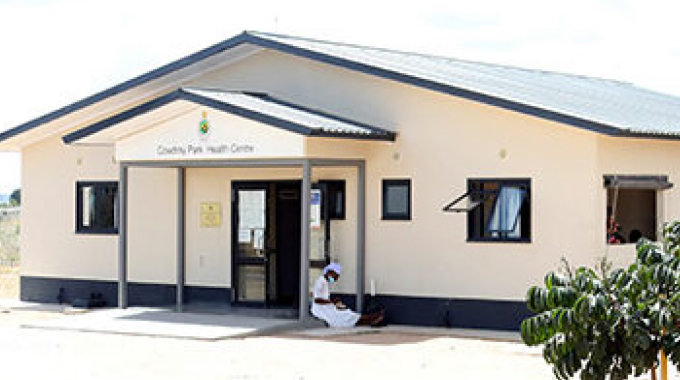
Raymond Jaravaza, [email protected]
WITH a population of over 75 000, the continued expansion of Bulawayo’s biggest suburb — Cowdray Park — is piling pressure on already stretched social amenities amid growing demand for new schools, clinics and judicial services, among others.
Cowdray Park has a population of more than 75 000 residents, much bigger than Gwanda Town, according to the 2022 Population and Housing Census, making it the second most populous urban ward in Zimbabwe, after Harare’s Budiriro, which has over 89 000 residents.
The suburb’s population is larger than that of towns like Gwanda (27 000 residents) and Hwange (40 000 residents). As the population continues to grow, the demand for essential services like education, healthcare, and shopping facilities is becoming increasingly urgent.

Ward 15 Councillor, Ashton Mhlanga, whose area covers Cowdray Park’s Phase I and 2, as well portions of Phase 3 called upon Government to expedite the construction of a new magistrates court to decentralise judicial services.
“Cowdray Park is facing a sharp increase in crime and desperately needs a big police station, similar to what residents of suburbs such as Nkulumane and Pumula have, and a magistrates court so that our residents can easily access essential services.
“The suburb keeps growing leading some people to call it ‘a city within a city’ and we are calling for Government to decentralise essential services such as the judiciary and the registrar’s offices,” said Clr Mhlanga.
On the education front, he said his ward only has two primary schools, an untenable situation that forces pupils to attend classes in the afternoon under trees because of shortages of classrooms.
“We cannot continue having a situation where our children attend classes in the afternoon under the hot-sitting arrangement where grades are divided into morning and afternoon classes.
“To address the shortage of schools in my ward, we need about four new primary schools to cater for the ever growing population,” he added.
Clr Mhlanga also bemoaned poor roads and lack of sewer reticulation system in some sections of the suburb where residents are still using Blair toilets and access into the suburb is difficult as a result of poor roads.
The Member of Parliament for the area Cde Arthur Mujeyi, concurred that the rapid growth of the suburb has resulted in a severe shortage of schools, clinics and other essential amenities.
While the suburb’s population continues to expand rapidly, infrastructure development has failed to keep pace with the growing demand.
“Government is aware of the challenges of social amenities faced by Cowdray Park residents hence the construction of Cowdray Park Clinic which has seen residents accessing services at their doorsteps,” said Cde Mujeyi.
He said individuals had identified investment opportunities in the education sector and were building primary and secondary schools in the suburb to complement Government and Bulawayo City Council (BCC)’s efforts to build schools.
“The growth of Cowdray Park is presenting business opportunities in the health and education sectors with the establishment of private schools and privately run clinics and pharmacies,” said Cde Mujeyi.

He said there were two clinics built by Government and council but there is still a lot that Government must do to provide essential services to the people.
The shortage of schools in the suburb is forcing many parents to send their children to schools in Luveve, Emakhandeni or town.
In the Hlalani Kuhle/Garikai area, a makeshift secondary school — Onxy Academy — was established last year to fill the gap. The school has 100 students.
A resident, Mr Orlando Mlilo, expressed concern over the shortage of schools in the suburb.
“Cowdray Park is growing at an alarming rate but the construction of schools is not keeping pace.
“Two years ago, I tried to enrol my son at Luveve High but they told me that the school only accepts children from their suburb,” he said.
According to 2023 statistics from the Ministry of Primary and Secondary Education, Zimbabwe has 10 517 schools. Ideally, the ratio of schools to population in the country should be about one school for every 1 500 people, based on a 95 percent gross enrolment rate in primary education and a national population of 16 million.