Chronicle Editor
Nqobile Tshili and Trish Mukwazo, Chronicle Writers
GOVERNMENT has de-registered 46 vocational training colleges across Zimbabwe, including eight from Bulawayo, as part of a crackdown on institutions that fail to meet the required quality standards.
Those de-registered in Bulawayo are Foundation College, Zimbabwe Distance Education College (Zdeco), Zaoga Nketa 7, Hillview International College, Academy of Learning, Zimbabwe Institute of Commercial Studies, GTG Information Technology Centre, and Mosmarch International College.
Additionally, the Ministry of Higher and Tertiary Education, Innovation, Science, and Technology Development identified 330 other colleges operating illegally nationwide. Of these, 39 are in Bulawayo, including 10 Bulawayo City Council-run youth training centres such as Tshaka Council Vocational Training Centre and Mpopoma VTC.
Other notable colleges operating illegally in the city include the Zimbabwe Academy of Music, City College of Computers, Mars Training Centre, and Nirvana Zen Academy.
Earth Moving Machine Operators-Africa (EMMB-Africa) centres across the Matabeleland region were closed down for operating illegally.
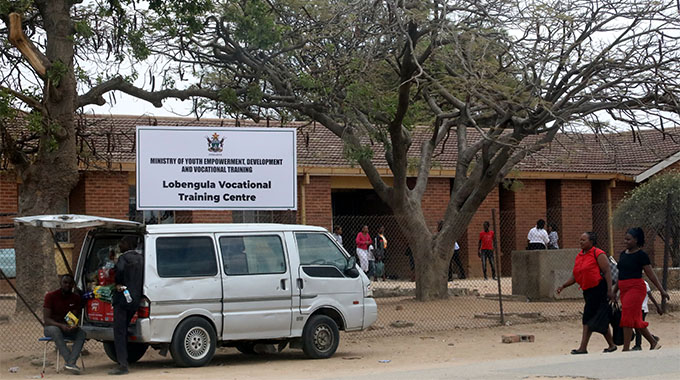
The Ministry of Higher and Tertiary Education, Innovation, Science, and Technology Development de-registered the colleges after conducting a Technical and Vocational Education Training (TVET) Quality Assurance Standards Compliance Inspectorate.
The exercise is in line with the ministry’s mandate to inspect private and independent education and training institutions to ensure that they comply with the Manpower Planning Development Act (Chapter 28: 02) subsection 1 and Statutory Instruments 333 of 1996 and 26 of 2001, on critical issues of registration that guarantee improved access to quality and equitable inclusive education and training.
In an interview yesterday, Higher and Tertiary Education, Innovation, Science and Technology Development Permanent Secretary Professor Fanuel Tagwira explained that these institutions were producing certificates not recognised by industry standards, disadvantaging students.
He stressed the importance of verifying colleges’ registration with the Higher Education Examinations Council (HEXCO) before enrolling.
“When they are operating illegally it means we cannot assess their standards. They might be offering an education that is below our standards, but their standards are unknown to us,” he said.
“Parents, guardians and students are paying a lot of money to access an education, but after spending so much money they discover that their qualification is not up to standard and it is not accepted when applying for jobs.”
Prof Tagwira said the move aligns with the Government’s commitment to ensuring access to quality, inclusive education through the enforcement of the Manpower Planning Development Act and related statutory instruments.
“The unfortunate thing is that when students graduate from those colleges, they can’t use the certificates to apply for a job since it would have been obtained from an unregistered college and does not comply with the national qualification framework,” said Prof Tagwira.
He urged prospective students to first establish if a college is registered with the Higher Education Examinations Council (HEXCO) before enrolling with it.
“If the college is not registered with HEXCO, as Government there is nothing that we can do to assist you. Even those colleges that claim to be offering international certificates have to be registered locally because someone needs to assess your qualifications and infrastructure to ensure they meet the required standards,” said Prof Tagwira.
“That is why we are concerned that some of these colleges are operating hence the action that we have taken to restore order.”
Prof Tagwira acknowledged that some institutions were deregistered simply for failing to renew their licences and urged them to regularise their operations.
“Some of the colleges that were registered did not renew their registration so it means we can’t vouch for them even if their standards are still up to scratch as there is no one who is assessing them.
“We always encourage institutions to renew their registration every year with HEXCO. For instance, no university operates without having been registered with the Zimbabwe Council of Higher Education (ZIMCHE),” said Prof Tagwira.


 Online Reporter