admin
admin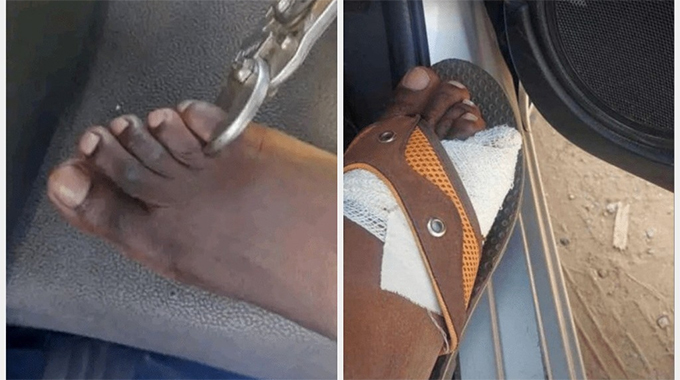
Daniel Nemukuyu-Investigations Editor
GULLIBILITY and the love for quick buck recently saw people buying into the social media craze that they could buy top-of-the range vehicles after selling their toes, a hoax that emanated in jest at the Ximex area in Harare.
It all started with some school children admiring a Toyota Hilux GD6 that was parked along Angwa Street near the Ximex area and they debated on the price of the vehicle.
“The children debated on the price of the vehicle until the owner, who had just visited this place, told them it was worth around US$70 000.
“He jokingly asked them to sacrifice their toes for the vehicle, and the word spread like veld fire as if it was true. That is how it started and since then, scores of people came to this place offering to be amputated.
“They asked for those behind the ‘GD6 deal’ and we all laughed in disbelief. That did not stop people coming here to inquire. Even today, some came inquiring on the same false claims,” said a cellphone trader along Angwa Street.
So gullible were the masses that some travelled from as far as Mutare, Mazowe and Chinhoyi inquiring on the “lucrative deal”.
Social media was awash with false notices and advertisements where the toes ranged from US$10 000 to US$40 000 each depending on the size.
However, it turned out to be a hoax.
None of the beneficiaries of the deal has ever been identified and medical practitioners have denied ever attending to patients whose toes were cut for rituals.
The president of the Medical and Dental private practitioners of Zimbabwe Association (MDppZA) Dr Johannes Marisa has rubbished the toes’ rush saying none of the medical practitioners had attended to patients whose toes were cut.
“Its a hoax. As doctors, we haven’t attended to such patients. On all our social media platforms, none has confirmed dealing with such cases. If the toes are being cut, then where are the victims being treated?
“There is nothing like that and people should simply work hard and earn money. Zimbabweans must not crave for quick buck always,” he said.
Dr Marisa, who is a prominent physician, said some of the pictures that circulated on social media were for wounds related to chronic illnesses.
“Some pictures that we saw on WhatsApp are for people with chronic illnesses like diabetes. Some diabetic patients end up having wounds of that nature, which were now circulating as if the patients were victims of the toes deal,” he said.
He said the false news had an effect of tarnishing Zimbabwe’s image.
“The fake story only tarnished our image as people who are selling human flesh,” he said.
Government also carried out its own investigation and dismissed the story.
Touring Ximex area, where the falsehoods originated, Information, Publicity and Broadcasting Services Deputy Minister Kindness Paradza recently said the trending story was false and misleading.
“As Government we did research on this issue and we realised it is false. These are social media reports aimed at tarnishing the image of the country,” said Deputy Minister Paradza.
He said he had interacted with some dealers who assured him that there was no such phenomenon at the former Ximex Mall.
All the dealers that interacted with Deputy Minister Paradza said they had all their toes, but they confirmed that many people were frequenting their place from as far as Bindura, enquiring on how they could have their toes cut for money.
Others removed their shoes to prove that they have all their toes, and they challenged each other to come to town with open shoes and slops last Saturday to demonstrate that they have all the toes.
Zimbabwe National Traditional Healers Association (Zinatha) president Mr George Kandiero dismissed the claims and urged people to work hard and earn clean money.
“As Zinatha, we haven’t heard of that before. I don’t think there is a traditional healer who can afford to pay that kind of money to people. We only heard of it through social media but in reality we haven’t come across such cases,” he said.
Zimbabweans are no strangers to these quick buck stories. In 2011 word spread that old charcoal irons were in demand somewhere outside of the country and there were buyers ready to buy at crazy amounts . The initial price was US$600 but it kept rising to above US$5 000 for each iron.
There was a specific type of charcoal iron that was sought. It had to have been made in Germany or Italy and it had to magnetically attract a razor blade to its base. The country went on a frenzy.
Almost every other person was looking for an iron. Rural homes were raided. Some people seemed to make money but to most, it was fool’s gold.
In 2016, another story of the quail (chihuta) transforming livelihoods trended.
Thousands of unemployed people looked to the quail as a deliverance from the economic challenges.
The quail bird craze was almost exactly like the irons, except that the story was that quails were the healthiest food ever.
Demand soared. Every other family constructed a fowl run and kept them anticipating thousands of United States dollars in return but it turned out to be false again.
Families ended up consuming their own small birds after nothing materialised.
No one knew where the birds were being sold for that much but without research, Zimbabweans embarked on the project.



 Online Reporter