Mbulelo Mpofu, [email protected]
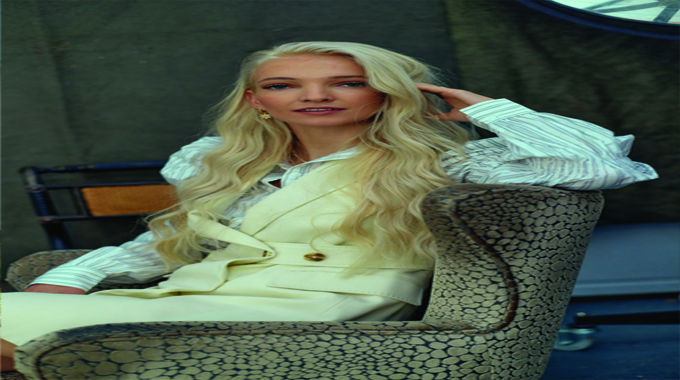
JESSICA J Rowlands, a rising figure in cinema, embodies a fascinating cultural fusion. Born in the UK to parents who moved to Hwange, Zimbabwe, in 1984, her life is a blend of two worlds. Her father’s work at the local power station and her mother’s teaching, coupled with her mother’s enduring ties to Zimbabwe — eventually becoming a citizen and settling in Victoria Falls — have deeply enriched her storytelling, making her a powerful voice in contemporary film.

Jessica, an award-winning screenwriter and director, is the creative force behind Rise, a film that propelled 10-year-old Sikhanyiso “S’kha” Ngwenya into the history books. S’kha became arguably the youngest National Arts Merit Awards (Nama) winner in the “Outstanding Actor” category for his portrayal of “Rise,” the film’s protagonist. Such was Jessica’s impact that she coached S’kha, a novice actor, to a podium finish at the recent Namas, surpassing seasoned performers John Mabuyane and Tapiwa Mavindidze.
The film also features the esteemed Tongayi Chirisa.

Before venturing into filmmaking, Jessica excelled academically. She graduated at the top of her class with a Law degree and pursued further studies in International Human Rights Law at the prestigious University of Chicago Law School. This rigorous training equipped her with critical thinking skills and instilled a discipline she attributes to her success in filmmaking.
“My background is in Law. I hold two law degrees, from both the UK and the US, which seems worlds apart from filmmaking. But I believe that training provided me with two crucial tools: critical thinking and disciplined hard work,” Jessica said to Saturday Leisure.

Throughout her life, Jessica has divided her time between London and Victoria Falls. Now, relocating to Los Angeles to pursue her ambitions, her dedication is yielding significant results. In 2019, she won the UCLA Screenwriting Competition, and in June 2020, she made history as the programme’s only two-time award winner in the UCLA Writing for Television Competition.
Her accolades continue to mount, with recognition from esteemed film festivals and competitions, including the Austin Film Festival and the Academy Nicholl Fellowship. Most recently, Jessica secured the “Best Original Screenplay” award at the London Independent Film Awards and the Gold Prize at the Page International Screenwriting Awards, solidifying her exceptional talent and distinctive storytelling.

Jessica acknowledged that her connection to Zimbabwe profoundly influences her narratives. Her works explore themes of identity, belonging, and resilience, often rooted in her experiences in Zimbabwe and the UK.
“I have always wanted to tell stories because I believe storytelling is the most powerful means of human connection. My connection to Zimbabwe has deeply impacted my worldview and the stories I want to tell. I’m drawn to narratives that explore identity, belonging, and resilience, stories rooted in specific places and experiences, yet speaking to universal human truths,” she said.
Beyond writing, Jessica is passionate about directing her own stories. She studied Film Directing at Sundance under the acclaimed director Claudia Weill and at the UK’s National Film and Television School (NFTS) under Scottish director Ian Knox. This dedication to her craft is evident in her production company, Pluvio Pictures, which aims to produce high-quality films showcasing unique stories and perspectives.

“I want to create space for work that is raw, emotionally complex, and grounded in the specificity of human experience. I’m particularly interested in films that blur the line between realism and style, where the form reflects the characters’ inner lives.”
As a successful filmmaker, Jessica is keen to empower fellow creatives, especially those from Zimbabwe. She also emphasises the importance of building a supportive community among peers.

“Make art. Make plenty of it. Don’t wait for permission. The difference between artistes and aspiring artists is action. Network horizontally, not vertically: find like-minded creatives on a similar level and rise together. Your peers, those in the creative trenches, are far more valuable than knowing a few senior, experienced individuals,” she said.
Jessica J Rowlands, a voice for Zim
Jessica also stressed the significance of persistence.
“Most successful people in this industry are simply those who didn’t give up. Keep going.”
March is Women’s History Month, a time to celebrate women’s contributions across various fields, including film, and Jessica believes women’s perspectives are essential in storytelling. She acknowledged the challenges women face in a male-dominated industry.

“Storytelling is about sharing the human experience, so it’s crucial we hear stories from the full spectrum of humanity. For a long time, it didn’t feel like a space I could occupy, but I’ve learned there’s more than one way to lead, and leadership doesn’t have to conform to traditional models.”
Jessica’s collaborative spirit shines through her work on “Rise,” where she assembled an all-African cast and crew. Premiering last year in Victoria Falls and Harare, “Rise” tells the story of a charismatic young boy living on a rubbish dump in Zimbabwe, who must convince a reclusive boxing coach to teach him to fight for safety and strength.
“It was a privilege to collaborate with so many talented Zimbabwean artists,” she said.

Her team included local talents such as Eddie Sandifolo, Nakai Matema, Farai Chimombe, Mmeli Mabhikwa, Kuda Sombi, Gregory Shambare, Taurai Kawara, Kelli Barker, and many others, showcasing the vibrant film industry in Zimbabwe. The film also features music from Mokoomba, Jah Signal, Nutty O, Leo Magozz, David HD Hondoyedzomba, Hope Masike, and Flying Bantu’s Tawanda Maoneni.

She also highlighted the importance of international collaboration, working with renowned professionals like Paul Watts, whose editing expertise was invaluable.
“All in all, Rise was a testament to the extraordinary talent in Zimbabwe and beyond.”
Despite her success, Jessica is acutely aware of the challenges facing Zimbabwean filmmakers, particularly women.
“The lack of resources, funding, and mentorship are the primary hurdles,” she noted.
She stressed the need for improved infrastructure and access to high-quality mentorship to help young creatives reach their potential. Jessica called for a concerted effort to build a sustainable film industry in Zimbabwe, one that produces quality work and showcases it globally.
“We need to make Zimbabwe an attractive destination for both local and foreign investment,” she said. — @MbuleloMpofu.