Online Reporter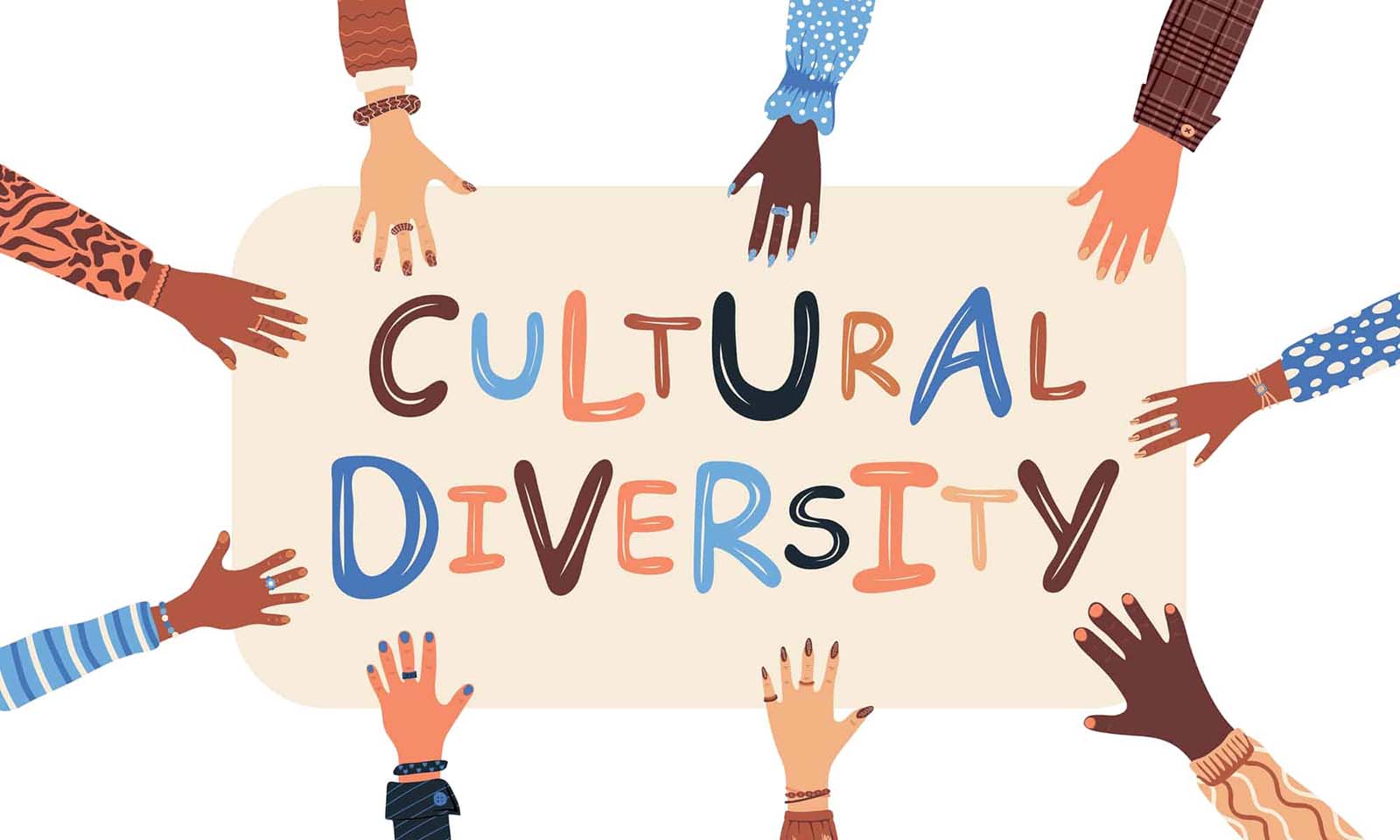
Flora Teckie
A Bahái Perspective
The World Day for Cultural Diversity for Dialogue and Development, observed on May 21, was a reminder of the richness and beauty of the world’s diverse cultures, and of the need to value and preserve our cultural multiplicity.
The great wealth of cultural diversity, achieved over thousands of years, is necessary for the development of our human family, which is experiencing its collective coming-of-age.
It is a heritage that enriches us all.
The Bahá’í Writings state: “The diversity in the human family should be the cause of love and harmony, as it is in music where many different notes blend together in the making of a perfect chord”.
The diversity of colour and culture are what make the world a more beautiful place to live in. Differences are not only in the human family, but are apparent throughout the whole of nature.
For example, a beautiful garden is normally made of flowers of different colours, and beauty, and trees of different types and sizes.
The following quotation from the Bahá’í Writings illustrate this: “Consider the flowers of a garden: though differing in kind, colour, form and shape, yet, inasmuch as they are refreshed by the waters of one spring, revived by the breath of one wind, invigorated by the rays of one sun, this diversity increaseth their charm, and addeth unto their beauty.
“Thus, when that unifying force, the penetrating influence of the Word of God, taketh effect, the difference of customs, manners, habits, ideas, opinions and dispositions embellisheth the world of humanity. . .”
Valuing differences in cultural expressions
Bahá’u’lláh, the founder of the Bahá’í Faith, compares the world to the human body, to which we can look as a model.
Our societies are composed of not only a mass of diverse people, but of associations of individuals, each one of whom is bestowed with intelligence and will.
The main principle operating in the human body is that of unity in diversity. This diversity of form and function is necessary for the life of any complex, well-developed organic entity, such as a human being. No cell lives apart from the body, whether in contributing to the functioning of the body, or benefitting from the well-being of the whole.
In the same way as the perfect functioning of the human body is due to the unity of diverse cells and organs, the well-being and well-functioning body of mankind is dependent on the unity of its diverse elements — of all races, nations, ethnic groups, and religions.
In a statement titled “The Prosperity of Humankind”, the Bahá’í International Community says: “Since the body of humankind is one and indivisible, each member of the race is born into the world as a trust of the whole. . .
“The principle of collective trusteeship also creates the right of every person to expect that those cultural conditions essential to his or her identity enjoy the protection of national and international law.
“The immense wealth of cultural diversity achieved over thousands of years is vital to the social and economic development of a human race experiencing its collective coming-of-age. It represents a heritage that must be permitted to bear its fruit in a global civilisation”.
Belief in the fundamental oneness of humanity
Currently, a major cause of discrimination and intolerance of differences is the erroneous idea that we are somehow composed of separate and distinct races and ethnic groups, that we have different intellectual, moral, and physical capacities, which justify different forms of treatment.
In reality, however, there is only one human race, and we are all created out of the same substance by the one Creator.
The Bahá’í Writings state: “Every human creature is the servant of God. All have been created and reared by the power and favour of God; all have been blessed with the bounties of the same Sun of divine truth; all have quaffed from the fountain of the infinite mercy of God; and all in His estimation and love are equal as servants.
“He is beneficent and kind to all. Therefore, no one should glorify himself over another; no one should manifest pride or superiority toward another; no one should look upon another with scorn and contempt; and no one should deprive or oppress a fellow creature”.
Belief in, and recognition of, the fundamental oneness of the human family is the key to overcoming prejudices dividing humanity. It is a prerequisite for lasting unity.
To accept the oneness of humanity is to embrace the variations that characterise human society, and to desire for every individual and group the opportunity to develop and express their unique capacities and talents.
To believe in the oneness of humanity does not imply that we should abandon legitimate loyalties, suppress cultural diversity or abolish national autonomy.
These are all necessary if the evils of excessive centralisation are to be avoided. Oneness of humanity, in the Bahá’í view, implies having a wider loyalty, a higher aspiration. It implies the subordination of national, and regional impulses and interests to the imperative claims of a unified world.
Feedback: [email protected] <mailto:[email protected]> or [email protected] <mailto:[email protected]>
Website: www.bahai.org <http://www.bahai.org>