admin
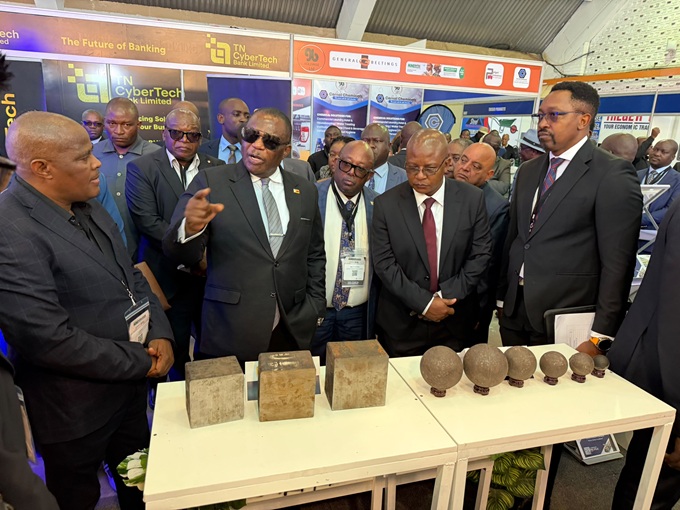
adminDr Kanyekanye was speaking at the Buy Zimbabwe Conference in Harare yesterday.
Securitisation would then allow industry and the country in general to leverage on its property assets to access critical funding for the economy.
Zimbabwe’s productive industries have since the advent of dollarisation been facing serious financing challenges, which has contributed to high production costs and uncompetitive products both on the local market and externally.
This has put a damper on the Buy Zimbabwe initiative that is aimed at encouraging greater local consumption of Zimbabwean products.
“There is need to put in place laws that allow for securitisation of, say for instance, our various properties.
“Debt equity is not working and it now requires our banks to be innovative,” he said.
Securitisation is basically the process of taking an illiquid asset, or group of assets, and through financial engineering, transforming them into a security.
For instance, a typical example of securitisation is a mortgage-backed security (MBS) which is a type of an asset-backed security that is secured by a collection of mortgages.
Observers however contend that it would be complicated to securitise property assets in the Zimbabwean context insofar as there are presently very limited mortgages on the market.
The CZI president also called for full exploitation of the country’s mineral resources.
“Why cannot the State nationalise the Marange diamond fields? And why not adopt a mineral swap strategy in view of the $400 billion platinum reserves that we have?”
Improved access to affordable financing can help boost the performance of the manufacturing sector, resulting in better competitive products, he said.
Speaking at the same event Employers Confederation of Zimbabwe (Emcoz) president Mr Anthony Mandiwanza said local industries do not need protectionist policies at this point in time.
“The Buy Zimbabwe initiative should not be a protectionist policy, because consumers have a right to choice.
“We should not be talking about closing our borders, but rather respond by ensuring that our industries provide the best product possible so as to establish and maintain a market,” he said.
Mr Mandiwanza explained a dichotomy in which other countries were better off in terms of their trade engagement because they had competitive advantage, while Zimbabwe’s strengths were largely comparative.
“Trade between Zimbabwe and South Africa last year amounted to 17 billion rands with 14 billion rands of that being constituted by South Africa’s exports of value-added products into Zimbabwe, while exports from Zimbabwe into South Africa amounted to 2,5 billion rand largely of extractive products.
“We can never narrow the trade deficit if such trade remains so lopsided,” said the Emcoz president.
Although there has been a lot of agitation for protectionist policies against excessive imports, Industry and Commerce Deputy Minister Mike Bimha yesterday said speculative tendencies on the part of industry was complicating the matter.
“Each time Government comes up with a tariff regime to protect local industry, the result is disastrous for consumers’ pockets.
“This lack of trust in the sincerity of our local industry and commerce complicates the works of an otherwise noble initiative,” he said.


 Online Reporter