admin
admin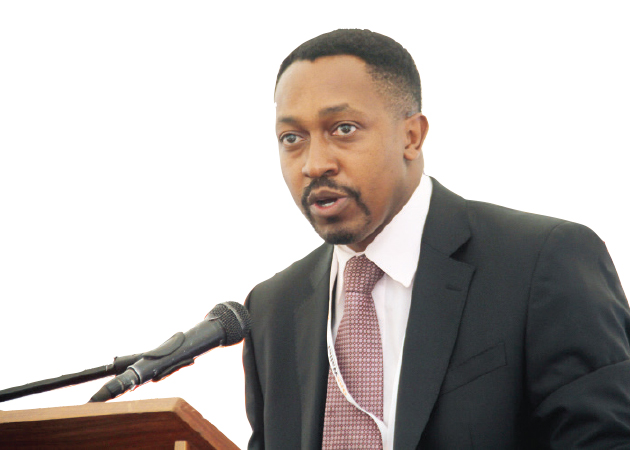
Prosper Ndlovu, Business Editor
CAPTAINS of industry have complained over the polarised political climate in Zimbabwe, which they blame for sluggish progress on the economic front.
Discussing during a round table economic briefing organised by the Confederation of Zimbabwe Industries (CZI) in Bulawayo yesterday, industrialists and academics said the national focus should be directed at removing barriers to investment and reversing economic stagnation.
CZI president and United Refineries Limited chief executive officer Busisa Moyo said polarisation has led to neglect of economic issues as leaders tussle over political issues.
“The biggest challenge we have right now is a polarised environment, the political environment in particular that’s affecting business at a time when the situation is precarious,” said Moyo.
He said while the business constituency has no mandate in meddling in politics, industry players needed to be “bold in stating the problems” that are affecting business and the challenges.
Zimbabwe is in dire need of investment to revamp its economy and create jobs for thousands of unemployed youths and professionals.
With manufacturing sector capacity utilisation pegged at 34 percent, the domestic market is dominated by imported products as companies struggle to stay afloat.
“In a polarised environment it’s difficult to get certain approvals, it’s difficult to get an audience. Because of a polarised environment you’ve to walk on egg shells. We would like to represent, as businesses, our issues without fear of being labelled this or that and just say this is what it is and this is what we’re facing,” said Moyo.
“So, that’s probably our biggest challenge. As a result you find that business and the economy in general is neglected, it’s not being guided at a precarious time.”
At a time when the region is facing economic challenges with exchange rates plummeting and the rand deteriorating, local firms have had to struggle with competition that requires close relationship with the government.
“We need certain interventions to come in sooner rather than later otherwise we’ll find ourselves out of business. We’ve got dwindling demand, with falling commodity prices the mining sector is shedding jobs.
“We’ve got a government that’s challenged in terms of fiscal space, a tax base that’s dwindling. These are real challenges that we need to address and in a polarised environment this becomes even more difficult,” said Moyo.
“We’ll really like to have some focus on the economy and getting the economy going otherwise the roof will fall on all of us.”
The participants, drawn from different economic sectors, took turns to express concerns over challenges facing the economy and delays in implementing required reform processes.
They called for the speedy operationalisation of the National Competitiveness Commission, the establishment of special economic zones and fine tuning of the new labour regulations.
CZI suggested adoption of internal devaluation approach to tame costs of production and setting up an acceptable minimum wage.
They also discussed strategies to curb imports and reverse the trade deficit, currently estimated at $3,3 billion annually. There was also concern over alleged heavy handedness by Zimra as well as the multiplicity of permits and fines charged by different government departments.
The business community, however, acknowledged positive steps in re-engaging the international community, the successful operationalisation of the pre-shipment exercise through Bureau Veritas and the creation of linkages along value chain systems as part of measures to reinvigorate the economy.


 Online Reporter