Chronicle Editor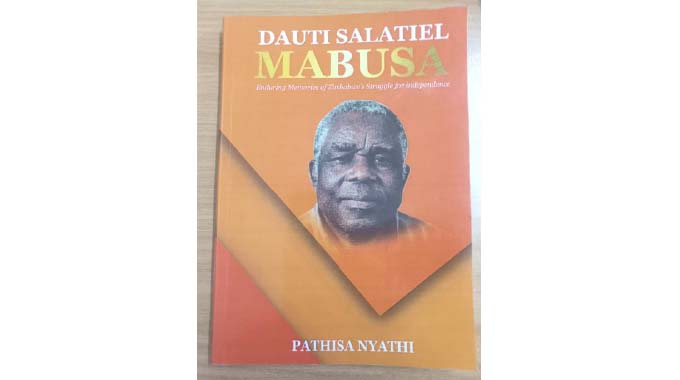
Pathisa Nyathi
OBITUARY
l Continued from yesterday
The succeeding political movement after the proscription of the SRANC was the National Democratic Party (NDP), once again led by Joshua Nkomo.
The new political party was more radical and more Pan-Africanist. Violence began to be embraced as a modus operandi for the attainment of majority rule. On the 24th of July political violence known as Zhi-i broke out in Bulawayo.
That came after a similar campaign in Highfield, Salisbury on 19 July.
Dauti was in the thick of it all. As the youth, they engaged in violent activities such as beatings, looting and arson. Dauti remembered in particular the incident when, at Iminyela Township they ransacked stores and looted tins and tins of condensed milk, among other items, which they drank to excess. Their stomachs groaned, rumbled and violently ejected their milky contents.
For Dauti the worst stage in political activism was yet to follow. From 1962, some Zimbabwe African People’s Union (Zapu) cadres began going out of the country to train in sabotage and military combat.
When those that had undertaken sabotage from countries such as Egypt, China, Ghana, North Korea returned, internal training ensued under the command of General Chedu (Enos Chikowore). Dauti was one of those who undertook internal training in sabotage tactics and strategies.
When he was finally captured, the colonial regime sent him to Khami Maximum Security Prison. There he found the company of Misheck Velaphi who, together with Ndukwana Ncube, Kenias Mlalazi (iNyoni yezulu) and Abraham Nkiwane had brought in the first consignment of weapons into Southern Rhodesia. He found Velaphi already at Khami Prison in 1963.
From then on, he was a hunted man with the Special Branch (SB), Criminal Investigation Department (CID) and the Central Intelligence Organisation (CIO) formed in 1964 under Ken Flower always on the watch out for him. He would spend the rest of the 1960s and the 1970s alternating between imprisonment, detention and short-lived freedom.
The Sabotage Campaign did not seem to yield expected results. The Sabotage Campaign was a two-pronged strategy.
It was both political and military. Political sabotage sought to discredit and decampaign government programmes as identified through known rural grievances such as cattle culling, construction of contour ridges and the various types of taxes.
Military sabotage concerned itself with the destruction of the government’s physical infrastructure such as dip tanks, roads, and agricultural crops such as tobacco and maize crops.
Livestock was not spared either. Dauti was involved in both. They were involved in blowing up cars and torching factories in Bulawayo.
For his involvement in the sabotage campaign, he was arrested and incarcerated at Khami Maximum Security Prison. There he was placed under solitary confinement as he was regarded as a dangerous saboteur. Nationalists were under pressure to ensure Zimbabwe became independent.
The process of decolonisation was moving at full throttle. There was thus a need to refocus. The armed struggle was ratcheted.
However, that was possible if both rural and urban black masses were politically mobilised and sensitised to support the armed struggle. It was at this juncture that Dauti was dispatched by Thenjiwe Virginia Lesabe to play an active role in the mobilisation of the aggrieved rural communities.
Dauti went to the Matshetsheni area where he worked closely with Lazarus Nkala, Enos Nkala and Keyi Nkala. He also went to canvass for political support in his home area and addressed meetings. There he worked with Edward Ndlovu, Orders Mlilo and others.
He canvassed vigorously addressing meetings at places such as Makarabha and Tshongwe. The Special Branch (SB) was hot on his trails. Koroneri in particular, with the likes of Kinosi Ncube and Vazhure monitoring his movements.
The government banned people of similar mind as Dauti from entering rural areas as they were thought to be politically polluting the minds of otherwise loyal and peaceful people.
Matobo was another area that Dauti was deployed to for the same politicisation and mobilisation campaigns. There he worked closely with Peter Njini Sibanda, Khutshwa Ncube and Tayima Tshelanyemba Ndlovu, among several others. For his inflammatory speeches, he was charged under the Sedition Act.
On two occasions, he was incarcerated at Gwanda Prison where torture and intense interrogation were the order of the day. It was during one stint at Gwanda Prison that he had his arm broken, fighting the prison guards.
At one time Dauti was arrested. He was tied to an acacia tree just before getting to Glassblock. He remained there the whole day only to be released late afternoon when the SB team was returning from their mission. Koroneri led teams that went to eavesdrop meetings that the likes of Dauti addressed. The gathered evidence was used against them when they stood trial. Koroneri had Dauti released when the Special Branch team returned in the evening.
Severe torture during interrogation was the trademark of the colonial regime security apparatus. A sjambok was used to beat up victims’ soles.
Sometimes the suspects had a bag with water covering their heads. Often, they were released from high torture rooms as used to happen at the John Vorster Square in Johannesburg. An impression was created that the suspect would be released and hit the ground several stories down. The whole idea was to get terrified suspects admitting they were guilty.
Khami Prison was where many political prisoners were held. Those deemed as hardcore political criminals were held in solitary confinement. Dauti remembered the mini-war that erupted at Khami Prison pitting the hardcore criminals and the hardcore political activists.
The latter were vehemently opposed to the practice of the Mainini Club whose members engaged in homosexuality.
Prison guards ignored the practice, as it was felt allowing prisoners to engage in homosexuality had a pacifying, domesticating and taming effect on the prisoners and that lessened the burden on the prison guards.
There was a clash between the two groups. The administration block was torched. Eight criminal prisoners were killed. Authorities identified individuals that they considered the ringleaders. Dauti was among them, together with Maphosa, Makhena Winya Ncube and Misheck Velaphi. They were accused of murder of the eight prisoners and faced the prospect of being hanged. Their trial at the Bulawayo High Court lasted several weeks. Justice Dandy
Young was the trial judge. Dauti went to the High Court handcuffed with his legs manacled.
Some of the suspects, including Dauti were Christians and prayed hard for the good Lord to intervene and have them spared the gallows. Indeed, the Lord answered their prayers.
Justice Young found all the accused not guilty. It was time to go back to the Khami Prison where Dauti was serving a three-year term. The term was increased to cover for the time spent on trial.
Whenever there were notable developments on the war front the local nationalists were rounded up and detained.
In 1976, the nationalist leaders were two years out of detention. The Geneva Conference was held in Switzerland. Habitual detainees like Dauti were detained at Marondera (then Marandellas). They were held together with their Zanu counterparts. They had been rounded up and taken to the Stops Camp from where they were taken to Grey Prison. There, they spent quite a lot of time.
After Marandellas they were then moved to Whawha Prison outside Gweru. This time it was Zapu cadres alone. In their group, there were Zapu activists who included Tafi Zibuya Moyo, Boysen Mguni, William Sivako, and Dlodlo from Filabusi.
The family used to visit Dauti at Marondera and would put up for the night at Sam Sipepa Nkomo’s house in Salisbury, on their way to Marondera. Dauti seized the opportunity at prison to do some private studies. Now in the main wing of the party, the ANC-Z, Dauti was elected to the provincial executive where he served with the likes of Paul Themba Nyathi and Johnson Mnkandla.
When in 1978 ZPRA fighters downed a civilian Viscount plane Dauti who was in hospital was snatched out of bed.
The authorities thought he was involved in the far-fetched incident. Dauti had graduated to a perpetual suspect.
Time came when some detainees were released. Dauti was among those who remained behind, including Enos Mdlongwa. Instead, they were transferred to Whawha Prison.
Independence then finally came after the successful conclusion of the Lancaster House talks. Dauti was released from detention and hit the ground running — doing election campaigning for PF-Zapu. The election results came. Dauti cried when he realised his party had lost. There was nothing for him to celebrate. In fact, there was time when he disrupted Independence Day celebrations at the Barbourfields Stadium.
He was to become a member of the first group of PF-Zapu cadres who were arrested and detained in post-independence Zimbabwe. He was rounded up with Zodwa Sibanda (nee Mbambo), Charles Sigangatsha, Mark Nziramasanga, and Sidney Donald Malunga. They were taken to the Stops Camp from where they were flown by helicopter.
They were told the copter was taking them to Mozambique. When the engine developed a problem in the air, the trip was diverted to Harare where they were met by the CIO operatives who quickly whisked them to Chikurubi Maximum Security Prison.
Intensive interrogations ensued and were accompanied by severe torture. The one man they did not know who pitched up at Chikurubi ostensibly facing the same charges as theirs was Jackoniah Moyo. Their release was delayed to allow their wounds to heal.
Dauti used to visit the Gwayi River Mine Assembly Point for the ZPRA cadres where he made contacts with the leadership that included Charles Gray, Soneni Moyo and Bitwell Moyo. Soneni briefed him on the impending Entumbane II in 1981.
He was requested to supply food as the advancing ZPRA cadres would run short of logistics. Indeed, Dauti met the ZPRA cadres at Binny’s and the second time at Mbuyazwe along the Bulawayo-Tsholotsho Road.
The CIO was aware of all these movements and contacts that Dauti was making. He was taken from his Luveve home blindfolded. He was driven to Nyamandlovu Police Camp where he was kept for 47 days.
He was taken to the graves nearby and told one of them was that of Edson Sithole who, together with his personal secretary Miriam, was abducted, never to be seen again. In his biography that I penned in 2020, titled, “Dauti Salatiel Mabusa: Enduring Memories of Zimbabwe’s Struggle for Independence,” he admits that the CIO had correct information regarding his operations leading to his arrest.
He worked closely with Umkhonto weSizwe (MK) in an effort to get their weapons brought from Zambia and the Gwayi River Mine Assembly Point transported and cached in Gwanda District where MK knew Dauti came from. MK wanted to get closer to South Africa and use Gwanda as the springboard for their attacks.
That marked the end of Dauti’s interest and participation in the struggle for independence and politics and concentrated more on his growing business empire and involvement in the activities of the Seventh Day Adventist Church (SDA) which he was a member of.


 Online Reporter