


 tawandamusarurwa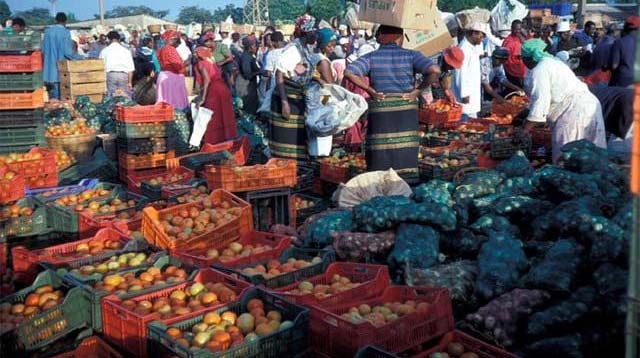
A VISIT to Mbare Musika or any other agricultural market is quite revealing.
Word from the Market
Cliff Chiduku
What usually catches the eye are rotten fruits and vegetables.
Presently, it is evident that Mbare Musika, Zimbabwe’s biggest agricultural market, is experiencing a supply shock at a time when there is limited effective demand for farm produce.
Vendors, unfortunately, do not have the capacity to prolong the shelf life of their produce, a phenomenon referred to, in economics, as the good year problem. This means most of the produce will go to waste.
Post-harvest losses are common when the market experiences a good year problem.
Since Zimbabwe had a bumper harvest this season, owing to good rains and various Government interventions, farmers always find it difficult to manage their harvest.
Reducing post-harvest losses is critical in promoting food and nutrition security, improved livelihoods and job creation, as enunciated in the National Development Strategy 1.
Post-harvest management is closely linked to United Nations Sustainable Development Goal 2 of creating a world free of hunger and poverty by 2030.
For Zimbabwe to achieve an upper middle-income economy by 2030, emphasis should be put on minimising post-harvest losses.
The Food and Agricultural Organisation (FAO) of the United Nations estimates from 2011 suggest as much as 37 percent of food produced in Sub-Saharan Africa is lost between production and consumption.
Estimates for cereals stand at 20,5 percent, while about 8 percent is for post-harvest handling and storage loss only. FAO also noted that 30 percent of food produced for human consumption is lost or wasted along the supply chain every year.
A research by the University of Zimbabwe’s Department of Soil Science and Agricultural Engineering shows that Zimbabwe has an average maize post-harvest loss of about 18,5 percent, roughly worth about US$259 per tonne, while for sorghum, the figure is pegged at 12,5 percent, which translates to a loss of US$175 per tonne.
The post-harvest losses are mainly due to destruction by pests, including insects, during storage.
One of the main factors preventing farmers from reducing post-harvest losses is the lack of financial capacity to procure proper post-harvest facilities and insecticides.
Therefore, improving access to cheap capital for farmers is critical to enable them to reduce these losses.
Research has shown that farmers are not willing to invest in facilities that can reduce food losses if they cannot sell their produce and make a profit.
So, what it means is that linking farmers to profitable markets is a step in the right direction.
One of the mandates of the Agricultural Marketing Authority (AMA) is to create market linkages.
AMA has programmes in place, where the authority links farmers to profitable markets as a way of reducing food losses.
This is after the authority realised that smallholder farmers have no capacity to invest in equipment to prolong the shelf life of their produce.
One of the most critical solutions to reduce post-harvest losses, especially for oil seeds and grains, is the improvement of storage facilities.
The most commonly used options are drums, granaries, silos and bags, which can reduce losses to almost zero if correctly used, allowing farmers to improve their food security status.
In the grain value chain, most losses in quantity and quality occur during storage and are due to improper drying.
This leads to damage and aflatoxin contamination, two of the major causes of losses in grains.
However, farmers are advised to acquire proper grain-drying equipment — from tarpaulins and covers to grain-drying equipment and shelters — that protect their harvest from rain.
They can also outsource storage facilities from the Grain Marketing Board.
Most losses occur in the fresh produce value chain, particularly for fruits and vegetables, fish, meat and milk.
Heat is one of the prime causes of spoilage for fresh farm produce, and lack of cold chain equipment and infrastructure has resulted in huge losses.
The acquisition of appropriate cooling equipment can substantially reduce losses of fresh produce.
Those in rural areas can reduce losses by employing traditional preservation methods such as drying, salting and pre-boiling, among others.
Some farmers who live in remote rural areas usually lack transport to take their produce to ready markets.
This prevents them from accessing markets.
So, improving transport infrastructure to the last mile can significantly reduce these food losses.
Collective storage facilities can also be a solution for farmers who lack the means to acquire on-farm storage technologies, which enable them to safely keep their crops while waiting for the right price.
Formalisation of the warehouse receipt system, such as the one operated by the Zimbabwe Mercantile Exchange, could be a game changer as it improves farmers’ access to storage facilities and finance.
Although lack of equipment and infrastructure is a key constraint that leads to post-harvest losses, lack of capacity by farmers should not be underestimated.
Training farmers on post-harvest handling and storage of crops is also key. For example, skills in the timing of harvest, drying, moisture management and storage are essential.
Solving the problem of post-harvest losses will no doubt have a positive impact on the lives and livelihoods of farmers, as well as the health of communities through improved food and nutrition security.
Word from the Market is a column produced by AMA to promote market-driven production. Feedback: [email protected] or WhatsApp/Call +263781706212.



 Bongani Ndlovu
 Online Reporter