

 admin
admin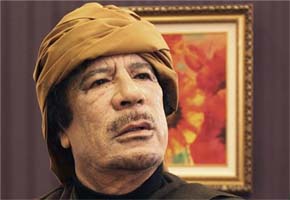
here at a time debate on the relevance of the world body to the geo-political demands of the prevailing uni-polar world gathers momentum. This is due to the routine manner the Western countries dismiss successive United Nations General Assembly resolutions and disregard due process in their engagement with other UN member states.
For Zimbabwe, it marks the 11th straight year the General Assembly convenes with Zimbabwe reeling from an illegal economic sanctions regime the West imposed outside the purview of the United Nations system.
The absurdity of the sanctions regime and the West’s flagrant violation of international law was manifest in the manner the US embassy in Harare once again denied ZBC chief correspondent Reuben Barwe a visa to cover the General Assembly despite the fact that the UN Headquarters is international territory where the US sanctions regime shouldn’t have any force or effect.
More so, the visa denial which was also extended to this writer and other members of the delegation in recent years violates the UN Host Agreement that the United States signed with the UN on June 26, 1947, and which was approved by the General Assembly on October 31, 1947. Section 11 Article IV of the Host Agreement that deals with Communications and Transit of persons to the UN Headquarters stipulates that: “the federal, state or local authorities of the United States shall not impose any impediments to transit to or from the headquarters district of (1) representatives of Members or officials of the United Nations, or of specialised agencies as defined in Article 57, paragraph 2, of the Charter, or the families of such representatives or officials; (2) experts performing missions for the United Nations or for such specialised agencies; (3) representatives of the Press, or of radio, film or other information agencies, who have been accredited by the United Nations.”
Section 12 holds that, “the provisions of Section 11 shall be applicable irrespective of the relations existing between the governments of the persons referred to in that section and the Government of the United States,” with Section 13(a) saying, “laws and regulations in force in the United States regarding the entry of aliens shall not be applied in such manner as to interfere with the privileges referred to in Section 11.
“When visas are required for persons referred to in that Section, they shall be granted without charge and as promptly as possible.”
Despite these clear stipulations of the Host Agreement, members of the Zimbabwean delegation are routinely harassed and selectively denied visas, a development that observers said bids the Government to summon the US ambassador in Harare to register its displeasure over the continued wanton violation of international law by Washington. Zimbabwe’s Permanent Mission here has since lodged its complaint with the Office of UN secretary general, Ban Ki-moon over Reuben Barwe’s case.
This year one of the figures that enthralled the grand debate with his antics and progressive voice, former Libyan leader Colonel Muammar Gaddafi will be missing, murdered in cold blood on October 20 last year during an illegal NATO invasion of Libya launched on the back of violation of Security Council Resolution 1973 that was passed to impose a No-Fly Zone over Libya.
It remains to be seen if it will be business as usual in the General Assembly or whether the world body will have the scourge of its convictions in taking NATO members to account over the Libyan fiasco.
The 67th session also convenes at a time the Cuban embargo that has been condemned by successive UN resolutions over the past 21 years enters its 50th year next month.
The commercial, economic and financial embargo was imposed on Cuba in October 1960, almost two years after the US-backed Batista regime was deposed by the Cuban revolution led by Commandant Fidel Castro, before being extended to a total embargo on February 7, 1962.
The General Assembly whose theme this year dwells on peaceful resolution of international disputes is expected to be seized with the Syrian conflict and an efficient global co-ordinated response to terrorism are among other important issues.
Western-sponsored rebels are engaged in a bloody conflagration with the Assad government in Syria. The US and Europe are calling for sanctions against the Assad government as a prelude to invasion while Russia and China are resisting intervention.
Last month — a day after former UN chief Kofi Annan quit his post as special envoy to Syria — the General Assembly voted 133 to 12 to condemn the Security Council for failing to stem the Syrian crisis, and Mr Ban slammed the Western powers for turning the conflict into a “proxy war”.
The Syrian crisis is expected to dominate debate along with the looming showdown between the US and its proxy, Israel against Iran over the latter’s civilian nuclear programme. President Mugabe is scheduled to address the General Assembly during the annual grand debate that begins on September 25 and runs until October 1.
And his address is always eagerly anticipated as he, along with Venezualan president Hugo Chavez and Mahmoud Ahmadinejad of Iran, is one of the few leaders with the courage to call the global situation as he sees it.



 Online Reporter