Online Reporter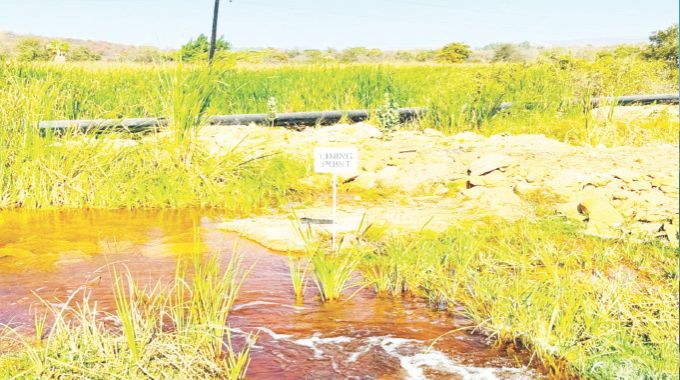
Fairness Moyana in Hwange
FOR generations, the Deka River has been more than a waterway for communities around Hwange. It has been a source of water, fish, livestock and livelihoods.
But years of mining and industrial activity have increasingly turned the river into a source of anxiety, with villagers reporting livestock and fish deaths and skin irritation after coming into contact with the water.
The worsening situation came under the spotlight when the Parliamentary Portfolio Committee on Environment, Climate and Wildlife visited Hwange last week to investigate the extent of pollution in the Deka River catchment.
The fact-finding mission brought together parliamentarians, mining companies, Government departments, traditional leaders and affected communities as Parliament sought to establish the sources of pollution and assess whether measures being taken by authorities and mining companies are sufficient to protect communities and the environment.
The investigation comes against a backdrop of scientific research linking pollution in the Deka River to acid mine drainage from abandoned underground mining operations, industrial effluent and runoff from coal-mining areas.
Acting committee chairperson and Mwenezi North legislator Mr Master Makope said Parliament had a constitutional responsibility to ensure that Zimbabwe’s mineral wealth was exploited without compromising the environment or the rights of communities.
“This committee does not come to pronounce with any predetermined conclusions. We come with open minds, guided only by the law and by the public interest,” he said.
Mr Makope said the committee would establish the nature and extent of mining and waste-disposal activities in the Deka catchment and assess their impact on water quality, human health, wildlife and livelihoods.
The committee would also engage mining companies and regulators on measures being taken to prevent, control and mitigate pollution.
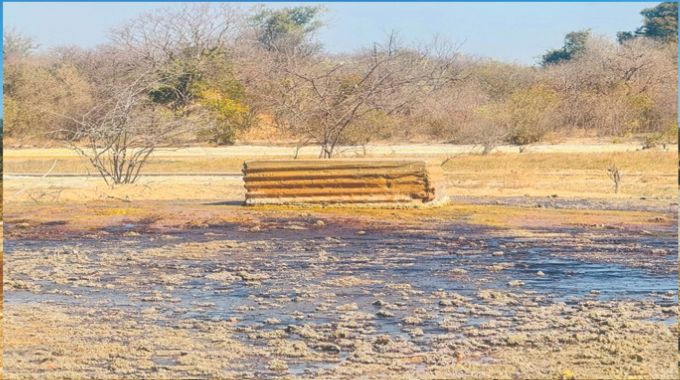
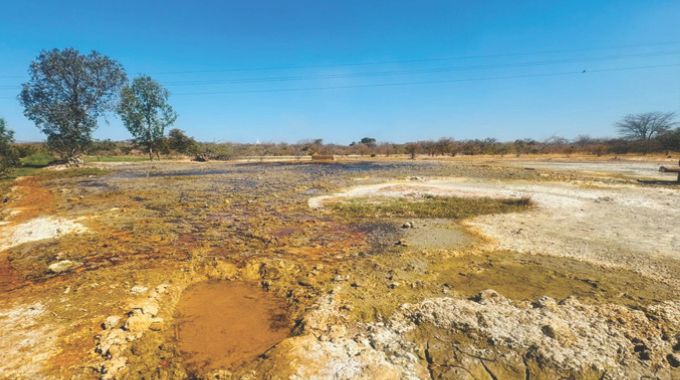
Evidence presented to the committee pointed to abandoned underground mines as one of the major sources of pollution.
Hwange Colliery Company Holdings (HCCL) general manager Engineer Alick Mutisi said the company, which has been mining in Hwange since the 1890s, was grappling with the legacy of old mining operations.
He said the Number 1 colliery, which opened around 1896 and closed in 1958, was now one of the company’s major environmental challenges.
“What is happening is that acidic water is coming out of the mine,” said Eng Mutisi.
He explained that water was escaping from abandoned underground workings through old exploration boreholes and cracks in the surrounding rock before entering the environment.
HCCL safety, health, environment and quality/environmental, social and governance manager Mr Butholezwe Dube said the company was using both passive and chemical treatment methods to control the acid mine drainage.
He said when the water is coming out, the pH will be around 2,8.
HCCL is using wetlands, hydrated lime and a series of four ponds to increase the retention time of the effluent, allowing it to be neutralised before being discharged into Sikabala, which eventually flows into the Deka River.
Mr Dube said the company monitored the water monthly, comparing results from its laboratory with tests conducted by the Environmental Management Agency (EMA) against Zimbabwean standards.
He said employees had also been deployed around the clock to manage the acid mine drainage.
Villagers living along the Deka River, said the interventions are failing to address the full scale of the problem.
Ms Rosemary Shoko of Chachachunda told the committee that pollution had severely affected the community’s livelihoods, particularly livestock production and fishing.
“The pollution of the Deka River has affected us badly. Our livestock have been drinking this water and some have miscarried while others have died,” she said.
“We also depended on fish from the river for food and to sell, but the fish are now dying. When people come into contact with the water, it also causes skin irritation.”
Mr Romano Nyoni of Mashala village said communities could no longer rely on the river as they once did.
“The Deka River is important to our community because we depend on it for water and our livelihoods. But because of the pollution, we are no longer able to use the river freely as we used to,” he said.
“We need the authorities and mining companies to find a lasting solution and ensure that communities have access to safe water.”
Although HCCL has drilled boreholes in affected areas, villagers said more alternative water sources were needed to cater for communities living along the river.
The community concerns are supported by scientific research. A 2023 study by Midlands State University researchers found that pollution levels in sections of the Deka River exceeded World Health Organisation standards for several parameters, including pH, manganese, iron, turbidity and sulphates.
The study also recorded community reports of impacts on health, livestock and livelihoods, including fish and livestock deaths.
Other research by scientists and community monitors has identified abandoned underground mines as significant sources of acid mine drainage, while active mining operations also contribute to pollution. Elevated concentrations of manganese, nickel and arsenic have been reported in the catchment.
The findings have raised questions about the long-term environmental legacy of Hwange’s coal-mining industry and the adequacy of measures to protect communities dependent on the river.
HCCL said it was also working to provide alternative water sources to communities affected by pollution.
Mr Dube said the company had drilled boreholes along the Deka River and recently launched a $6 million pipeline from the Zambezi River, which is expected to supply Hwange town and communities along the route with clean water.
The project is expected to reduce dependence on contaminated water sources and improve access to safe water for communities in the mining district.
However, the Parliamentary committee’s visit suggests that water supply interventions alone will not resolve the underlying environmental problem.
Following the presentations, committee members travelled to various points along the Deka River for an on-site verification exercise led by EMA officials.
The parliamentarians were shown identified pollution sources and interventions being implemented to contain the contamination.
During the inspection, the committee observed significant volumes of acid mine drainage entering the environment.
The findings from the fact-finding mission are expected to inform Parliament’s recommendations on pollution control, environmental protection and sustainable mining practices.