Chronicle Editor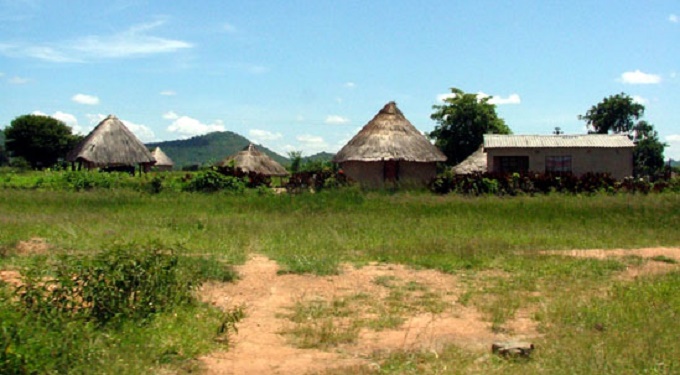
WHEN I got to my rural home at Sankonjana in Kezi the weather was unkind. It was during the month of July. In comparison, June was a peaceful and warm month. I noticed some shift in climate, not so much in terms of weather extremes. The cold season seems to be shifting towards the normally warmer months. I am allergic to the cold and I cannot think straight when my brain is freezing.
The day I arrived the night was pitch black. It was the sort of night when a hyena attacks its rider. Identity is shrouded in the pitch-dark night. The sun had already performed its setting rituals. The champion of the heavenly bodies had exited from the dance arena. The lesser cosmic bodies were taking centre stage. The Milky Way that we wrote about last week graced the performing arena.
Here the people get up early to attend to various domestic chores. The goats have to be milked for the morning tea. After that, tea is prepared and is still a favourite beverage. Tanganda Tea that was my father’s favourite tea brand is still holding out. Whenever I buy these tea leaves, my intension is always beyond a beverage.
Instead, I drink legacy, I drink history and get to reminisce with memories of my father.
Cattle have to be released from the pen and allowed to venture into the grazing pastures. Our area has been terribly overgrazed, denuded and bared. Whenever it rains, the water simply flows away and carries with it grass seeds and soil fertility. Here economic activities are still controlled by cycles of cosmic bodies. It is more or less, as it has always been the case for millennia. Only to a lesser extent has solar powered lighting made inroads into the area. Yes, in some instances buildings that exhibit a new architecture where houses have developed large ears, read satellite dishes.

These are satellite dishes used to capture television signals from South Africa. The House of Zwide is one of the favourite programmes that some people are glued onto at night. It was proved during the few days I was there that my mind is too active to be captured by television. In town, I have no television set, and no radio receiver. When I tried to watch television, I soon found myself soul floating into another world above the one other people sample and enjoy extremely.
The moon was two days from its demise. In their language they say, “inyanga isiselwa.” This is the time when the moon rises in the eastern sky at the time when the sun is about to rise too. The moon has lost its glitter and one could tell it is sick and will soon die, only to regenerate and resurrect soon thereafter.
This important quality of the moon is still cherished as it influences social, cultural and economic events in rural areas. There is strict timing for these events to coincide with maximum potency that underwrites success of rituals. Bringing home ceremonies, weddings and agricultural activities are so scheduled to fall during times of maximum potency and avoid the opposite when ritual potency is not guaranteed.

Firewood is still a major source of energy for cooking, lighting and warming the people. The environment bears the scars of this economic activity. I remember when I was growing up at Sankonjana during the time when the natural landscape was thickly forested. My father’s heavy and devastating axe that he called uMdabulagubula did its fair share of environmental degradation. The numerous donkey population took over.
There are now just too many of these animals that are featured in biblical stories with the Christ riding on one of them. At the time, donkeys were not available in southern Africa. We are told that King Mzilikazi first saw a donkey when he lived at Inyathi. The animals are adapted to dry conditions.
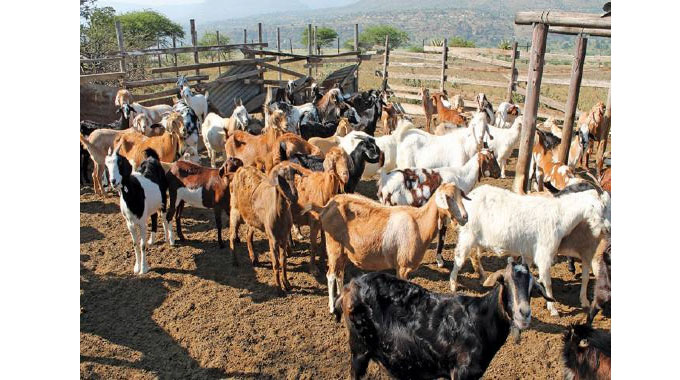
The disciplined sources of draught power are reputed with grazing day and night. Given their ever-zooming populations, the landscape has no chance to recover. At night, they sleep in a standing position. Strange beasts of burden. The goat population too has mushroomed. These graze on acacia leaves, which abound in arid areas. Goats are a source of protein as they reach maturity earlier than the more prized cattle. Their milk is handy when it comes to preparation of tea to which the rural folk is addicted. They always talk about headaches when they do not get their daily teas, quite often without bread. It is a question of affordability as trucks from various bakeries such as Bakers Inn and Oceans do get to our home area. Other traders make use of buses. Both Dubies and the resurrected Pelandaba Bus Service transport the much-cherished bread to the rural areas. There is sustained onslaught on the tongues of the rural folks in order to develop a preference for urban products.
Even here, there are strong ideas relating to the cosmic bodies. I looked at the Milky Way, umthala and just wondered how it was named. I realised that the name came out of keen observation of the anatomy of a cows’ stomach. This vast chewed grass storage is not uniformly structured. The massive bag has a part that is thick, whitish and meanders like a river. The same word has been used in reference to a type of grass in some rivers within the Matobo natural landscape. A river never charts a straight course. The same is true of the bolder section of a cow’s stomach.
When I began writing this section of the article there were several ideas that started zooming through my mind. A word came racing towards my mind. UMthala. This is a word from a language that is not IsiNdebele. Many years ago, I wrote the biography of one Dickson Netsha Sibanda, a businessman from Tsholotsho who assisted ZAPU/ZPRA in Zambia during the armed liberation struggle. It was at the time of researching the history of his people that I came across the name of a place called Mathalethale. It was a place of spiritual significance.
Another name also made its way into my mind. Talawunda. The concepts were similar with the latter referring to the Moyos that are found in Kezi and Brunapeg. Tala unda invoked in my mind the idea of making a line. Finally, there came the name of a city in the Eastern Highlands. Mutare. I was convinced there were conceptual similarities among all these words in different languages. Essentially, these are Bantu languages that attach the same concepts to words with the same sounds.
On the cow’s stomach, it is as if a line of different tissue has been made, a line has been drawn. In all the instances given above, the same concept is implied. Umthala is a name so given in order to capture the concept that is exhibited in the anatomy of the stomach of a cow. In terms of taste, umthala, tastes nicer. However, the naming came from the perceived drawn line of a tissue that is different from the rest of the chewed grass bag. Those who are observant enough can tell time from the changing positions of cosmic bodies that are traversing the firmament. There are observable associated changes on many fronts on earth. Cosmic bodies do not remain in the same position throughout the night. The Milky Way is no exception. All the cosmic bodies are in constant motion. It is these shifting positions in the firmament that were observed to lead to changes on earth. Cosmic movements are associated with several changes some of which embrace temperature, amount of heat available in the atmosphere, prospects for rain, frost and other environmental conditions. Indeed, the weather and climate are not spared either.
It is worth noting that the Milky Way is several light years away from earth. Despite the vast distance, some African communities saw the spiral nature of the Milky Way and admired its artistic design. The curved spirals are very distinct and captivating. African communities in admiration of the artistic designs sought to replicate the Milky Way at the cultural plane on earth. We have, in the past, cited ilala baskets of the Ndebele and the Tonga. Both communities have captured the enchanting spirals and planted them on their baskets.
As I pondered over the naming of umthala the Milky Way, I found myself interrogating which was named first, the Milky Way as umthala or umthala as part of a cow’s stomach. The similarities are quite clear. However, it is important to know whether the image and anatomy of a cow’s stomach was projected upwards. If so, it was a case of “As below, so above.” It is such matters that my mind seeks answers to. Is it the Milky Way, uMthala that inspired the name of the part of a cow’s stomach? If that was the case, then we end up with the other better-known African adage, “As above, so below.”

Essentially the question is which is older, the Milky Way or the stomach of a cow? A cow started as a wild animal living in the bush veld, undomesticated. Humans used to hunt animals and the cow would have been one of the hunted species. I have no doubt that at the time of the domestication of cows; the Milk Way was already in existence. If that be, the case, then the Milky Way is the cosmic phenomenon that led to the naming of a portion of the cow’s stomach and not the other way round.
Where similarities are observed, naming is done to bring out those observed similarities. Let us give another example. From a life of foraging and hunting, communities engaged in agricultural activities. Once they began doing that, they realised some link between certain stars and the commencement of the ploughing season.
We are here referring to the stars known as isilimela, whose name is derived from ukulima, cultivating. I am of the view that agricultural practice was adopted. When humans, in particular African communities, engaged in agriculture, they observed some link between the commencement of agriculture activities and the appearance of isilimela, Pleiades. An economic activity on earth led to the naming of some stars. It was a question of learning through association….



 Online Reporter