admin
admin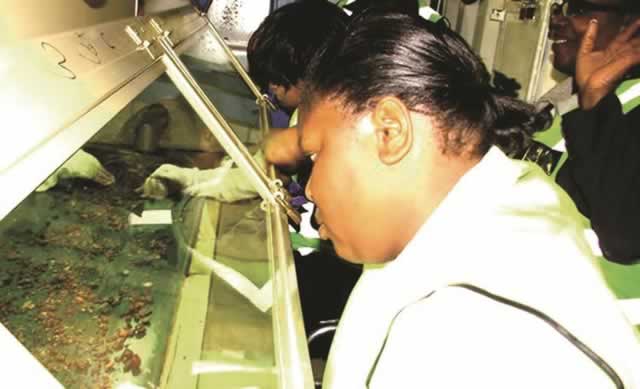
Business Reporter…
Global value chains (GVC) that operate in a transparent and accountable way can be an engine for sustainable development in Zimbabwe and on the African continent. In its 2014 African Economic Outlook, African Development Bank (AfDB) said Zimbabwe is currently integrated in global value chains in agriculture, mining, manufacturing, clothing and textiles, wood, timber and fertilisers.
Zimbabwe has some of the largest deposits of diamonds, gold and platinum in the world.
“The development potential of the mining sector can be maximised through building resource linkages with the rest of the economy. This includes revenue linkages, backward linkages (supply chains), forward linkages (value addition/beneficiation) and knowledge and spatial linkages to create new industries associated with mining,” said AfDB.
“This is particularly important in that economic recovery in Zimbabwe hinges on the mining sector.
“The government needs to build capacity and support private sector participation, especially in SMEs. It also needs to develop an institutional framework for public-private partnerships, in particular to develop world-class infrastructure.”
The GVC of the diamond industry includes exploration, mining, sorting, polishing, dealing, jewellery manufacturing and retail.
The report argues that more effective participation in regional and global value chains — the range of activities in different countries that bring a product from conception to delivery to the consumer — could serve as a springboard for Africa in economic diversification, domestic resource mobilisation and investments in critical infrastructure. In order to do so, however, the continent needs to avoid getting stuck in low value-added activities.
Africa’s exports to the rest of the world grew faster than those of any other region in 2012, but they remain dominated by primary commodities and accounted for only 3.5 percent of world merchandise exports in 2012.
Avoiding that trap, the report said, entailed investing in new and more productive sectors, building skills, creating jobs and acquiring new technology, knowledge and market information. These interventions require sound public policies, as well as entrepreneurs that are willing and capable of helping achieve these gains.
“African economies have a great potential to build on their demographic dynamism, rapid urbanisation and natural-resources assets. The challenge now for many of them is to ensure that greater insertion into global value chains is achieved and has a positive impact on people’s lives,” said Mario Pezzini, Director of the OECD Development Centre.
“Public policies need to be articulated in a targeted strategy that promotes more equitable economic and social transformation and an environmentally sound development,” he added.
The African Economic Outlook shows that there has been remarkable progress in human development, with lower poverty levels, rising incomes and improving rates of school enrolment and health coverage.
Further achieving real human development gains requires empowering people and ensuring environmental sustainability, so that economic growth can yield benefits for all. In order for value chains to effectively integrate the poor and marginalised, often including women, targeted public policies and inclusive business models should facilitate access to productive assets such as land and financing, enhance productivity, and improve the resilience of small producers.
“As engagement with global value chains deepens, the appropriate measures need to be in place to mitigate the risks which they can bring about, such as volatile prices, unfair competition and increased vulnerability,” said Pedro Conceição, Chief Economist at UNDP’s Regional Bureau for Africa.
“While regional and global economic networks present immense opportunities, women, men and communities must be able to compete from a position of strength.”



 Online Reporter