Online Reporter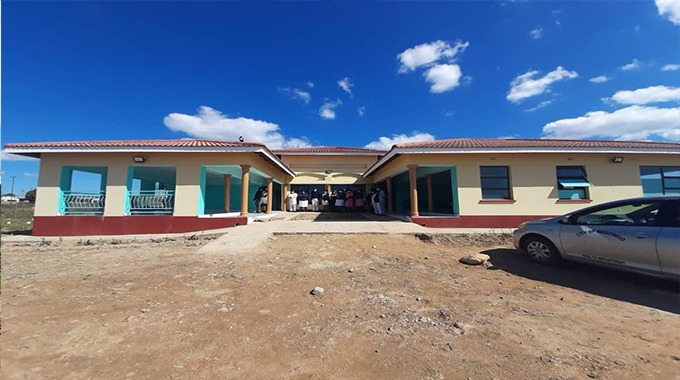
George Maponga in Masvingo
IT’S a Tuesday wintery morning and hordes of women with children of varying ages strapped on their backs,have formed a meandering queue that snakes through a dusty thoroughfare extending into Runyararo West suburb, one of the most populous areas in Masvingo City.
Runyararo North West Medical Centre, a newly-minted modern health facility is the rendezvous of the predominantly female population seeking medical care. As the clock ticks towards 7am, the queue continues to get longer, confirming the health facility’s indispensability in the daily lives of the residents of Runyararo West and the adjacent Victoria Range suburb.
For Itai Hwenjere, a Victoria Range resident, the opening of Runyararo North West Medical Centre was a health tonic in the lives of residents in the suburb and others from the nearby greater Masvingo West rural constituency.
Hwenjere believes that the new state-of-the-art medical facility is also a lifeline for rural communities domiciled on the western fringes that border Victoria Range in the country’s oldest town.
“This clinic (Runyararo North West Medical Centre) could not have been built at a better time because we no longer have to travel all the way to Mazorodze in Mucheke A or Runyararo West in Mucheke D, which is too far for people in need of medical attention. Even villagers from rural parts of Masvingo West constituency are now coming to Runyararo North West Medical Centre for assistance,” said Hwenjere.
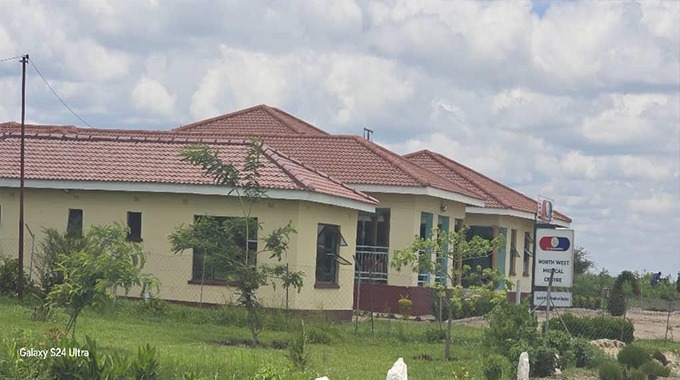
Runyararo North West Medical Centre is one of the flagship projects in Masvingo City that was built using devolution funds. The new health facility opened its doors in 2023 and has a catchment of over 30 000 people, in both Masvingo City and rural parts of Masvingo West constituency.
“We want to thank the Second Republic for intensifying the devolution initiative. The Government and council entered into a partnership that has changed the face of our health sector in Masvingo City,” said Hwenjere.
Devolution has indeed added impetus to Masvingo City’s plans to morph into an industrialised metropolitan by 2030. The city’s march towards becoming a world-class city would lose steam in the absence of a solid health pedestal on which the urban settlement’s population will have its health guaranteed.
The coming on board of Runyararo North West Medical Centre reduced pressure for health services on Masvingo Provincial Hospital, which also serves as the province’s health referral centre.
The devolution programme has created visible footprints on Masvingo City’s socio-economic landscape, which dovetails with the national agenda of propelling Zimbabwe into an upper-middle-income economy.
Masvingo City Council also implemented several other projects using the devolution funds, in the process, stimulating socio-economic development that speaks to President Mnangagwa’s “leaving no one and no place behind” philosophy.
The mothballed Runyararo West sewer trunk-line project received a kiss of life through devolution funds after work had stalled, owing to funding dearth.
The seven-kilometre sewer trunk-line project is now poised for completion courtesy of devolution funding, with a lot of groundwork already covered after the project had stalled over a decade ago. Upon completion, this project will connect more than 10 000 houses in Victoria Range suburb to the city’s sewer system.
Residents in the suburb use ecosan toilets and the sewer trunk-line will feed waste into the Rujeko sewer pump station.
Besides giving a sewer lifeline to the entire Victoria Ranch, over 200 houses built under the Garikai/Hlalani Kuhle initiative will also be connected to the city’s sewer system, while other planned housing developments in the Jairos Jiri area will also have leeway for being connected to the sewerage system, thanks to devolution funding.
Masvingo City Council has also used the devolution purse to ease biting water challenges across the ancient city’s suburbs such as Rujeko and Mucheke through the installation of solarised boreholes, to ensure the availability of potable water.
Solarised boreholes in populous suburban areas in Masvingo have been a Godsent in making sure residents have access to clean water, in the process helping the ancient city accrue a top score in the sphere of water and sanitation.
New and upgraded vending markets have also been opened at Sisk, Chitima market and in the Masvingo City Centre using the devolution financial muscle, enabling traders to have clean and spacious operating spaces where they are regulated, allowing the local authority to collect rates from them, thereby boosting its coffers.
Masvingo United Residents and Ratepayers Alliance (Murra) spokesperson Mr Godfrey Mutimba, hailed the Government and Masvingo City Council for financing the implementation of projects that have a direct bearing on the lives of residents, using devolution funds.
Mr Mutimba said the city’s health and informal trading spheres had oxygen pumped into their lungs thanks to devolution, which enabled the building of the new Runyararo North West Medical Centre and vending markets for city informal traders.
“‘As the biggest residents’ representative body in Masvingo City, we want to commend the government for disbursing devolution funds to our local authority that has in turn enabled the council to embark on a number of game-changing projects that are helping vulnerable residents. We want to commend Masvingo City Council for using those devolution funds to construct and complete projects like Runyararo North West Clinic, which is now helping hundreds of previously marginalised residents to access health services more easily,” said Mr Mutimba.
“Previously, residents would walk very long distances to access health services, but now, people in Runyararo West and Victoria Range suburb are easily accessing health services and what makes this clinic project more critical and timely is that Runyararo North West clinic has a maternity wing where expecting mothers can also give birth and this has the net effect of reducing pressure on Masvingo Provincial Hospital that has to cater for the whole province.”
Masvingo Informal Traders Association (Mita) president Mr Gilbert Chikwata, lauded the devolution initiative for giving Masvingo City Council the financial wherewithal to implement some projects that had been mothballed, owing to lack of funds.
“We want to applaud Masvingo City Council for prioritising game-changing projects for completion using devolution funds and as informal traders in the city, we are happy with the increasing number of solarised boreholes, especially in overpopulated high-density suburbs where water shortages are rife. We also hope the long-awaited sewer trunk-line project will be completed using devolution funding so that Runyararo West and the greater Victoria Range suburbs can be connected to the city`s sewer system,” he said.
Mr Chikwata applauded Masvingo City Council for an exhaustive consultative process to get residents’ consensus on priority projects that must be financed using devolution funds.
Masvingo Town Clerk, Engineer Edward Mukaratirwa, paid tribute to the Second Republic for putting wind in the sails of the devolution initiative, making sure local authorities were financially capacitated to implement projects and programmes that improve the lives of ordinary people.
Eng Mukaratirwa said Masvingo City was eyeing industrialised world-class city status by 2030, noting that the country’s oldest town was using devolution funds to improve infrastructure such as clinics, schools and sewer systems.
Council has jointly partnered with the Government to build Rujeko Secondary School in the city, to ease hot seating and stem perennial shortages of secondary school places.
“We want to pay tribute to President Mnangagwa and the Second Republic for unlocking additional funding for local authorities, devolution funding, which is helping us to finance some high capital projects that had stalled because of underfunding.
“The new Runyararo North West Medical Centre has brought relief to our residents who no longer have to travel long distances to access health services and this speaks directly to our quest to become an industrialised metropolitan by 2030,” said Eng Mukaratirwa.
Eng Mukaratirwa said he was upbeat about the city’s prospects to attain its goals to evolve into a world-class city, noting that the country’s oldest town was also exploring additional ways of raising enough capital to roll out the water augmentation project expected to gobble over US$70 million.
The project envisages duplicating the current water pumping, purification, conveyancing and storage infrastructure to ramp up daily output to 60 megalitres and ensure that on top of several solarised boreholes, all the city’s suburbs have an uninterrupted water supply daily.
Council is also working flat out to develop a new landfill at Cambria Farm, to end nagging challenges in waste disposal while the city’s street lighting system is also set to be upgraded, conforming to the requirements stipulated in Masvingo City’s 20-year master plan that has also resolved to develop a new central business district across Mucheke River.
Minister of State for Masvingo Provincial Affairs and Devolution, Ezra Chadzamira hailed Masvingo City Council for using the devolution funds to implement projects that have a direct bearing on the lives of residents.
The minister noted that the continued growth and expansion of the country’s oldest town required regular investment in infrastructure and other services such as water and sanitation, which dovetails with President Mnangagwa’s vision of propelling Zimbabwe into an upper-middle-income society by 2030.
For Masvingo City Council, devolution funding will for the foreseeable future remain a vital cog in the ancient city’s development trajectory as the city pulls all the stops to attain industrialised metropolitan status by 2030.