Chronicle Editor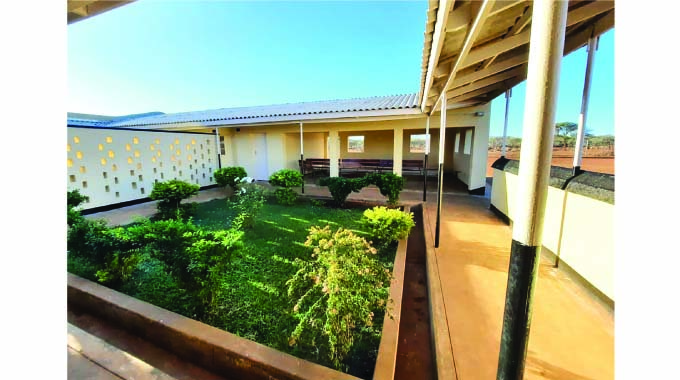
Sukulwenkosi Dube-Matutu, Matabeleland South Bureau Chief
THE devolution programme has seen the construction of clinics reduce distances walked by villagers in Gwanda District as well as rehabilitation of key infrastructure.
Since 2019, the council in Gwanda has received $85 million in devolution funds. The local authority has constructed Mandihongola Clinic in Ward 14, Tshanyaugwe Clinic in Ward 18 which are both set to be commissioned before year end.
Council has also built a waiting mother’s shelter at Garanyemba Clinic and Mashaba Clinic which are also set to be operational before year end.
Council is also in the process of constructing a girl’s hostel at Mzimuni High School in a bid to reduce distances walked by learners. The project is expected to be complete by year end.
Devolution funds have also been used to rehabilitate three clinics in the district and five schools that were damaged by heavy rains.
In 2019, council received $6,7 million in 2020 $8 million, $42,5 million in 2021 and this year the local authority has received $29,3 million.
Gwanda Rural District Council chief executive officer, Mr Ranganani Sibanda said Mandihongola Clinic which was set to be commissioned before year end was targeting over 2 500 households.
He said it will reduce distance walked by villagers as some had to travel about 10 kilometres to the nearest health facility which is Ntalale Clinic.
Mr Sibanda said the clinic will also benefit villagers from neighbouring Matobo District.
“Since 2019 we have received $85 301 096 through the devolution programme and we have managed to roll out a number of projects. The funds have helped us significantly to improve on service delivery.
We started constructing Mangihongola Clinic in 2020 and we are left with a few works such as tubing, wiring, installation of solar system at staff cottages among other final touches,” he said.
“We are in the process of constructing Mzimuni High School girl’s hostel. The purpose of this project is to reduce distances walked by learners. For now, we are targeting the girl child and then we will move on to construct a hostel for the boys.
Distances walked by learners contribute significantly to the performance.”
He said council also came in to assist in the construction of Tshanyaugwe Clinic which is set to be completed by year end. Mr Sibanda said initial funding had come from the community, CDF programme and International Organisation for Migration (IOM).
Ntalale, Mapate and Silikwe Clinics were rehabilitated this year using devolution funds. Makokwe Primary, Mtandawenema Primary, Lumene Primary and Bengo Primary Schools have also been rehabilitated using devolution funds.
Mr Sibanda said repairs were still ongoing at Nyambi Primary School.
“We are also constructing a classroom block at Connemara Primary School.
As part of our 100 day cycle projects we are constructing ECD blocks at Mahwanke, Zhukwe and Makokwe Primary Schools.
We expect to have completed these projects by year end. The district has recorded significant development as a result of devolution funds.
The funds have helped to address key thematic areas of education, machinery and equipment, infrastructure and health,” he said.
Devolution funds are assisting local authorities fulfil their obligation of ensuring improved access to social amenities across the country through development of key infrastructure such as clinics, classroom blocks, roads and bridges among other facilities.
Social amenities and infrastructure development are some of the major pillars of the National Development Strategy 1 (NDS1).
The devolution programme is one of the key pillars under the NSD1 which is the country’s first five-year medium term plan aimed at realising the country’s Vision 2030 while simultaneously addressing the global aspirations of the Sustainable Development Goals (SDGs) and Africa Agenda 2063.
The overarching goal of the NSD1 is to ensure high, accelerated, inclusive and sustainable economic growth as well as socio-economic transformation and development as the country moves towards an upper middle-income society by 2030. – @DubeMatutu


 Online Reporter