

 admin
admin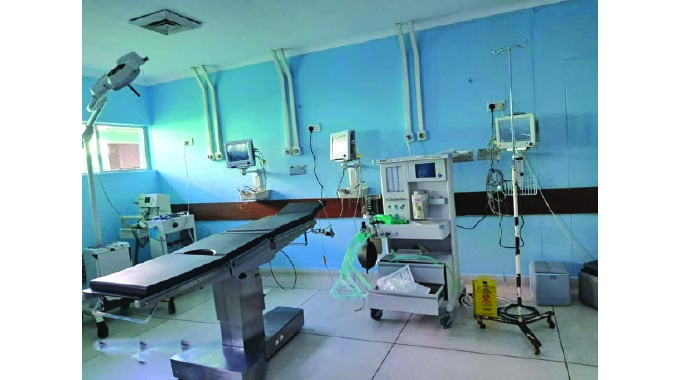
Fungai Lupande-Mashonaland Central Bureau
THE recruitment of 10 specialist surgeons at Bindura Hospital in Mashonaland Central is another crucial step in the country’s devolution revolution, which will hand over valuable healthcare power to communities in Mashonaland Central Province.
The Second Republic has fully embraced devolution as a strategy to facilitate rapid economic growth as the Government seeks to achieve an upper middle income economy status by 2030.
Devolution was adopted as a key component of the new Constitution of Zimbabwe of 2013 and is recognised as one of the Founding Values and Principles to the Constitution.
Apart from facilitating rapid economic growth, devolution is now being embraced by the healthcare sector to enhance efficiency within health systems and to improve population health outcomes in various rural and urban underserved areas.
The presence of 10 specialist surgeons at Bindura Hospital now reduces referrals to hospitals in Harare, helping to cut down on out-of-pocket expenses for patients.
It follows the Government’s decision to increase the establishment of specialist services at provincial hospitals from nine to 20.
The decentralisation of specialised care has saved the lives of people in the province, who no longer need to travel to Harare for emergency surgery.
Bindura Hospital now has two obstetricians and gynaecologists, two general surgeons, an orthopaedic surgeon, a physician, a paediatrician, an ear, nose and throat specialist, an ophthalmologist and a neurosurgeon.
“We are happy that we have managed to attract several specialists compared to the past. Our patients traditionally travelled to Harare to seek specialist services but now they can access the service closer,” said hospital medical superintendent Dr Budirirai Gwagwa.
“We have scaled up the number of life-saving operations being done at the hospital. We are thankful for the increase in specialists and the support we are getting from the Government. We are happy that we still have room to recruit more.”
He said the hospital is now in the process of recruiting a specialist anaesthetist to complement the nurse anaesthetist, who has been administering the service.
To maximise this increase in specialist surgeons, the hospital has engaged a mining concession to expand its labour ward.
He said the design of the maternity ward includes a stand-alone maternity theatre.
Currently, the hospital has two operating theatre rooms and the maternity theatre will free the rooms and create more operating space.
Dr Gwagwa said the team of specialist doctors has greatly enhanced both the training of students and the accessibility of specialised medical services in the province.

Dr Gwagwa
The hospital has limited theatre rooms for the surgeons.
Bindura Hospital is a district hospital and the Treasury has allocated ZiG$1 million for preliminary work at the new site for a provincial hospital. The new site is located close to the Chanaka Business Centre in Bindura.
Creation of the new hospital designs is now at an advanced stage and awaits approval by principals in the Ministry of Health and Child Care.
Dr Gwagwa said the new design includes a big theatre with multiple operating rooms.
Meanwhile, Bindura Hospital has acquired critical biomedical equipment to bolster theatre services. The hospital procured an anaesthetic machine, overhead suspended operating theatre lights and a range of equipment for the theatre and the maternal wing.
The hospital also established a High Dependency Unit last year, to advance patient care.
To respond to the drug and substance abuse, it established Chipadze Rehabilitation Centre in August last year.
“Treasury has released ZiG830 000 towards procurement of medicines and food provisions at the rehabilitation centre,” Dr Gwagwa said.
“Freda Rebecca Gold Mine’s recent refurbishment and commissioning of an incinerator underscores our commitment to environmental stewardship and responsible waste management. In response to the challenges posed by power outages, we have installed a 40 KVA solar plant. This has significantly reduced operational downtime and uninterrupted service delivery.”
The hospital now has a 40-seater Tata bus to ferry staff to and from work.
Dr Gwagwa thanked Bindura North MP Kenneth Musanhu for assisting the hospital in the rehabilitation of a borehole.
The hospital, however, still lacks critical services like a renal unit, Intensive Care Unit, Echocardiography and CT scan.
Dr Gwagwa said the missing units underscore the pressing need for continued investment and support.
“Other challenges include inadequate staff and student accommodation, an ageing fleet of service vehicles. Inadequate potable water negatively impacts hospital operations.
“Despite these challenges, I am confident that the collective dedication and unwavering commitment of our management, staff and stakeholders pave the way for a brighter and healthier future for all.”
Narrating the history of the hospital, Dr Gwagwa said what started as small thatched houses around 1930, Bindura Hospital is now a tertiary referral hospital for eight districts in the province.
The hospital started by providing healthcare to the white population and was later divided into the Michael Appleby wing (current maternity wing), catering to the whites, while the other side provided services to indigenous black communities.
Bindura Hospital now has a bed capacity of 180, with an average occupancy rate of 85 percent.
The provincial medical director, Dr Clemence Tshuma, said Bindura Hospital no longer has reason to refer patients to Harare.
“We now have most of the specialists, although we still have some constraints. These surgeons need a specialist anaesthetist, which we currently don’t have. We are using a nurse anaesthetist. The hospital might not be able to carry out certain operations.
“Our theatres are limited and some of the surgeons might not be able to work every day as they have to share the theatre. However, we have improved service delivery and soon we won’t have reasons to send patients to Harare.”
In addition, the Bindura Hospital opened a sickle cell clinic, a well-equipped high-dependency ward, a paediatric outpatient clinic and an annexe for substance abuse detoxification.
This outpatient department, which is separate from the accident and emergency department, now offers a 24-hour service.
The devolution programme being implemented by the Second Republic has become one of the anchors of development as it steps up efforts to ensure economic growth and improved service delivery to all corners of the country.
The devolution programme in Zimbabwe can be traced to the Zimbabwe Constitution Amendment (No. 20) Act 2013.
For years, progress in rolling out the programme was slow until the Second Republic in 2017 started accelerating the implementation of the constitutional provision that defined devolution. The Second Republic started allocating budgets to local authorities for funding devolution, with the programme receiving $2,93 billion (old currency) in the 2020 national budget, $19,5 billion in 2021, $42 billion in 2022 and $195 billion in 2023.
This year, about $2,7 trillion (old currency) was allocated towards devolution initiatives that aim to promote the equitable distribution of national resources and empower local communities to participate in their development.
These budget allocations signal a new approach to the implementation of the devolution concept under the Second Republic.


 Peter Tanyanyiwa
 Online Reporter