Lovemore Kadzura
Post Reporter
ACROSS many communities, schools still carry the legacy of a bygone era — built for smaller populations, simpler curricula, and minimal technological demands.
Today, those same classrooms, laboratories, and facilities are expected to support 21st century learning, exposing a widening gap between learners’ needs and what their environments can provide.
In countless schools, aging buildings stand as both symbols of resilience and stark reminders of the urgent need for renewal.
Cracked walls, leaking roofs, and worn out furniture are now commonplace. Electrical systems designed decades ago struggle to power modern devices, while science laboratories lack the equipment required for meaningful experimentation.
Teachers continue to adapt, reimagining lessons to fit the limitations of their spaces. Creativity often fills the gaps where resources fall short. Yet even the most dedicated educators face barriers when infrastructure fails to support innovation. Many schools, now over 80-years-old, can no longer withstand the vagaries of weather and climate change.
Increasingly, hailstorms and strong winds leave learners and teachers exposed to the dangers of collapsing walls and roofs.
The Ministry of Primary and Secondary Education recently announced plans to rescue 237 schools damaged during the rainy season, most of them old rural institutions.
According to the ministry’s director of communications and advocacy, Mr Taungana Ndoro, Manicaland Province has borne the greatest brunt, with schools regularly affected during heavy rains.
To address these challenges, the ministry is rolling out the Smart Schools model nationwide.
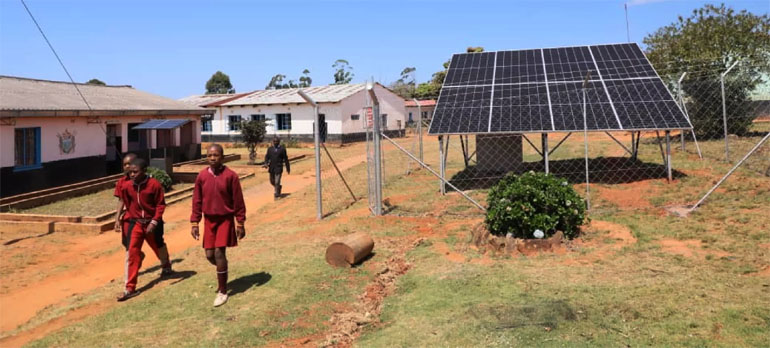
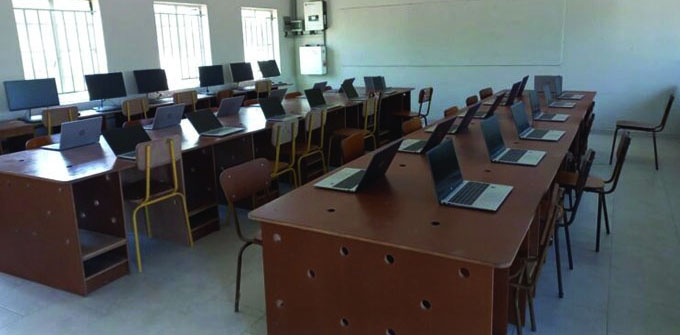
This initiative includes the construction of climate proof structures, installation of solar powered boreholes, and establishment of digital laboratories—steps aimed at transforming schools into safe, modern, and resilient learning environments.
“Following the recent assessments, Manicaland Province accounts for a number of schools that were damaged by the rains. However, I do not have the statistics for the province. The province was one of the hardest hit due to the topography and intensity of the rains. These schools are a top priority for the ministry under the immediate rehabilitation phase.
“The ministry is implementing a phased strategy. We recognise that a significant portion of our school stock, especially in rural areas, was built decades ago. In the short term, we are prioritising emergency repairs for roofs, window frames, and cracked walls that pose safety risks. In the medium to long term, the ministry is working with the Ministry of Local Government and Public Works to roll out the ‘Smart Schools’ model. This involves constructing modern, climate-proof structures (using alternative building technologies like stabilized soil blocks to reduce costs) that include solar powered boreholes and digital laboratories.
For teacher accommodation, we have entered into Public-Private Partnerships to construct housing units as we understand that lack of decent housing is a major factor affecting teacher retention in remote areas,” he said.
Turning to sub-standard structures which are prevalent in resettlement areas, Mr Ndoro said such schools are going to receive modern and state-of-the-art infrastructure so that no learner learns in dangerous buildings.
“The ministry is aware that in some older resettlement areas, former farm outbuildings (such as barns or sheds) are still being used as make shift classrooms. This is not an ideal learning environment, and we are moving to phase this out. Our plan involves a multi-pronged approach that is in areas where new permanent blocks are under construction, we are providing temporary mobile classroom tents to allow for the immediate decommissioning of unsafe farm structures.
“We have identified priority schools in resettlement areas across Manicaland, Mashonaland and Matabeleland provinces to receive complete new buildings that are classroom blocks, administration blocks and VIP latrines to replace farm infrastructure.
‘‘We do not anticipate new school registration in resettlement areas unless the developer commits to constructing purpose-built structures from the outset, rather than relying on converted farm buildings. We are committed to ensuring that every child, regardless of their location, learns in a safe and dignified environment,” said Mr Ndoro.
Zimbabwe Rural Teachers union president, Mr Martin Chaburumunda called upon responsible authorities to take decisive action to rehabilitate ageing schools or to build new proper structures to support the growth of quality education.
“The impact of old and dilapidated infrastructure on learners can be profound. Learners in under-resourced environments may struggle to stay engaged, not because they lack ability, but because their surroundings do not inspire or facilitate active learning. Overcrowded classrooms can limit individual attention, affect concentration and overall well-being.
“Renewal of old school infrastructure is no longer a luxury, it is a necessity. Modern learning spaces are designed to be flexible, inclusive, and technology-driven. Upgraded classrooms can support interactive teaching methods, collaborative work and digital integration. Science and computer labs equipped with current tools open doors to practical skills and innovation.
‘‘Even simple improvements, such as proper lighting, safe sanitation facilities and comfortable seating, can significantly enhance the learning experience.
“Investment in infrastructure also sends a powerful message, that education matters. When learners walk into a well-maintained, adequately equipped school, it fosters a sense of pride and motivation. It tells them that their future is worth investing in. Community members, government, and stakeholders such as churches all play a role in this transformation” he said.
He added that, not only classrooms and administration blocks require attention, but also teacher accommodation and electrification of rural schools help to retain experienced educators and curb rural to urban migration.
He said school leaders should also be innovative and launch initiatives of inviting alumni to come back and invest in schools that moulded them.
“Public funding, private partnerships and community-driven initiatives can come together to rebuild and modernise educational spaces.
‘‘Former learners can be invited to partner their former schools and contribute in the improvement of infrastructure. While the costs of mordenising may be significant, the long-term benefits include an empowered, skilled, and confident generation which far outweigh the investment. Teacher accommodation has been a long standing challenge that require attention as we have teachers in rural areas who are renting rooms at grocery shops due to lack of houses at their work stations,” said Mr Chaburumunda.