Online Reporter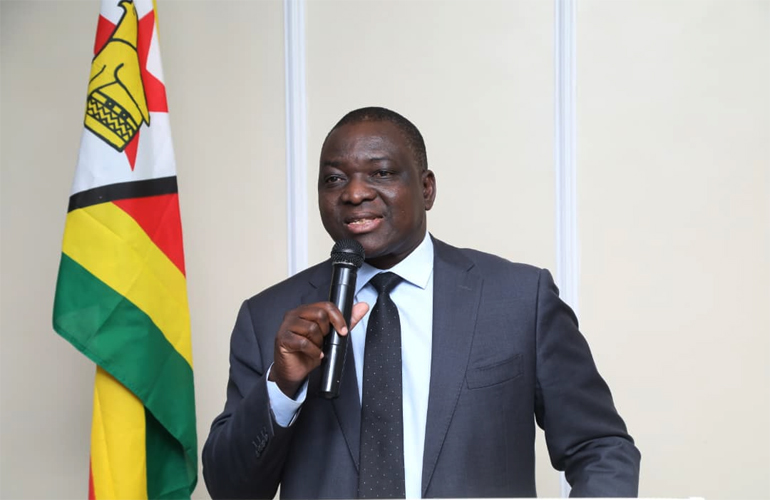
Ray Bande
Senior Reporter
THE media industry’s ability to generate revenue from digital platforms remains one of the most pressing challenges in an era of rapid technological transformation, Information, Publicity and Broadcasting Services Minister, Dr Zhemu Soda has said.
Speaking during his ministry’s mid-term performance review workshop in Vumba early this week, Dr Soda, said while Zimbabwe’s media sector has embraced digitisation, equal attention must now be directed towards ensuring that digital platforms become financially sustainable.
“I am pleased that digitisation remains at the centre of our discussions because that is the direction the world is taking. However, we must also seriously consider issues of monetisation. That is the biggest challenge confronting the media industry today, and we need to collectively find lasting solutions. We cannot continue investing in digital platforms without generating value from them,” said Dr Soda.
The minister said Zimbabwe’s changing position on the international stage presents new opportunities and responsibilities for the media sector.
“Zimbabwe’s place within the global community has significantly evolved. We are now serving as a non-permanent member of the United Nations Security Council, and are preparing to assume the chairmanship of COMESA this year. This places our country at the centre of regional and international decision-making processes.
“As a result, our media must rise to the occasion by helping to unite Zimbabweans around Vision 2030, while also showcasing investment, trade and business opportunities available in the country,” he said.
Dr Soda urged media organisations to establish specialised business desks capable of producing regular and informative content on key economic sectors.
“We need dedicated business coverage that highlights industrialisation, agro-processing, energy value chains, mineral beneficiation and other strategic sectors of the economy. The media has a critical role to play in promoting national development and economic growth,” he said.
Dr Soda also challenged officials within his ministry to remain innovative and results-oriented despite resource constraints affecting programme implementation.
“This mid-term review provides us with an opportunity to assess our achievements, confront our challenges and recommit ourselves to delivering on the mandate entrusted to us by His Excellency, President Mnangagwa.
“Our ministry occupies a strategic position in the Government. We are responsible for leading the Government communication, facilitating access to information, promoting media development and safeguarding Zimbabwe’s image,” he said.
While acknowledging progress made during the first half of the year, Dr Soda said funding shortfalls slowed the implementation of several programmes.
“Some projects have experienced delays due to resource limitations, procurement processes and infrastructure-related challenges. In certain areas, implementation has not progressed at the pace we anticipated.
“As leaders, however, we must continuously seek innovative solutions rather than allow challenges to define our destiny. At this stage of the year, we would ordinarily expect to have received about 50 percent of our budget allocation. As things stand, we are only approaching 22 percent of funds released by Treasury.”
To improve coordination and address funding challenges, Dr Soda announced the establishment of a joint committee comprising officials from his ministry and the Ministry of Finance, Economic Development and Investment Promotion.
“The committee, which will include deputy ministers from both ministries, will regularly engage on issues relating to the release of funds and programme implementation,” he said.
In his welcome remarks, Minister of State for Manicaland Provincial Affairs and Devolution, Advocate Misheck Mugadza, hailed the Second Republic’s efforts to expand access to information through the licencing of additional radio stations.
He noted that Manicaland now has more radio stations than any other province in Zimbabwe, a development he attributed to the Government’s policy of democratising the airwaves.
“President Mnangagwa has anchored the Second Republic’s media agenda on the democratisation of the airwaves and information inclusivity, recognising access to information as a fundamental right that should leave no one and no place behind.
“Under his leadership, the media is, not merely an observer of development, but a critical partner in economic transformation, helping to tell the authentic Zimbabwean story and mobilising citizens towards the achievement of Vision 2030,” he said.
Minister Mugadza said Manicaland has emerged as a model province in media pluralism and community participation.
“We take pride in the fact that Manicaland now boasts more radio stations than any other province. Through the deliberate expansion of broadcasting services, communities can now access local content tailored to their languages, cultures and developmental needs,” said Minister Mugadza.
He highlighted the crucial role played by community radio stations in disaster preparedness and response, particularly in a province that continues to face climate-related risks.
“Having experienced the devastation of Cyclone Idai, we understand the importance of timely access to information. These stations do not merely entertain; they save lives.
“They serve as essential platforms for early warning systems, ensuring that weather alerts, public health information and civic messages reach vulnerable communities in real time. They have become indispensable tools in strengthening climate resilience and disaster management across the province,” he said.
The workshop brought together senior officials from the Ministry of Information, Publicity and Broadcasting Services to review progress made during the first half of the year and chart a course for improved performance during the remainder of 2026.
Ends