tawandamusarurwa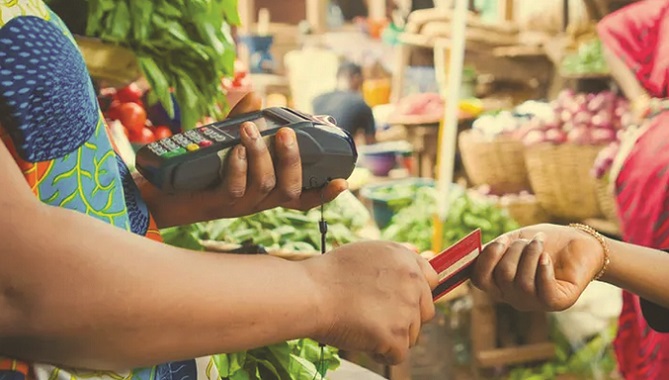
Nixon Chekenya
THE design and provision of financial products and services for rural markets in most developing countries seems to be a daunting task at the borderline of impossible.
Anyone interested in servicing rural markets has to brace up with the trilemma problem of isolation, small-scale transactions and risk.
These challenges often create considerable information asymmetries and transaction costs that make rural markets either missing or costly.
Emerging digital technologies such as mobile money, digital credit scoring and earth observation have the potential to reshape rural microfinance, particularly in developing economies.
This application of digital technologies can extend beyond credit provision to microinsurance and savings.
The flow of both information and capital to complete rural transactions is often constrained by three key factors which characterise most rural microfinance spaces in developing countries. These are isolation, scale and risk.
Isolation relates to how rural communities with low-quality social, transportation and infrastructural networks manage high costs of moving capital, products, information and people.
Scale speaks to smaller value and volume of rural transactions in low-income rural environments relative to high and fixed costs of transactions.
This mismatch often reduces the charm of providing financial products and services to rural markets.
In rural Zimbabwe, as in most rural parts of Africa, agriculture is the dominant economic activity. This is often characterised by risk, particularly now in the face of a changing climate.
A typical smallholder farmer in the rural areas is exposed to high risks emanating from climate shocks in the form of variations in rainfall patterns, pests and agricultural diseases, often leading to crop failure or abandonment.
This will lead, ceteris paribus, to a famer being unable to meet their debt obligations.
Taken individually or together, these three factors (isolation, scale and risk) constrain the quality, availability, tenor and cost of providing financial services to rural markets.
Additionally, these features render access to financial products and services in rural areas unattractive for these low-income households.
Combine this with poor trade network, the servicing of rural markets becomes impossible.
However, technological advances can help this case.
One direct way is the role of digital technologies in reshaping rural microfinance products and services provision.
Some of these technologies include mobile payment systems, digital credit scoring and satellite remote sensing.
These technologies can be applied to address the challenges of isolation, scale and risk in rural microfinance.
One obvious area of application is agriculture given the fact that smallholder agriculture contributes significantly to GDP for most developing countries.
Mobile money can be thought of in terms of transactions taking place on mobile devices, which then obviate the need to visit a physical bank.
Digital credit scoring will involve the use of non-conventional data (such as socio-demographic information) to predict and build individual risk profiles or determine credit lines.
Earth observation includes gathering data about the earth’s physical features and social structures through remote sensing tools.
This data can provide clues on cashflow stability and conditions of crops in rural areas.
These technologies can help in efforts to service rural markets.
*Nixon Chekenya is a lead research fellow and teaching assistant at the Department of Agricultural & Applied Economics (W. Davis College of Agricultural Sciences & Natural Resources, US)



 Online Reporter