Online Reporter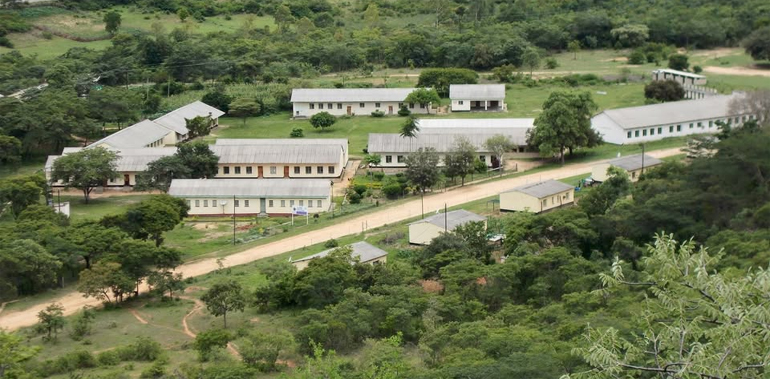
Reverend Dr E. Z. Samutereko
THE Diocese of Manicaland of the Church of the Province of Central Africa (CPCA) has, since its formation in 1981, travelled a remarkable journey of growth, resilience and transformation.
What began as a relatively small diocese with limited human and institutional resources has developed into a vibrant ecclesiastical community with a significant presence in education, health, evangelism and community development.
As the Diocese celebrates its history and looks towards the future, the story of the past decades is one of God’s faithfulness, visionary leadership, dedicated clergy and laity, and the commitment of successive generations to the mission of the Church.
From a small beginning to a growing diocese
At its formation in 1981, the Diocese of Manicaland had only about five boarding schools under its care. Today, that number has doubled to 10 boarding schools, reflecting the Church’s enduring commitment to education and the development of young people. The growth has not been confined to educational institutions. The number of congregations has increased substantially, from approximately 200 at the beginning to about 400 today. This expansion demonstrates the continued spread of the Christian faith and the Church’s growing presence among communities across Manicaland and beyond.
Membership has also grown significantly. The Diocese now has approximately 35 000 members, making it a substantial Christian community whose ministry extends into numerous communities and families. Such growth has required a corresponding expansion in pastoral leadership.
From an initial complement of only 10 clergymen, the Diocese now has approximately 70 clergy serving its congregations and institutions.
Investment in clergy and human resources
One of the most significant achievements of the Diocese has been its investment in the training and development of its clergy.
Over the years, the Diocese has produced and supported clergy who have received theological education and professional training at Bishop Gaul College, while others have had opportunities to undertake theological studies and specialised training abroad. The result is a well-trained and well-educated clergy establishment capable of responding to the increasingly complex pastoral, social and educational needs of the Church.
Today, more than 30 clergy hold university degrees, while approximately 15 hold master’s degrees. This represents a significant transformation from the early years of the Diocese and demonstrates the emphasis placed on developing competent human resources for effective ministry.
The Diocese can therefore look to the future with confidence, knowing that its greatest resource is not only its physical infrastructure but also the people who serve the Church with knowledge, dedication and commitment.
Expanding the educational ministry
Education has remained one of the important pillars of the Diocese’s ministry. The growth from five to ten boarding schools is a testimony to the Church’s long-standing contribution to the education of Zimbabwe’s young people.
The Diocese has also continued to establish new institutions. Among the more recent developments are St James Zongoro and St Werburgh’s Primary schools, which add to the educational network of the Diocese and extend its contribution to communities that require access to quality education.
At the same time, the Diocese has embarked on efforts to recover schools that were taken over by rural district councils after independence. This process is part of a broader endeavour to restore and strengthen the Church’s educational ministry and ensure that institutions established through its mission continue to serve their communities. The story of these schools is not merely about buildings and institutions, but children, families and communities, and the Church’s belief that education is an important instrument for social transformation and human development.
Strengthening the health ministry
The Diocese has also made significant strides in the provision of health services. Its hospitals continue to serve communities, supported by trained personnel and improved facilities and equipment.
The Church’s health ministry remains an important expression of its commitment to the wellbeing of the people it serves. A particularly important development has been the establishment, and continued operation of the School of Nursing at Bonda Mission. The school contributes to the training of health professionals, who can serve both Church institutions and the wider community. Through its hospitals and nursing education, the Diocese has therefore extended its ministry beyond the pulpit, demonstrating the Church’s holistic understanding of mission — ministering to the spiritual, physical and social needs of people.
Developing diocesan infrastructure
The physical development of the Diocese has also kept pace with its institutional and numerical growth. During the period under review, the Diocese successfully constructed its diocesan offices, providing an important administrative centre for the growing organisation.
The development of proper diocesan infrastructure has helped to strengthen administration and coordination of the various ministries and institutions under the Diocese.
Looking ahead, the Diocese is preparing to embark on another major development at the 111 Stand along Herbert Chitepo Avenue. The proposed project represents another step in the continuing development of diocesan infrastructure and reflects the Diocese’s determination to prepare for the needs of future generations.
A journey of faith and service
The achievements of the Diocese of Manicaland since 1981 cannot be measured only by statistics. Behind every increase in membership, every new congregation, every school and every trained priest are people whose lives have been touched by the ministry of the Church. The growth from 10 to 70 clergy, from 200 to 400 congregations, and from five to 10 boarding schools represents decades of commitment by bishops, clergy, lay leaders, teachers, health workers, parents, parishioners and benefactors. The development of highly trained clergy, the expansion of educational institutions, the strengthening of hospitals and nursing education, and the investment in diocesan infrastructure all point to a Church that has continued to adapt to the needs of its people while remaining committed to its mission.
As the Diocese of Manicaland reflects on its journey since 1981, it has every reason to acknowledge the contribution of those who laid the foundations and those who have continued to build upon them.
The challenge for the present generation is to preserve these gains while opening new frontiers of ministry. The Diocese’s growing human-resource capacity, expanding membership and institutional base provide a strong foundation for the years ahead.
The story of the Diocese of Manicaland is therefore a story of growth, service, perseverance and faith. From a small beginning in 1981, the Diocese has developed into an institution with a substantial ministry in evangelism, education, health and community development.
As it celebrates its diocesan birthday, the Diocese looks back with gratitude, stands firmly in the present, and looks towards the future with hope and renewed commitment to the mission of the Church.