Online Reporter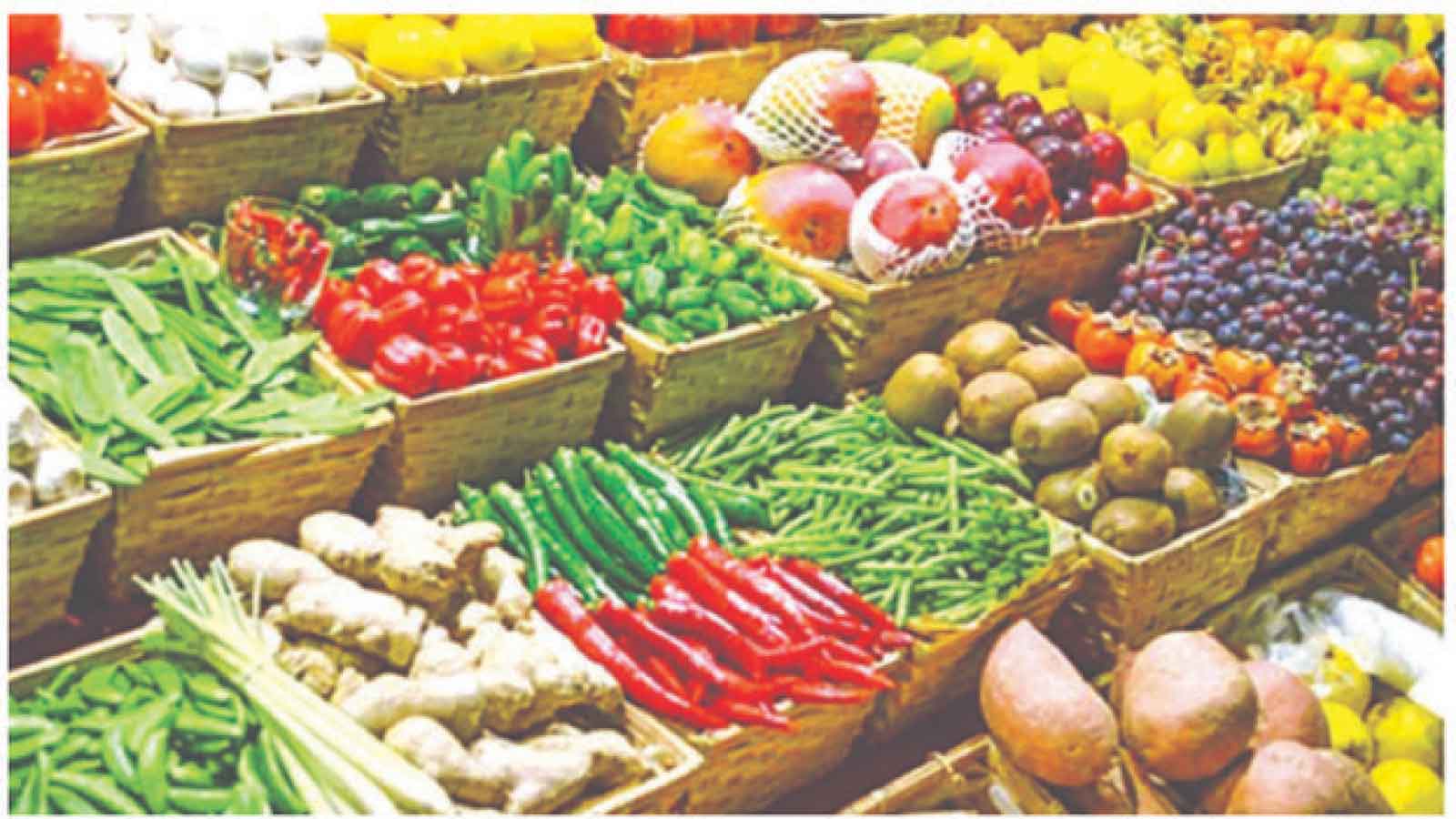
Trade Focus-Allan Majuru
The resumption of direct Air Zimbabwe flights between Harare and London after an absence of 14 years restores one of Zimbabwe’s important commercial links with the United Kingdom (UK).
Whilst the flight will ease the movement of persons between the two countries, it will also reopen a strategic trade corridor that once connected Zimbabwean farms, factories and exporters directly with one of the world’s largest and high-value consumer market.
For exporters, particularly those dealing in horticultural produce, the direct service offers a shorter and more predictable route to the market.
Fewer transit points should help preserve freshness, reduce handling risks and improve the competitiveness of Zimbabwean products in the UK market.
This development fits into the engagement and re-engagement agenda being led by President Mnangagwa. Through this agenda, Zimbabwe is rebuilding links with strategic destinations and creating practical channels for travel, investment and trade.
Undoubtedly, the return of Air Zimbabwe to London gives practical expression to the Second Republic’s “Zimbabwe is open for business” philosophy.
It demonstrates that engagement and re-engagement are not abstract diplomatic concepts, but programmes capable of producing routes through which people, investment and goods can move.
The return of the service also comes at a time when Zimbabwe is rebuilding its horticultural production, expanding irrigation and encouraging businesses to target export markets.
The available cargo capacity can connect these production gains with buyers in the UK.
Its value will be seen in the export contracts it supports, the volumes carried and the income generated for farmers, packhouses, freight companies and other businesses along the supply chain.
Room for growth
The UK is a high-income economy with a population of around 68 million people and an estimated gross domestic product (GDP) of US$4 trillion.
According to Trade Map, the UK imported goods worth US$948,08 billion from the world in 2025.
The size and diversity of this import market present considerable scope for Zimbabwean businesses. Importantly, local exporters are not entering the market without a trade framework. Under the Eastern and Southern Africa-United Kingdom Economic Partnership Agreement, qualifying Zimbabwean products enjoy duty-free and quota-free access to the UK.
This gives local products a favourable entry point into a market where competition is often determined by price, quality and reliability of supply.
However, the available market access has not yet translated into export volumes that reflect the size of the opportunity.
In 2025, Zimbabwe exported goods worth US$21,26 million to the UK, compared with imports valued at US$58,56 million.
Total bilateral merchandise trade stood at approximately US$79,82 million, leaving Zimbabwe with a trade deficit of about US$37,30 million. Zimbabwe’s exports were dominated by iron and steel, edible fruit and nuts, precious stones and metals, and edible vegetables and roots. Combined exports of fruit, nuts and vegetables accounted for nearly 37 percent of Zimbabwe’s exports to the UK.
The figures confirm that horticulture already has a firm place in bilateral trade and could record immediate gains from improved air connectivity.
The challenge, therefore, has not been a lack of demand or favourable market access.
It has largely been the ability of local producers to supply sufficient volumes, comply with market standards and deliver goods consistently, competitively and within the required time. The direct flight addresses the delivery aspect of this equation.
Duty-free access can support the price competitiveness of Zimbabwean products, while a shorter and predictable route can improve their condition on arrival, particularly in the case of fresh produce whose shelf life and commercial value depend on speed.
History provides important context
The Harare-London route has historically been one of Air Zimbabwe’s most strategically important services.
A study by Chris Mutambirwa and Brian Turton around the year 2000 on Zimbabwe’s aviation sector found that, during the 1996-1997 period, the Harare-London route had a passenger load factor of 72,6 percent and generated approximately 23 percent of Air Zimbabwe’s total revenue.
The commercial significance of the corridor was not limited to passengers.
At the turn of the millennium, Zimbabwe had developed one of Africa’s strongest horticulture export industries.
Records from the Horticultural Promotion Council of Zimbabwe around the same year show that the country exported a total of 46 230 tonnes of horticultural produce between 1996 and 1997. More significantly, between November 1999 and October 2000, Zimbabwe airfreighted approximately 7,02 million kilogrammes of horticultural products to the UK. This was equivalent to an average of about 146 tonnes of UK-bound horticultural cargo every week.
Although available historical records do not separate this tonnage by Air Zimbabwe alone, what is clear, however, is that direct Harare–London services formed an important backbone of the export system.
When Air Zimbabwe subsequently increased its London operation to five weekly frequencies after British Airways withdrew from the route in 2007, farmers could harvest produce in Zimbabwe, pack it in the afternoon, place it on an evening flight and have it available to buyers in the UK the following morning.
That speed protected freshness, shelf life and value. It also strengthened Zimbabwe’s reputation as a dependable counter-seasonal supplier of premium vegetables, fruit and flowers.
The return of the direct flight is, therefore, not the creation of an entirely new commercial idea.
Rather, it is the restoration of a route whose economic potential has already been demonstrated by history.
Perishable products will benefit most
Horticulture is the first sector that should respond because time is part of the product for exporters of perishable products.
Zimbabwe already exports blueberries, citrus, peas, vegetables and other fresh produce to the UK. The country’s climate allows growers to supply during periods when British and European production is lower, particularly in autumn and winter.
Products with potential include fresh peas, blueberries and related berries, avocados, citrus, fine beans, chillies, herbs and cut flowers.
Demand is present, but access depends on quality, food safety and traceability.
But what has been the challenge with no direct flight? Every additional hour spent at an airport, every unnecessary transfer between aircraft and every break in the cold chain reduces freshness and commercial value.
In the absence of a direct flight, exporters have had to move products through regional and international hubs. This often involves several handling points, longer transit times, limited cargo space, missed connections and exposure to temperature variations.
For blueberries, peas, fine beans, baby corn, chillies, herbs, avocados and cut flowers, these delays can translate into reduced shelf life, quality claims, rejected consignments or lower prices. A direct service reduces the number of times a consignment must be handled and allows exporters to plan around a known departure and arrival schedule.
It also gives Air Zimbabwe and local stakeholders an opportunity to coordinate cargo allocations around Zimbabwe’s production seasons.
A two-way commercial corridor
The resumed service is equally important for what Zimbabwe imports from the UK.
In 2025, Zimbabwe’s leading imports from the UK included vehicles and parts worth US$34,79 million, machinery worth US$7,97 million, electrical equipment worth US$4,33 million and pharmaceuticals worth US$2,87 million.While complete vehicles will generally remain suited to sea freight, the direct flight can improve the movement of urgent spare parts, medical products, precision instruments, manufacturing components and other high-value goods. The same route can move packaging materials, laboratory equipment, specialised agricultural inputs and pharmaceutical products into Zimbabwe, while carrying horticulture, high-value manufactured goods, arts and crafts, pharmaceuticals and selected minerals to the UK.
This balance is important because the sustainability of a long-haul route improves when cargo moves in both directions.
Projecting the opportunity
The actual impact of the route will depend on reliability, freight charges, cargo capacity, production volumes and contracts secured by exporters. Nevertheless, transparent scenarios help illustrate what is possible.
Zimbabwe’s exports of fruit, nuts and vegetables to the UK were worth US$7,83 million in 2025. A 25 percent increase during the first full year of the direct service would lift these exports to approximately US$9,79 million, generating nearly US$2 million in additional export earnings.
Should the two categories grow by 20 percent annually over three years, their combined value would reach approximately US$13,53 million, an increase of around US$5,70 million from the 2025 level. At the level of total exports, annual growth of 15 percent would lift Zimbabwe’s exports to the UK from US$21,26 million in 2025 to about US$32,34 million after three years. Assuming imports remained at their 2025 level, this would narrow Zimbabwe’s trade deficit with the UK from US$37,30 million to approximately US$26,22 million.
These figures are scenarios rather than guaranteed forecasts. They show, however, that even moderate and sustained growth could make a measurable difference to foreign currency earnings and the bilateral trade balance.
The cargo potential can also be viewed in physical terms. At an illustrative average of 10 tonnes of export cargo on each of the three weekly outbound flights, the route could move approximately 1 560 tonnes a year.
This would represent only about 22 percent of the UK-bound horticultural tonnage recorded during the 1999-2000 period.
History, therefore, suggests that there is substantial room to grow beyond the initial cargo volumes.
Allan Majuru is the chief executive officer of ZimTrade.



 Bongani Ndlovu