Andrew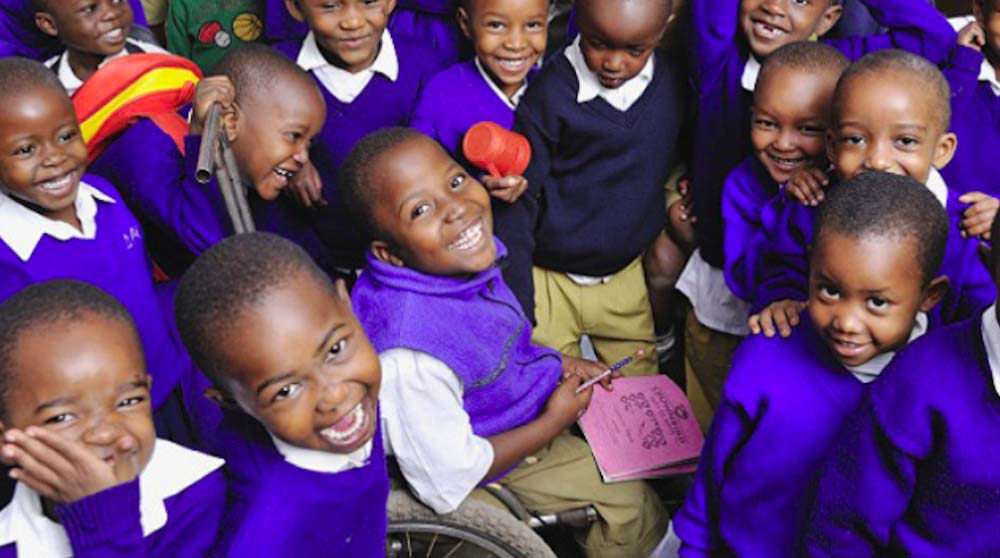
Disability Issues
Dr Christine Peta
IN this article, I continue to unpack the provisions of the National Disability Policy which was launched by President Mnangagwa on June 9, 2021. The Ministry of Public Service, Labour and Social Welfare, led by Honourable Minister Professor Paul Mavima oversees the implementation of the National Disability Policy, thus moving the provisions of the policy from paper to the real world to make a positive difference in the lives of persons with disabilities and their families.
The focus of this article is on Section 3.9 (Education) of the National Disability Policy, which is set out as follows:
3.9 Education
3.9.1 Persons with disabilities must be exempted from paying fees and levies at all public learning institutions.
3.9.2 An inclusive education system of appropriate standards, at all levels, as well as lifelong learning for persons with disabilities of all gender affiliations, must be ensured.
3.9.3 Learners with disabilities like all students, should have an individual education plan including assessments that are shared with parents and guardians.
3.9.4 Reasonable accommodation of each individual’s requirements must be provided including in relation to preferred language, physical infrastructure, schedule, staffing, assistive technology, teaching and learning methods, information and materials.
3.9.5 Persons with disabilities must receive the individual support they require to facilitate their effective education, in environments that maximise academic and social development including that of blind, deaf and deafblind learners.
3.9.6 The education of learners who are blind, deaf or deafblind must be delivered in the most appropriate languages and modes and means of communication for the individual.
3.9.7 The full development of the human potential, sense of dignity, self-worth, personality, talents, creativity, as well as the mental and physical abilities of persons with disabilities must be enhanced.
3.9.8 Persons with disabilities must be enabled to learn life and social development skills to facilitate their full and equal participation in education and as members of the community.
3.9.9 Standard Zimbabwean Sign Language, which is governed by a Sign Language authority must be established in collaboration with the Zimbabwean Deaf community.
3.9.10 Ensure the learning of Zimbabwean Sign Language and the promotion of the linguistic identity of the Deaf community.
3.9.11 A Zimbabwean Braille Code which is governed by a Braille authority must be established in collaboration with the Zimbabwean blind community.
3.9.12 Ensure the learning of Braille, alternative script, augmentative and alternative modes, means and formats of communication, and orientation and mobility skills as well as peer support and mentoring.
3.9.13 The subject of disability, including awareness about the rights of persons with disabilities, must be ingrained as an examinable subject in the curriculum of all learners from early childhood education to tertiary level.
3.9.14 Continuous professional development on disability must be compulsory for staff including qualified teachers and social workers.
3.9.15 A disability resource centre must be established at every educational institution to cater for the needs of educators, learners and staff with disabilities.
3.9.16 Advice and information to learners with disabilities, in relation to career paths must be offered in inclusive career guidance services that must be established at all learning institutions.
3.9.17 Strive to ensure that on the basis of merit, persons with disabilities are awarded a minimum of 15 percent of scholarships including on the Presidential Scholarship Program.
3.9.18 Persons with disabilities must be allowed to apply for scholarships, including the Presidential Scholarship Programme at designated centres within the districts where they live, including in rural areas.
3.9.19 Strive to ensure that a proportion of a minimum of 15 percent of student teachers, and social workers per enrolment, must comprise persons with different kinds of disabilities.
3.9.20 Teacher training programs must include a module about use of appropriate augmentative and alternative modes, means and formats of communication, inclusive educational techniques and materials to support persons with disabilities.
3.9.21 Ensure the employment of teachers and staff including teachers and staff with disabilities who are qualified in the Zimbabwean Sign Language, at all levels of the education system.
3.9.22 Ensure the employment of teachers and staff including teachers and staff with disabilities who are qualified in Braille at all levels of the education system.
3.9.23 Ensuring confidentiality, disaggregated data about the training and employment of teachers and staff with disabilities must be submitted to the Department of Disability Affairs, Ministry of Public Service, Labour and Social Welfare, in November of each year.
3.9.24 Personal assistants of teachers with disabilities must be afforded paid maternity leave as opposed to being forced to resign and reapply after maternity leave.
3.9.25 Personal assistants of teachers with disabilities must be regarded in the same way that the lowest paid civil servants are considered — they must be awarded the same allowances that civil servants are entitled to, including the cost of living adjustment.
3.9.26 Vocational rehabilitation and training centres must provide start-up kits to persons with disabilities who successfully complete their courses to enable them to set up their own entrepreneurial projects.
3.9.27 New vocational rehabilitation and training centres that are inclusive of persons with disabilities in all the 10 provinces of Zimbabwe must be established, beginning with Matabeleland North province.
3.9.28 Existing and upcoming learning institutions including vocational rehabilitation training centres must adopt the principle of universal design as defined in this NDP.
3.9.29 Vocational rehabilitation training centres must be run by persons with interdisciplinary skills that enable them to effectively address the requirements and concerns of persons with disabilities.
3.9.30 A rigorous awareness raising programme that includes persons with disabilities and which educates families, and communities, about the significance of enrolling children with disabilities in learning institutions must be designed and implemented.
3.9.31 Synergy of education, and additional sectors that include nutrition, health and social welfare must be established, to enhance the health and well-being of learners, educators and staff with disabilities.
3.9.32 Learning institutions must employ a full-time or part-time social worker who is trained in disability issues to cater for the rights, requirements and concerns of children, educators and staff with disabilities.
3.9.33 Learning institutions must aim to provide transport for children with disabilities and children of parents with disabilities to enable them to travel safely and timeously to and from school.
3.9.34 Guidelines for the establishment of private inclusive early childhood learning centres, primary, secondary, tertiary and vocational institutions must be formulated and publicised.
3.9.35 Institutions of learning must forge strategic partnerships and establish links with employers in order to enable learners with disabilities to access employment opportunities upon completion of their learning programmes on an equal basis with others.
3.9.36 Technical and Vocational Education and Training (TVET) students must be registered with the Department of Disability Affairs, Ministry of Public Service, Labour and Social Welfare so that employers may collaborate with the Ministry in relation to issues of employment of persons with disabilities.
3.9.37 Ensuring confidentiality, disaggregated data about learners, teachers and staff with disabilities must be submitted in November of each year, to the Department of Disability Affairs, Ministry of Public Service, Labour and Social Welfare.
So what does it all mean?
Education is one of the most powerful tools of lifting persons with disabilities out of poverty, as well as of narrowing the gender gap for women and girls with disabilities. The National Disability Policy is therefore directing equality of opportunity, universal access, and monitored quality standards of education, which are inclusive of persons with disabilities at all levels.
Dr Christine Peta is a disability, policy, international development and research expert who is the national director of Disability Affairs in Zimbabwe — she can be contacted on: [email protected]


 Online Reporter