


 Sundaymail Editor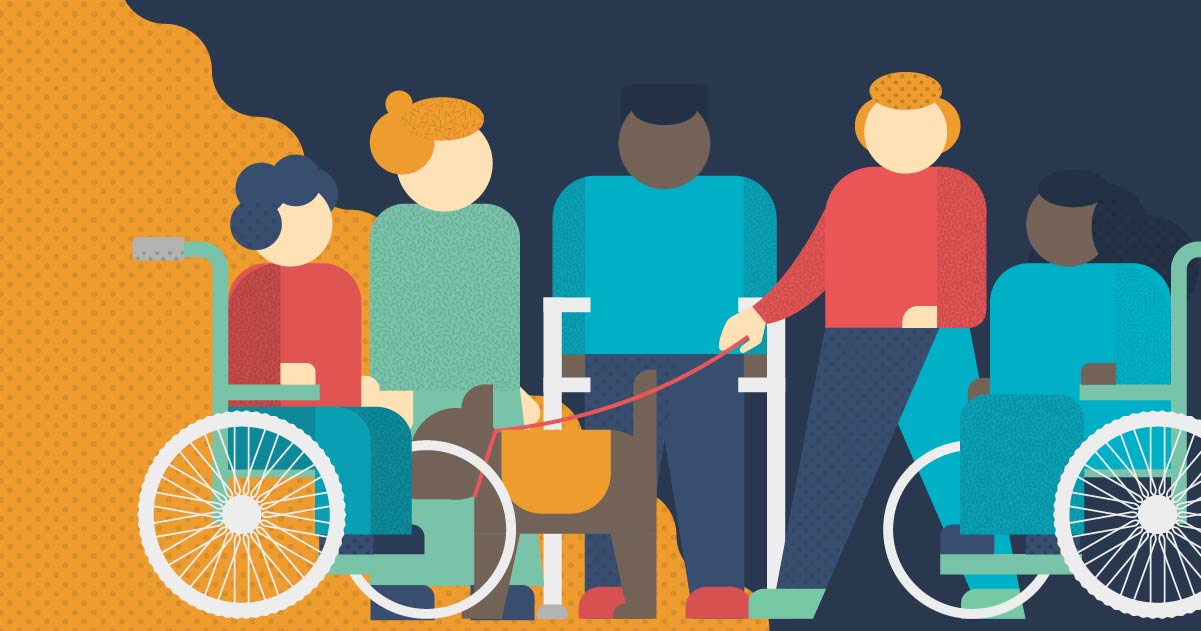
Disability Issues
Dr Christine Peta
SEPTEMBER 12 is internationally recognised as the United Nations Day for South-South Co-operation.
This week I am focusing on mainstreaming disability in South-South co-operation.
On September 12 1978, the UN General Assembly adopted a plan to promote and implement technical co-operation among developing countries.
South-South co-operation seeks to transform the lives of people in developing countries through innovative forms of knowledge exchange, technology transfer, emergency response and recovery of livelihoods.
Research has indicated that 80 percent of persons with disabilities live in developing countries.
South-South co-operation presents an opportunity to come up with new ways of thinking, as well as concrete projects and means that enable us to facilitate voices of the people in the Global South, including voices of persons with disabilities, and bringing such voices from the periphery of society to the fore.
The idea is to drive innovation and promote development that upholds the principle of Sustainable Development Goals (SGDs) — Agenda 2030 principle of leaving no one behind.
Disability-inclusive South-South co-operation presents an opportunity for us to achieve the goal. The bottom line is that persons with disabilities lie at the heart of the 2030 Agenda, with the commitment to the principle of not leaving anyone behind.
The 2030 Agenda is an action plan in which all people, including persons with disabilities, must be allowed to thrive, have a voice and opportunities to shape development.
Disability is specifically mentioned in five of the 17 SDGs – SDG 4 (Quality Education), SDG 8 (Decent Work and Economic Growth), SDG 10 (Reduced Inequalities), SDG 11 (Sustainable Cities and Communities (with a specific mention of accessibility) and SDG 17 (Partnerships for the Goals).
Disability is mentioned seven times in the SDG targets and 11 times in the indicators.
Mention of disability in the indicators is important because it helps us to identify areas where we need to achieve progress in relation to disability inclusion.
Disability is also covertly acknowledged in numerous other goals, targets and indicators through terms such as “for all”, “the vulnerable”, “most disadvantaged”, “non-discriminatory” and “equal access”.
These terms imply that persons with disabilities should not be excluded in initiatives that seek to achieve the SDGs — 2030 Agenda.
The 2030 Agenda seeks to empower vulnerable groups, including persons with disabilities, in the same way the United Nations Convention on the Rights of Persons with Disabilities (UNCRPD) does.
The direct link between the SDGs and the UNCRPD is evident, given that there are only four SDGs that are not directly related to the provisions of the UNCRPD.
What then should we do within the context of South-South co-operation?
Ensure that in all development initiatives, data is disaggregated on the basis of disability, thus enabling us to measure the extent to which we are fulfilling our commitment to the 2030 Agenda principle of leaving no one behind.
Use data that is disaggregated on the basis of disability to identify areas of discrimination that we still need to address.
Ensure disability inclusion in humanitarian initiatives.
Develop tools that seek to promote the rights, active and meaningful participation and inclusion of persons with disabilities in the implementation of SDGs.
Implement provisions of the UNCRPD in South-South co-operation initiatives.
Mainstream disability in South-South co-operation to enable development, implementation and monitoring of disability inclusive sector policies and services in a participatory manner and in line with the UNCRPD.
Strengthen disability inclusion in Covid-19 response and recovery initiatives.
Host a South-South co-operation expo for showcasing collaborative disability-inclusive initiatives that are in line with the 2030 Agenda and the UNCRPD.
As we commemorate the UN Day for South-South Co-operation, we all need to remember that disability is part of being human.
Most of us, if not all of us, will at one point or the other temporarily or permanently experience some form of disability in our lives due to diseases, accidents, ageing or other causes.
It is, therefore, important for us to ensure that we achieve disability inclusion through collaboration within the context of South-South co-operation, in initiatives that seek to ensure national well-being, self-reliance and achievement of goals that have been internationally agreed on. We cannot talk about achieving SDGs if the implementation and monitoring is not in line with the UNCRPD, including within the context of South-South co-operation.
Dr Christine Peta is a disability, policy, international development and research expert. She is the national director of Disability Affairs in Zimbabwe. She can be contacted on: [email protected]


 Bongani Ndlovu
 Online Reporter