
Walter Nyamukondiwa-Mashonaland West Bureau Chief
Like the Biblical Eden, Ditchwe Wetland in Mhangura has four springs, commonly referred to as nyatso or tits, through which water seeps from the ground to support a thriving “garden”.
Eden had four rivers, branching from one that watered the garden, including Pishon, Gihon, Hiddekel and the Euphrates.
Like Eden, the Ditchwe Wetlands have dense vegetation of different plant species giving medicinal, aesthetic and spiritual value, making up a garden which supports different animals and bird species. It is pleasant to the eye, offering a serene and calming environment.
Covering nearly 200ha, the Ditchwe Wetlands also have a network of caves, which are said to connect to the iconic Chinhoyi Caves.
According to elders of the Marisa clan, who facilitate rituals for the Nemakonde chieftainship and claim the Ditchwe Wetlands as their ancestral home, the caves were homes and acted as hideouts from enemies.
The name Ditchwe Wetlands was a bastardisation by colonialists of the local Kore Kore name Dipkwi, referring to soggy land.
It is one of numerous areas of traditional and historical significance that carries an unwritten code for those who happen to visit: don’t comment or pass a remark if you see something!
The punishment is a remotely engineered disorientation that will see one wandering in the garden until rituals are conducted to restore normalcy, so say the locals.
Adorned with indigenous and exotic fruit trees including lemons, granadilla and guavas among others, one is expected to eat to their satisfaction without harvesting to take home.
When collecting roots or any part of the plants as herbs to treat or manage various health conditions, one takes from the eastern side and then the western side.
A villager, Mr Eniwe Murimbika, said traditional values and wisdom had managed to help conserve the wetlands in pristine condition.
“This wetland was bequeathed to us by our ancestors and we are carrying forward with wisdom and values they used to keep them healthy,” said Mr Murimbika.
“Our forefathers taught us that we could not carry fruits home from the Ditchwe Wetlands. Instead you eat until you are full and leave them there. Even if getting herbs, you don’t uproot the whole plant but you take some from the east and then the west.”
The values of detachment from the animals and plants, he said, have been one of the keys to preserving the wetlands.
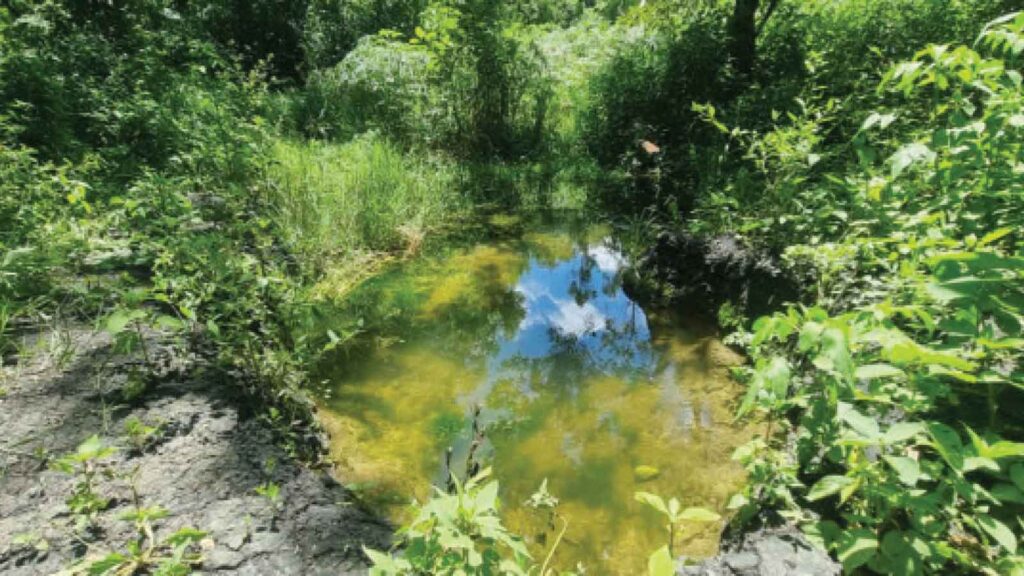
The Ditchwe Wetland
A story is told of a man in the early 2000s who saw a matured marijuana plant and decided to smoke away. It was said to be satisfying and unusually “tasty” that he plucked some for later enjoyment at home.
Upon getting home, he suddenly took off his clothes and that was to be the last time he was seen with clothes on.
“There was a man who people later called Chikwasha because his tummy was always in the open and he walked around without clothes. He never wore clothes again after smoking the ancestral herb, which normally gets people arrested, and filled his pockets to take some home. He never put on clothes from that day until he died,” said Mr Murimbika.
The late Chikwasha would mostly be seen naked around the Plateau Secondary School area and parts of Mhangura.
In another incident in 2002, a kraal head went to cut down trees in the wetlands, which locals call Gute, and as he was pruning the branches, it turned into a snake.
Myths, folklore or engineered oral tradition— the impact in the preservation and conservation of wetlands has been unmistakable.
Tied to threats of punitive mysterious occurrences are real incidents in which the Ditchwe Wetlands started drying up after a series of unexplained fires. These were said to be tied to violations where people let cattle drink directly from the springs, cut down trees and also hunted animals.
An incident occurred in 2004 when trees started mysteriously catching fire for a period of a month.
“Trees caught fire, fell and surprisingly, green shoots of vegetation would be seen the following day,” said Mr Newton Murimbika, another villager.
“This went on for about a month until spirit mediums were called in resulting in drum-beating and rituals being undertaken. The fires stopped the following day and to this day we have not experienced anything like that.”
Other tales are told of people going into surrounding mountains with axes to cut down trees, only to start feeling itchy all over the body.
Chief Nemakonde said protecting wetlands was important in preserving traditional values and sustaining livelihoods.
The wetlands, he said, carried seasons and times which gave pointers and signs to what needed to be done.
“We read time and seasons from just observing trees and hearing sounds from birds such as hungwe (African Fish Eagle), which holds spiritual significance,” said Chief Nemakonde.
“The mukuyu (sycamore) tree for instance tells us when it’s time to conduct rain-making rituals, the same way we use the mango tree to know when to start preparing our fields or start planting.”
The wetlands were once a contested area between one Chigaramo, allied to Mbuya Nyatyava, who fought a man called Nyamakwere, who was said to have four eyes.
“According to oral tradition, our ancestors led by Chigaramo and Mbuya Nyatyava fought with a man called Nyamakwere, who had four eyes and lived in the Bunga Mountains,” said Mr Murimbika.
The nexus between traditional conservation efforts and science-based ecosystems management can only help strengthen efforts to preserve wetlands and derive value from them through commercial activities such as tourism and establishing apiculture projects.
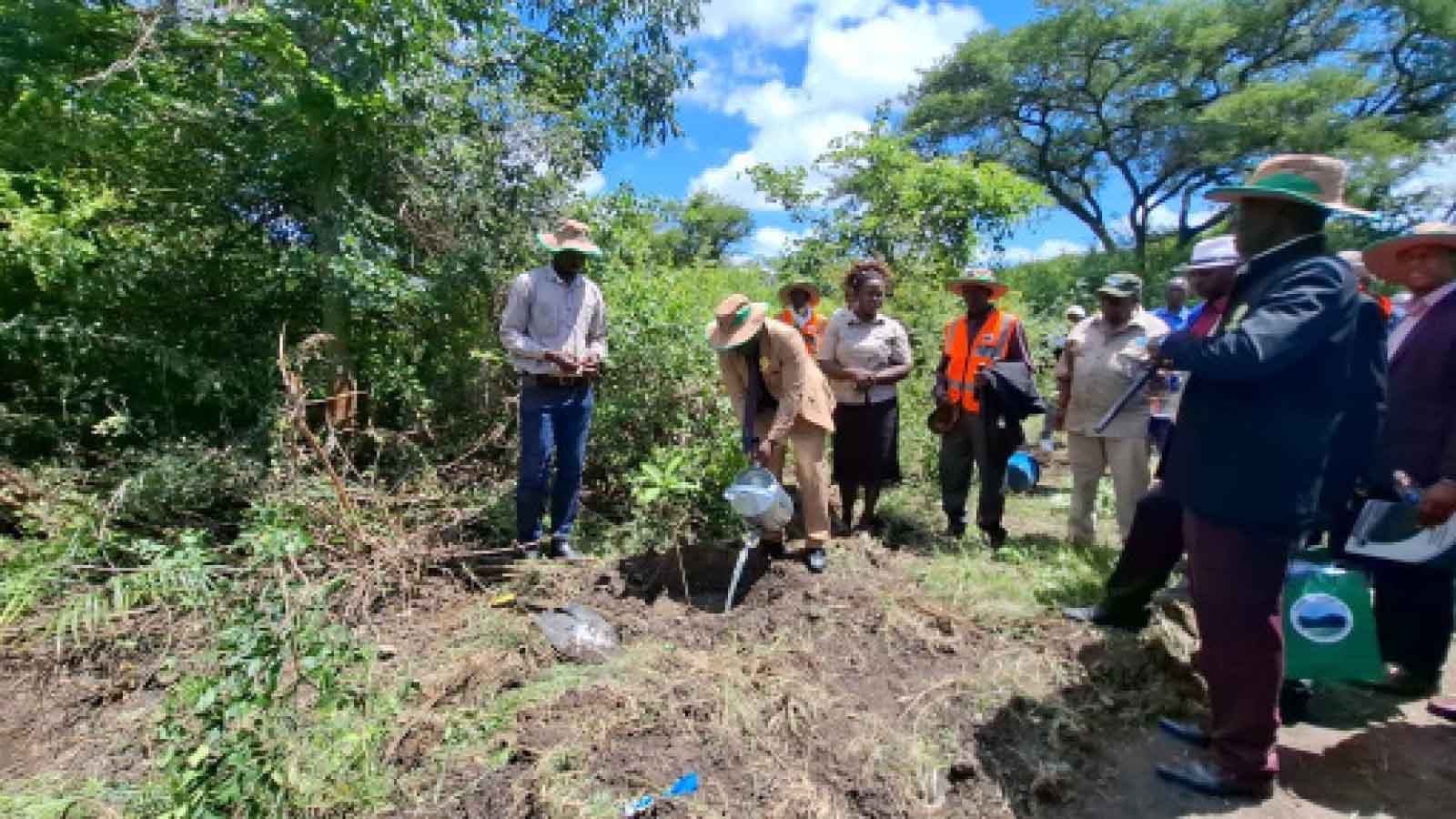
Reaffirming the importance of wetlands, government and other stakeholders gathered at Ditchwe Wetlands to commemorate the Ramsar Convention on Wetlands Day.
At least two hectares have been fenced and about 200 of 2 000 beehives set as the first step towards establishing an apiculture value chain.
Government has committed to protect wetlands amid concern over construction of structures on wetlands in urban areas. It has set an ambitious target of restoring about 250 000ha of wetlands by 2030.