

 daniel chigunwe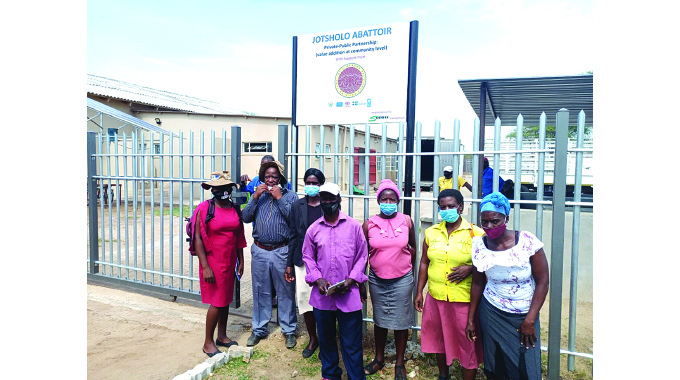
Sifelani Tsiko
Agric & Innovations Editor
Livelihood diversification is gaining traction among smallholder farmers in Lupane, helping to build resilience in this drought prone part of the country.
Farmers here are now appreciating the value of spreading the risk of livelihood activities after suffering back to back droughts and other drought-related stresses in the past few years.
During a farmer exchange visit for Binga farmers to Lupane, which was organised by the Zimbabwe Resilience Building Fund (ZRBF), local farmers showcased their off-farm activities.
The Lupane farmers are engaged in multiple livelihood activities that include bush meal production, fisheries, mushroom ànd honey making and solar powered vegetable drying at Zinapi Irrigation Scheme in Ward 9.
Others in Ward 14, Banda Village, are also doing small grains and bush meal production layered on goat and cattle pen fattening, poultry production, abattoir and irrigated pastures as well as women’s enterprise groups that do basketry and bead works to augment their off-farm earnings.
One of the farmers’ major successes are the Internal Savings and Lending Schemes (ISALs) in which farmers pool together money and lend it to members at 10 percent.
The members use the money to invest in procurement of equipment such grinding mills, buying of inputs such as mushroom seed, as well as engaging in other household income generating projects.
All the livelihood diversification activities have been supported by seven ZRBF consortia that operate in 18 districts of Zimbabwe to build the resilience of individuals, households, communities and systems.
ZRBF seeks to improve the resilience of about 830 000 people through contribution to an increased capacity of communities to protect development gains in the face of recurrent shocks and stresses ultimately leading to a reduced need for humanitarian responses and improvement in well-being.
These diversified livelihood activities offer other income streams less affected by some other shocks.
Despite the challenges they experience when expanding their livelihood options, farmers in Lupane say off farm activities have helped them to escape from the poverty line.
They say diversification to non-farm activities rather than relying only on subsistence farming enables households to have better incomes, enhanced food security, increased agricultural production and also to better cope with environmental shocks.
Lucy Moyo, a farmer at Banda village in Lupane said ISALs have a made huge difference in their lives as farmers access capital to buy poultry that include resilient chicken breeds, breeding of guinea fowls, pigs, goats, cattle and even engaging in other trading of goods.
“We have been trained to make fodder for our livestock and this helps us to improve animal health and earnings,” she said.
“As an individual farm household, l have 65 guinea fowls, chickens, ducks, goats. From the earnings, l have managed to install a solar system and to build a new toilet at my home. I’m able to pay fees for my children and also buy clothes and groceries.
“As a woman l’m now empowered and l no longer depend on my husband for everything. I’m also playing my part to support our household needs.”
Sheila Sibanda, a farmer from Jabatshaba Village, said earnings from off-farm activities have helped her to build a three-roomed house, a toilet, granary and to buy kitchen utensils.
“Our group has managed to save R20 000 from off-farm activities and many are building houses, toilets and buying kitchen utensils, including installation of solar systems at their homesteads,” she said.
The setting up of the Jotsholo Abattoir through a partnership of the local community, business and public sector has also helped farmers to earn better incomes through reduced costs and the removal of middlemen who often rip farmers off.
“This abattoir was born out of a partnership between the local community and the private and public sectors,” said Thandazani Mkwananzi, an agricultural advisor at Sizimele ZRBF that supports farmers in Lupane.
“The establishment of the abattoir has reduced transport costs for local farmers significantly. In the past they used to take their animals to Bulawayo abattoirs and could be charged anything up to US$60 per beast. Now their cost have fallen to below US$15 helping them to enhance their earnings through reduced transport costs and other risks related to middlemen.”
The abattoir has the capacity to slaughter 45 beasts per day and the meat is supplied to local butcheries and markets in Bulawayo, Kwekwe, Harare and Marondera.
Farmers doing fisheries at Zinapi Irrigation Scheme are now targeting to build five or six fish ponds so that they can earn as much as US$400 a month from selling fish.
Currently, they have one pond with 1 500 fish.
“Expanding what we do here also improves our earnings. When one thing fails we have something else to back us up,” said Rose Sibanda, project leader of fisheries at Zinapi.
“Fish rearing is much easier and apart from subsistence farming, this keeps us busy and active throughout the year. Crop farming is done once a year and in between, engaging in other livelihood activities helps us to earn income and survive.”
Mushroom production has also added another revenue stream, with the farmers producing and solar drying mushrooms for sale in Bulawayo, Jotsholo and within their local community.
“When there is a drought, we can use sorghum or pearl millet stocks to produce mushrooms,” said Melody Ndlovu, mushroom production group leader at Zinapi.
“Expanding livelihood activities is good for us as it helps to earn more income throughout the year when we are not growing crops. When crops fail, at least we have a back up plan.”
Livelihood diversification requires development researchers to study to what extent these activities can build resilience of local communities in the wake of droughts, floods and other natural shocks.
The outcome of such research helps policy makers to understand the sources of resilience that enable local communities to substantially escape poverty given the complex play of other factors in the country.
Livelihood diversification should help local communities to respond and survive natural shocks which leave farmers exposed.
Humanitarian responses are short term and inadequate to enable local communities to rapidly recover their livelihoods and rebuild their asset bases.
Despite the challenges that also come with expanding livelihood activities, they can at least help locals to become resilient and promote sustained escape from grinding poverty.
With more research, it is possible for Zimbabwe to determine which off-farm activity works and which doesn’t in the wake of shocks and other stressers.


 Online Reporter