

 admin
admin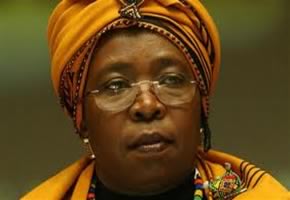
She duly managed the feat after amassing 37 country votes, three above the threshold for outright victory.
Addressing journalists after the contest, AU chairman Dr Thomas Boni Yayi of Benin said Dr Dlamini-Zuma’s victory was a victory for all Africa and there was no loser as the Commissioner had come out the winner after a tightly fought democratic contest.
Responding to questions shouted by the jostling hordes of reporters, President Mugabe said he was happy with the outcome, and happy for Sadc.
Uganda President Yoweri Museveni described the new Commission chair as a freedom fighter.
‘’She is not a girl correct or a diplomat. She is a freedom fighter and will be a strong voice for Africa,’’ he said.
Convening under the theme “Consolidation of intra-African trade”, the summit, apart from electing the chairperson and the deputy chairperson of the Commission, was also set to appoint the eight Commissioners of the AU and the three Judges of the African Court on Human and Peoples’ Rights.
In his address to Summit yesterday AU chairman Dr Yayi called on member states to strengthen the bloc to transform it into a union of people, not just a union of states or governments.
In the wake of the impasse over the ICC’s arrest warrant on Sudan president Omar al-Bashir, Dr Yayi called for an African Criminal Court. The mid-term Summit was initially slated for Malawi but was moved to Addis Ababa following disagreements with the host government. Malawian President Joyce Banda
departed from the AU position by refusing to invite President al-Bashir, with the AU insisting the Sudanese leader should be invited.
The AU accuses the ICC of bias. The Malawian leader dug in prompting the AU to convene the summit at its headquarters here.
President al-Bashir was indicted for alleged genocide in Darfur in 2009. Plans for an African criminal court picked pace with a final draft protocol drawn up on May 15 among a number of protocols expected to be adopted here. Before beginning deliberations, Summit honoured the memory of Algeria’s founding president Ben Bella, and Malawian President Bingu wa Mutharika who passed on this year with a minute of silence.
The new leaders of Egypt, Lesotho and Senegal President Mohammed Mursi, Prime Minister Tom Thabane and President Macky Sall were all officially welcomed and took the floor to deliver their maiden speeches in which they paid tribute to the founding fathers and pledged to honour their memory in leadership.
Other delegates who addressed the opening session included the Emir of Kuwaiti Sheikh Sabah Al-Ahmad Al-Jaber Al-Sabah — who was the guest of honour — Dr Ping, the new UN under-secretary general Jan Elliason who cut his teeth in diplomacy by opening Sweden’s embassy in
Harare in 1980, the chairperson of the Arab League Nabil Elaraby, and a Palestine Liberation Organisation representative.
In their closed session, the leaders were expected to receive a report from the Peace and Security Council that convened on Saturday to deliberate on the conflicts in Mali, Sudan, Guinea Bissau, and eastern DRC.
The leaders were also set to consider recommendations of the Executive Council; a report on Nepad, and the report on Africa’s preparation for the Climate Change Negotiations at COP18.
Proposed reforms of the UN Security Council were also part of the agenda. And in line with the Summit theme, “Consolidation of intra-African trade”, Summit was set to consider a report of the High Level Committee of Heads of State and Government/Chairs of the Regional Economic Communities on boosting Intra-African Trade, among other things. The AU seeks to create a pan-African trade zone by 2017.



 Online Reporter