Chronicle Editor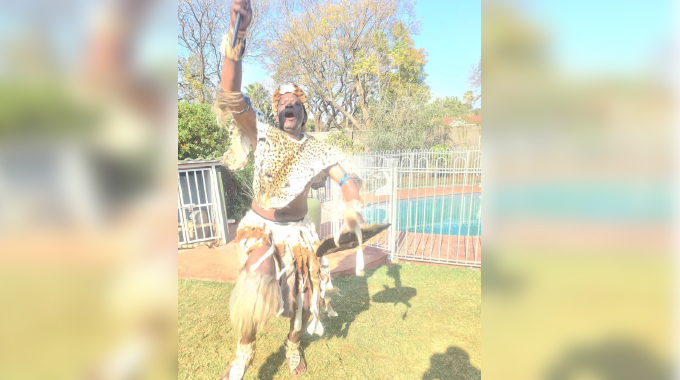
Bruce Ndlovu, Sunday Life Reporter
EVERY year in August, the Ngwenya family prepares for a ceremony that they believe brings them closer to their ancestors.
In the lead-up to this ceremony, a lot of preparations are made.
Grains like millet, maize, and finger millet are stocked within the family’s home, and then a week before the ceremony, beer is brewed. The alcohol on offer is not barrels of frothy lager or the dreaded “njengu” that has flooded the streets of Bulawayo and other parts of the country.
It is an authentic African brew (umqombothi) that, by the time the ceremony starts, would have been left to ferment inside traditional pots (amaqhaga) for at least a week.
A goat and an ox are also brought in for slaughter for this particular occasion. Meat is eaten, beer drunk and there is widespread joy and merriment, with song and dance an integral part of the festivities.
One would expect that the person leading such an elaborate homage to the ancestors would be an old man or traditional healer in tune with the old ways of doing things.

Instead, leading this colourful parade of culture and tradition is one of the country’s foremost men of medicine, Professor Solwayo Ngwenya. Despite his education, Prof Ngwenya, the Clinical Director of Mpilo Central Hospital in Bulawayo has stayed steadfast to his traditional beliefs. For some, these traditional values are at odds with modern medicine.
However, in an interview with Sunday Life on the eve of his family’s annual traditional celebrations on Saturday, Prof Ngwenya said he had never felt the need to disavow African customs.

“Culture is what defines us and should be proudly practiced. Modern medicine is good for reducing psychological, mental, emotional, and physical morbidity, and mortality. I am proud to be privileged to have both modern medicine and being a determined culturalist,” he said.
For Prof Ngwenya, confusion about his affinity for tradition only comes from those who believe that African customs shouldn’t have survived the onslaught of colonialism and other forms of cultural imperialism.
The medical practitioner said he believed the two cultures should co-exist side by side harmoniously.
“The clash is that proponents of Western culture’s main aim is to convert all Africans to their side. I believe that our culture is sacred. The medicine that I practice with galvanised passion should co-exist with our African way of life. The two have the potential to give positive results for the people,” he said.

In 2021, Prof Solwayo graduated from the National University of Science and Technology after attaining a PhD in Statistics.
This was in addition to his first degree in Medicine, attained from the University of Zimbabwe in 1997.
He also achieved Membership of the Royal College of Obstetricians and Gynaecologists London, UK 2004 a fellowship of the Royal College of Obstetricians and Gynaecologists London, UK in 2017.
All this represents a remarkable journey for the son of a “hunter-gatherer” who, when he was herding his father’s cattle in rural Lupane, Matabeleland North Province never thought that he could ever rise to such lofty academic heights.

All the books that he consumed, said Prof Ngwenya never posed a threat to his cultural beliefs.
“Despite having a fairly wonderful Western education, I have not changed my cultural heritage because education helped me understand the reasons why and how our ancestors remained fairly prosperous without Western education. I then discovered that the strongest link to Mvelinqangi (great maker) is best maintained via our ancestors. I decided to hold on to such a dear and vital link to Mvelinqangi, and this allows me to lead a simple, content, and fairly prosperous life just like my ancestors before colonisation. My early grooming and experience in the village was such a nostalgically glorious time and I wouldn’t swap it for anything. Additionally, my parents were 20th century people whose own parents lived pure African lives before being disturbed by colonisation,” he said.
The family’s annual ceremony, right on the eve of spring, was significant as they sought good tidings from their ancestors while thanking them for the season of plenty that had just passed.
Growing up, Prof Ngwenya said that the village used to reverberate with the sounds of song and dance as the people paid homage to their forebearers.

“Traditionally, harvest usually occurs around May. We celebrate good harvest and thank Mvelinqangi labadala for providing the family with good health and harvest. Thereafter, the celebration season starts from June to September before the new planting season in October. Each family can choose any date during this period. Ours choose August usually during school holidays to allow members to attend. We were born into these ceremonies.
“These were held in almost all the homesteads in the village and were associated with great joy and celebration. Families chose different days during that period, and villagers enjoyed it a lot as they took turns to hold the ceremonies. There were great celebrations with the drums (ingungu) reverberating in the village. It was a wonderful experience for Africans in their pure form, doing ancient traditions that connected them to the great maker, Mvelinqangi labadala. I remember such ceremonies with nostalgia,” he said.

Just as it had been for him when he was growing up, Prof Ngwenya said ceremonies were also an education for his children, who also eagerly participated in them.
“Our role as children was mainly to learn and retain the skills for the continuation of such great traditions. My children are still of tender age and are undergoing training. They are doing this with extraordinary excitement and curiosity despite being born during disorderly times. They are truly amazed at our culture,” he said.

As many Africans struggle to be in touch with their roots in a rapidly changing world, Prof Ngwenya said he would be holding on steadfastly to the traditions that have always guided him.
He would continue doing this even though some within his profession find his way of life bizarre for a highly educated man.
“Yes, westernised people do look down on our culture. But for us, people without a culture are lost people. Education doesn’t mean that we should discard our culture. The loss of our culture is probably the cause of most of the problems that we face in life. My advice is that a person can be educated and be an ardent cultural person. There are huge, huge, massive benefits of practicing one’s ancient cultural heritage,” he said.


 Online Reporter